Tag: Interactive Marketing

  • “Checking In” to Spring Break

    Happy Spring Break! Many students have spent the last couple months (or longer) trying to figure out where their Spring Break time is best spent. If you’re like me, this preparation may have involved a thorough internet search to find the perfect hotel for your week off. An increasing number of hotel chains have discovered the perks of social media use and are developing ways to satisfy the needs and wants of their customers on an increasingly personal level.

    Social media sites such as Foursquare, Twitter and Facebook Places, allow a user to “check in” or log their current location. While some companies may be skeptical about the relevance of such tools to the business that they do, the hotel industry has discovered that these services create a greater feeling of inclusion and personalization to their guests. Now hotels can invite guests to “check in” both literally and virtually, completely committing to their stay. Another added benefit of location-based check-in tools is the ability to track and incentivize a guest’s stay. Hotels participating in incentive programs for social media have been known to use a variety of rewards to reach out to their social media circle; examples include anything from a discounted meal in the hotel restaurant to late checkout times for the final night of your stay. Some hotels have gone so far as to collaborate with airlines or credit card companies to create an unofficial “rewards program”; offering discounts and frequent flier miles for using your American Express card or staying at the Hilton.

    Of course with programs such as these, there can (and will) arise questions of security and privacy. Many savvy social media users are hesitant to place their exact location online. The flip side of this is that many users don’t want the world to know where they are NOT (for instance at home…protecting their belongings). While safety and security concerns are understandable, potential thieves and “bad guys” are not the only party with a vested interest in your location and personal information. Some of the aforementioned hotels have begun tracking mentions of their brand to create a more customized experience. For instance, say you book a night at a Marriott and tweet about how excited you are to stay there for your anniversary. With the use of these tools it’s not unlikely that you will open the door to find a chilled bottle of Champagne with a note from the staff wishing you a “Happy Anniversary”. Or, on a creepier note, a woman on the local radio the other day described checking into a hotel to find a wrapped dog bone and a note saying “Snickers misses you”, a response to her Facebook status the day before where she stated that she “ hate(s) to leave Snickers (her dog) at home when she goes on vacation”… To me, this was a little bit too personalized.

    As is typical with this type of marketing, it is necessary to find a happy medium between discovering a guest’s needs and invading their privacy. How far is too far and is there such thing as too personal? While this may not be a topic that concerns you too much while lounging on the beach in Florida or soaking up the culture in a foreign country, it’s important to keep in mind that while logging your location, you may be signing up for more than you recognize. So what do you think? Will you be
    “checking in” before you checkout this Spring Break?

    Lauren Habig

  • Get Your Vote On!

    From commercials to infomercials, advertising and marketing in this day and age has become a completely different game than in the past. Lately, between the Super Bowl and Valentine’s Day, many Americans have been overwhelmed with advertisements and promotions that are attempting to make their company stand out from the competition. Whether it was simply trying to convince you to buy their soft drink or attempting to convince you to buy your girlfriend’s engagement ring from their jewelry store, sometimes it seems a little too forced.

    http://www.stikkymedia.com/blog/pepsis-20-million-dollar-social-media-campaign

    In response to this tension,  marketers are always looking for innovative new ways to involve consumers in the production, promotion and selection of the product itself. This method has been used effectively before and proved quite fruitful for certain companies. In 2007, Mountain Dew began their “DewMocracy” promotion where customers get the chance to vote on new flavors, graphics, colors and names. To this day, Mountain Dew continues to create opportunity for customer interaction in their promotions and advertisements.

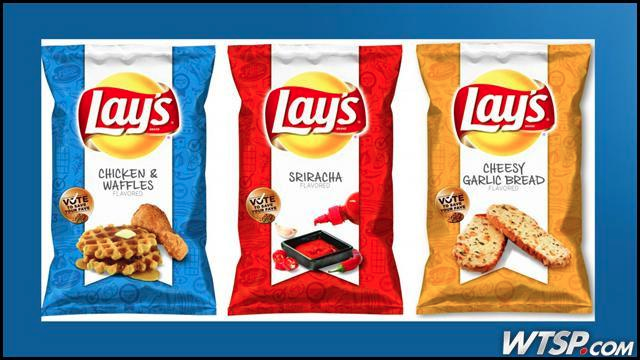
    Interactive promotional campaigns are ideally designed to benefit both the customer and the company. Lays potato chips are the most recent corporation to take this creative strategy and run with it. Lays has put together a multi-step process for establishing their newest flavor of chip. Originally, Lays invited consumers to submit their flavor ideas and let the public vote on these flavors on Facebook. At this point, the public has voted and Lays has narrowed the competition down to the top 3 public favorites. These flavors have actually been produced and are available for purchase for a limited time. While these flavors are available the voting will continue on Facebook and eventually one will be voted in and named the newest member of the Lays family.

    http://www.wtsp.com/news/article/297982/81/You-get-to-pick-the-new-Lays-potato-chip-flavor

    Taking a step back and evaluating this marketing strategy utilized by Lays, Mountain Dew and many other large corporations, it is clear that it is effective not only as a result of the customer interaction, but in a handful of other ways. Obviously if voting and discussion is taking place on social media, this is driving a ton of Internet traffic to each of the respective websites. Also, the customer involvement builds a relationship with the consumers and gives them the feeling that they are a part of the company and making important decisions. Finally, specifically for Lays and other promotions that offer the product for a limited time, this strategy causes a boom in sales with everyone trying the new product.

    Now that this promotion idea of customer involvement has been tried and proven many large companies are adopting these campaigns. Doritos, along with a few other companies, ran campaigns before the Super Bowl to have the consumers make and vote for which commercial would be shown during the big game. So despite the fact that we are still being consistently and constantly advertised to (and that’s not likely to change any time soon!) the benefits of running these promotions are clearly beyond the obvious boost in sales, this is relationship building at its finest!

    Zach Abramo, Callie Fenlon, Lauren HabigAlexandra Huss, Michael Nunes, Daniel Schaefer, Dann Williams