Tag: IMC

  • “Did I do that??”

    With a week full of fails, I imagine that readers will display a facepalm or two. Ad fails are fairly common and many are laughed off and explained through the phrase, “Everyone makes mistakes.” While ad fails often hit us in our funny bones, some offend readers far more than expected. This past year, AT&T and Esquire Magazine produced some facepalm-worthy ads that hit our country in one of its most sensitive spots: 9/11.

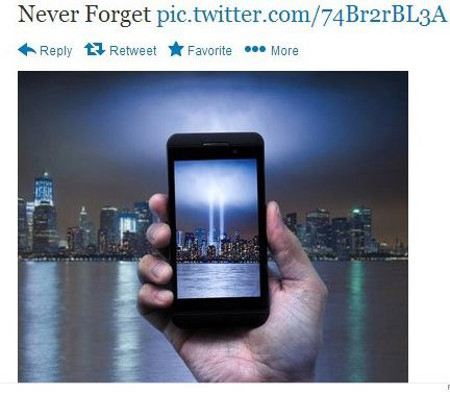
    What was supposed to be an anniversary tribute to those who died in the Twin Towers turned into an outrageous ad for AT&T. The company tweeted the below photo as a 13th anniversary mark of respect to 9/11. The tweet immediately went viral, leading to hundreds of angry comments within minutes that claimed the ad was “tacky” and “tasteless”. The image was pulled from Twitter within an hour, followed by a tweet from the carrier saying, “We apologize to anyone who felt our post was in poor taste. The image was solely meant to pay respect to those affected by the 9/11 tragedy.”
    Image

    It seems that in this situation, AT&T just can’t do anything right. Users of Twitter still were not happy with the apology, admitting that it’s insincerity somehow made the situation worse. Some consumers were so outraged that they threatened to change phone carriers, all because of this ad. In today’s market, finding new customers costs six to seven times more money than it would cost to maintain them. Finding new customers can’t be easy, especially after the bad media attention that AT&T received once the photo was released. If the Twitter comments live up to their words, AT&T could be out a lot of cash by the end of this year.

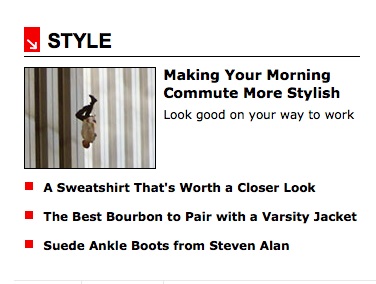
    AT&T was not the only company to bring the facepalms this past 9/11. Esquire Magazine’s online server accidentally posted an iconic photo next to a headline for another article. Instead of describing it, here’s an example of “a picture is worth a thousand words” :
    Image

    Following the post, Esquire tweeted a half-hearted apology saying, “Relax, everybody. There was a stupid technical glitch on our “Falling Man” story and it was fixed asap. We’re sorry for the confusion.” I imagine that Esquire did not consider their Return on Investments (ROI) when posting this tweet. While such outrage over a glitch may seem silly, taking the time to post a genuine apology would secure their consumers and perhaps draw in more. Because the Huffington Post reported on the incident, consumers from all over the world could unsubscribe from the magazine, causing a bad ROI for Esquire. It seems that a genuine “I’m sorry” tweet from the magazine would be far worth the investment it takes to produce the post. Instead, they received a negative return in response to their unenthusiastic efforts.

    #fail #facepalm

    -Dylan Fowler

  • PR Disaster in Wake of Natural Disaster

    It has been exactly one year since Hurricane Sandy first hit the coastline of the United States. Much of the news media last October covered Hurricane Sandy and the damage that it caused. With all the focus on such a serious event it was important that brands and companies remained sensitive to the issue at hand. However this is exactly what several brands, including American Apparel, did not do. American Apparel was criticized for their promotion of their “Sandy Sale” during the storm. The ad stated, “In case you’re bored during the storm just Enter SANDYSALE at Checkout.” The sale was only available in the states that were most impacted by the storm, which included Connecticut, Delaware, Massachusetts, North Carolina, New Jersey, New York, Pennsylvania, Virginia, and Maryland.

    Image

    During this disaster consumers were most likely expecting to see messages that were heartfelt and encouraging, not promotional social media ads for clothing companies. This violation of expectancies caused by American Apparel created negative backlash from not only their consumers, but also the public. The Expectancy Violation Theory states that the outcome of negative communication may result in uncertainty in people’s behavior. A consumer replied to American Apparel’s ad by tweeting that she will forever boycott their stores. This consumer, along with many others, probably became uncertain if they wanted to purchase from this brand in the future.

    Image

    Another aspect of the Expectancy Violations Theory explains that reward from the violation can be either negative or positive.  In American Apparel’s case, the ‘reward’ was negative.  In most cases, a negative reward is met by socially acceptable behavior in attempt to correct any violation, but the CEO of American Apparel did the exact opposite.  In response to the unfavorable backlash,  he stated that, “I don’t think our marketing guys made a mistake. Part of what you want to do in these events is keep the wheels of commerce going,” he told Business Week. “People shopped on it. We generated tens of thousands of dollars from the sale, but we’ll probably lose a million dollars from this (storm) event at a minimum. We’re here to sell clothing. I’m sleeping well at night knowing this was not a serious matter.”

    Over the years, “Made in the U.S.A.” has become American Apparel’s trademark marketing approach, but in this particular situation, nothing could be less depicting of American ideals and morals than this failed attempt to generate income.  This and other failed public relations ventures should be seen as an example of what not to do during a national crisis.  The way we see it, during crises, PR specialists and media relations professionals should proceed in one of two ways.  Either stray away from social media, or only produce messages that do not promote one’s brand.  In the long run, this situation did not make a lasting impact on American Apparel, but if you were the CEO, how would you have responded to this negative feedback? When have other brands violated your expectancies in a positive or negative way?

    -Aaron Love, Kara Zimmerman, Rachel Clay, Rebecca Hobbs

  • Is the Cure on your Agenda?

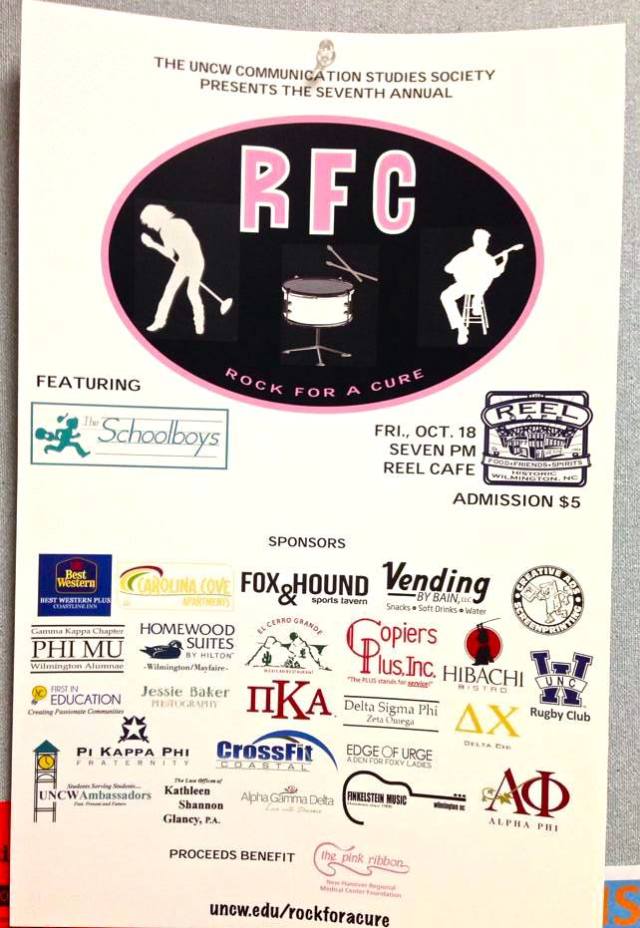
    In just a few short days, the Communication Studies Department at University of North Carolina Wilmington will be hosting their 7th annual ‘Rock for a Cure’ fundraiser.  The event is held to help raise funds and awareness for the New Hanover Regional Medical Center Foundations ‘Pink Ribbon Project.’  On October 18th, at 7 p.m. students, staff, and community members will head to Reel Cafe in downtown Wilmington to listen to live music, enjoy drinks, and socialize while raising money to help local women fighting breast cancer.  To attend this event, all you have to do is purchase a ticket for five dollars, and “since the events inception, Rock for a Cure has raised more than $22,000 to assist local women with mammography screenings and care bags for women who are undergoing cancer treatments.”  This is always a much anticipated event on campus because of the large amounts of community news coverage, sponsorships, raffles and the fact that UNCW’s very own, “The Schoolboys” will be performing.

    582135_511063455654107_2141160679_n

    The Pink Ribbon Project “has helped thousands of local women – without insurance or other financial resources – by providing mammography screenings, diagnostics, comfort items and spiritual support.”  They provide information via their Facebook page that informs the public of any local places or events going on that donate proceeds to their project. The Pink Ribbon Project, since its founding in 1998, has raised over $1.4 million for women undergoing cancer treatment in the New Hanover region. The organization has also provided over 5,200 comfort bags, which include necessities during treatment as well as inspirational insights.

    October was first designated as the National Breast Cancer Awareness Month over 25 years ago and since then has been used as a source of revenue for many foundations. Although foundations such as Susan G. Komen and the American Cancer Society raise money year round, October is targeted to generate specific media coverage for awareness, prevention, and research for breast cancer. Countless organizations including the NFL also bring awareness to this cause and by doing this, they, along with the other organizations are harnessing the Agenda Setting Theory. If a news item is covered frequently in the media, audiences will regard the issue as more important.  The Agenda Setting theory is used when telling audiences what to think about, not how to think. Rock for a Cure is able to gain so much support from students because it is a prominent topic on UNCW’s campus. Students, staff, and community members are all made aware of this event through various outlets such as Facebook, the school website, posters, online news articles, and information sessions.

    546908_10151980755359108_1202783879_n

    Can you think of a time when the media has influenced what you have thought about? Where have you seen the Agenda Setting Theory being used recently? Has this been a successful method used for Rock for a Cure?

    See you all Friday at Rock for a Cure!

    -Aaron Love, Kara Zimmerman, Rachel Clay, Rebecca Hobbs

  • Holiday Shopping at Risk from Government Shutdown

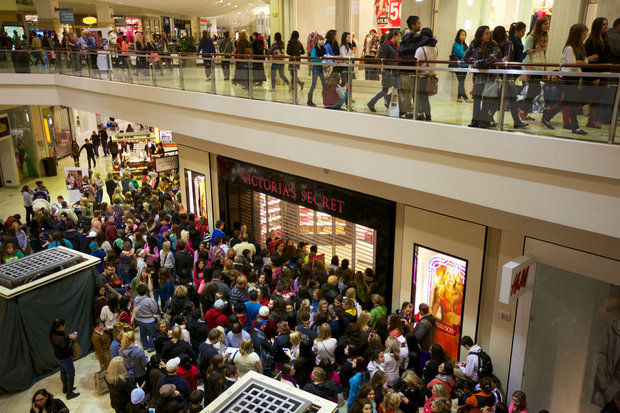
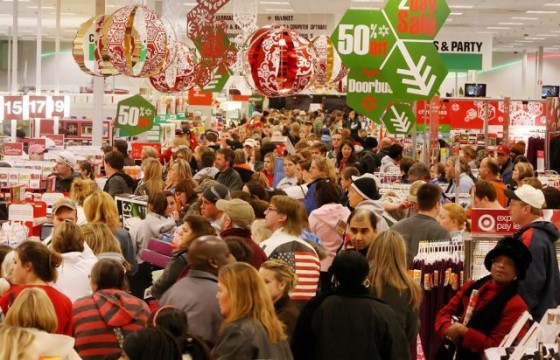
    The current shutdown marks the first time in 17 years that the government has come to a halt, as both political parties remain at a standstill. With no sort of compromise in sight, a chain reaction with numerous consequences could follow. Currently, one of the main concerns is the increase in number of furloughed government workers who are grouped into two categories: essential and nonessential jobs. However, if the shutdown continues, retailers of public businesses may also take a hit creating potential conflict during the holiday season.

    Image

    As the upcoming holiday season quickly approaches, retailers are actively predicting whether or not the federal government shutdown will impact sales. According to The National Retail Federation, sales are expected to increase 3.9 percent for November and December. However, these calculations were based on past holiday sales that had no interference of a government shutdown. Depending on how long the shutdown lasts, retailers may have to alter their marketing strategies to maintain their predicted sales for the holidays.

    As the government shutdown enters its second week, no substantial progress has been made to give retailers an accurate sense as to what will come in the next few months. Some sources believe that the shutdown could not be more perfectly timed because, “…the back-to-school rush has quieted, and despite the best efforts of some retailers, the holiday shopping season is still many weeks away from being in full swing.” On the other hand, “…some marketers may find that because consumers are spending less money, their holiday marketing may need to be tweaked at the last minute this year.”  These two outlooks lead us to wonder if a rippling effect will take place. NBC News has created possible scenarios that would occur if the shutdown lasted for over a month. One possible scenario on November 17th, according to The National Retail Federation, would indicate the “make-or-break” of the holiday shopping season. Consumer confidence in retailers will diminish as the shutdown continues, which will create devastating effects for retail stores and the overall economy.

    Image

    With Halloween quickly approaching, it will be interesting to see how the government shutdown could impact sales in terms of consumer behavior. Do you think that the shutdown will have an effect on holiday spending? How will retailers respond if the shutdown looms on in terms of marketing strategies?

    – Aaron Love, Kara Zimmerman, Rachel Clay, Rebecca Hobbs

  • The Personality Behind PETA

    “Animals are not ours to eat, wear, experiment on, use for entertainment, or abuse in any way,” is the brand proposition of the world’s largest animal rights organization, PETA. The acronym PETA stands for People for the Ethical Treatment of Animals, and is known for their extreme stance on the treatment of animals.  This non-profit organization is based in Norfolk, Virginia and has over 3 million supporters who avidly believe in it’s mission.  The four main areas that PETA focuses on where animals suffer the most are factory farms, clothing industries, laboratories, and the entertainment industry.  There are many reasons for PETA’s success as a non-profit organization since its founding in 1980.  One main reason for the organization’s success is how they have fostered their strong brand personality.

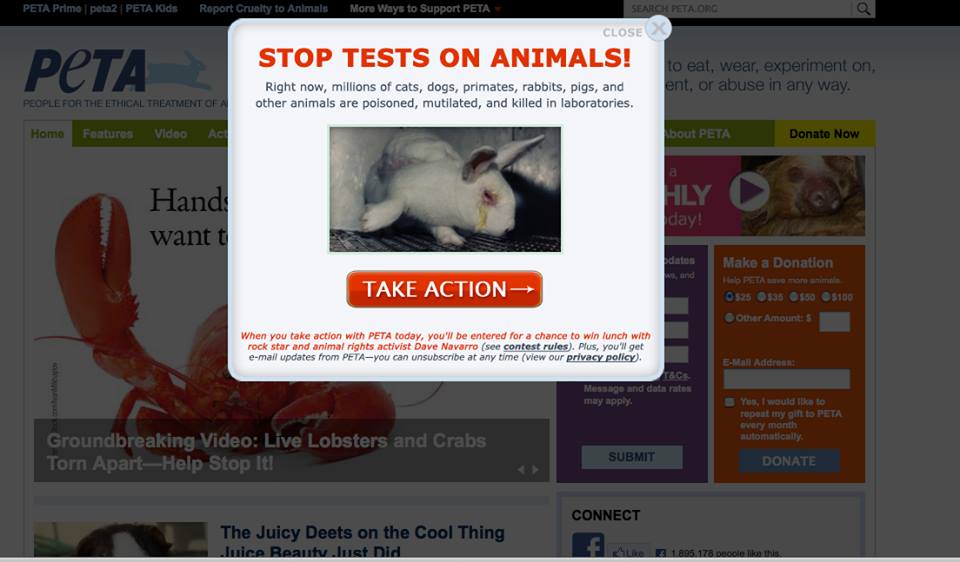
    PETA’s brand personality can be described as aggressive, emotional, and persuasive.  These characteristics can be seen in their advertisements, commercials, endorsements, and website.  Aggressiveness can be seen on the organization’s website through its use of language and tone.  The language used can be seen as aggressive because it is dramatic and creates a serious, yet sad and drastic tone.  One example from the website (even before you arrive at the main page) is a pop-up that takes up the entire screen.  The pop-up “greets” visitors the first time they view the website and features a graphic image of an ill-treated animal.  Language on the pop-up is bold, red, and uses exclamation points.  The message states, “Right now, millions of cats, dogs, primates, rabbits, pigs and other animals are poisoned, mutilated, and killed in laboratories.”

    Image

    Emotional appeals come into play as you continue onto the main page of the website and see horrific images of distressed or dead animals.  PETA uses this technique to form their brand personality because people’s emotions are triggered when they see either sad photos of animals, or even victory stories of animals that PETA has saved. PETA keeps their promise of saving more animals by having a readily available donation section on the homepage. Supporters who are moved by PETA’s mission are able to fill in their information and donate to save more animals with just one click. This allows supporters to create an emotional attachment because they aspire to create an ideal self by donating to the cause.

    Image

    A large portion of PETA’s success can be attributed to their use of celebrity endorsements as a means of persuasion. Celebrities such as Bob Barker, Carrie Underwood, Simon Cowell, and Audrina Patridge have all teamed up with PETA to support their mission and cause. One campaign in particular that remains consistent with PETA’s brand personality is represented by former Miss USA winners who advocate the idea that they would rather go naked than wear fur. These advertisements are meant to make the viewer feel uncomfortable in an attempt to call people to action. Even Academy Award winner, Joaquin Phoenix, has paired up with the organization to make an influential video that relates to his own personal experience dealing with animal cruelty.

    PETA’s brand personality continues to be strengthened because supporters are able to express their identity by representing the organization.  The combination of these three characteristics create an overall concept of what to expect of PETA, which is both distinctive and enduring.  Other than these three characteristics (aggressive, emotional, and persuasive) what comes to mind when you think of PETA? Do you feel that their brand identity is distinctive and memorable?

    – Aaron Love, Kara Zimmerman, Rachel Clay, Rebecca Hobbs

  • Flacco’s “Lovin’ It”

    From his first infamous trip to purchase a 10 piece nugget meal, to now being featured in a full scale McDonald’s advertisement, Joe Flacco is now not only representing the NFL scene, but the fast food scene. Many companies have harnessed and benefitted from the use of the pathos and emotion in their advertising campaigns to attract current and future consumers. McDonald’s has started a new advertisement campaign with Ravens’ quarterback and recent Super Bowl XLVII MVP, Joe Flacco. With the Ravens’ latest win in Super Bowl XLVII, Flacco has become a household name, contributing to a rise in Ravens’ supporters and fans. As the new football season revs up, McDonald’s is appealing to the crazed fans young and old alike who have a passion for their team and what it believes in.

    Although Flacco is a respectable and genuine role model who is described by many as humble and “the guy next door,” this is not just a question of the effect of pathos being used in this campaign, but also ethos. By doing the commercial for McDonald’s, which is well known for their appeal to younger consumers, Flacco could be seen as ethically responsibly for the image he puts out for young children. Young boys and girls may look up to him because of his celebrity appeal and athletic status and think they should eat McDonald’s because he does. In the advertisement, Flacco is shown eating McDonald’s new “Mighty Wings” which are (480 calories and  31 fat grams). As a well known sports icon, Flacco is constantly in the limelight. He is a fit and healthy individual, which will create the image of eating McDonald’s as an attractive and healthy option. This may cause misleading perceptions about the health benefits of McDonald’s and in Flacco losing credibility as a professional athlete.

    Logic (Logos) may be factored in when looking at the obvious benefits that McDonald’s will gain from having Flacco in their advertisements.  Having a well known athlete sponsor your brand is a sure fire way to bring in revenue and was a good marketing move by McDonald’s.  On the other hand, logic also tells us that McDonald’s does not provide the healthiest food that we can put into our bodies.  The nutrition facts cannot be hidden by a super fit athlete.  Do you feel as though Flacco lost or gained credibility by endorsing McDonald’s?  How do you think McDonald’s credibility has changed or stayed the same, knowing the type of people they feature in their advertisements (particularly athletes)?

    We can almost be certain that aside from the ethical questions that this ad brings up, there will be a rise in support of McDonald’s by a deeply rooted Ravens’ fan base. This brings about a win-win situation for McDonald’s and Flacco off the field.  So, who knew that a simple 10 piece nugget meal from McDonald’s would land him yet another win?

    -Aaron Love, Kara Zimmerman, Rachel Clay, Rebecca Hobbs

  • America Runs on Dunkin’, but Will They Stay?

    Dunkin’ Donuts prides themselves in promoting their image as the coffee spot for the average Joe. However with Starbucks and McDonald’s as competitors, Dunkin’ Donuts has decided to revamp their stores in an effort to pull in more upscale coffee drinkers. Dunkin’ Donuts is now attempting to reach customers that are interested in the coffee-drinking experience rather than just a quick morning pit stop. Owners have the ability to choose from four different schemes that they can remodel their store as. These themes include “Original Blend,” “Cappuccino Blend,” “Dark Roast,” and “Jazz Brew.”

    Image

    -Pictured above is the “Jazz Brew” scheme.

    By redesigning their stores, Dunkin’ Donuts hopes to give their customers a better overall experience. In turn, customers will be more likely to form a strong attachment with their brand and chose them over Starbucks or McDonald’s.  Just as the CEO of Starbucks states in a quote from author Bryant Simon, “I think we have managed to, with a simple cup of coffee and a very unique experience, enhance the lives of millions of people, by recreating a sense of community, by bringing people together and recognizing the importance of place in people’s lives.” If Dunkin’ Donuts would like to be able to brand itself as what we call in IMC, a “third place,” they will have to take a page out of Starbucks’ marketing plan to create an atmosphere that draws people in to not just drink coffee, but stay.

    Image

    -Pictured above is the “Cappuccino Blend” scheme.

    So far the new change in atmosphere has led to positive results for Dunkin’ Donuts. The remodeled locations include new additions such as faux-leather chairs, digital menu boards, and relaxing music. These changes have already fostered a greater sense of community because more business professionals are stopping in around lunch time for business meetings and interviews.

    Improving the consistency in the appearance of their locations, Dunkin’ Donuts can reach a stronger brand identity. It is evident that their stores need to be redesigned after receiving the second lowest atmosphere score for beverage and snack shops in a 2012 survey done by Nation’s Restaurant News and WD Partners. As of June the company had redesigned 90 locations and hopes to have 600 finished by the end of 2013. Have you recently been to a Dunkin’ Donuts and noticed a difference in the atmosphere? Have you wanted to actually sit down and stay a while?

    -Aaron Love, Kara Zimmerman, Rachel Clay, Rebecca Hobbs