Tag: IMC

  • How Influencer Marketing has Changed our Society

    By Kylee Clifton

    It’s 2023. You spend most of your free time scrolling through TikTok watching your favorite influencers “Get ready with me” videos. They show you their most recent favorite products, linking them in their profile for you to view. You automatically put these new products into your cart and buy them, not realizing you are a part of their strategic marketing strategy. According to Jones (2021), “Influencer Marketing” uses trusted figures within a niche community that possess knowledge or experience about what they are advertising. The term “Influencer celebrification” is defined as “The process by which influencers acquire celebrity capital within an interconnected advertising ecosystem.” This celebrity capital is usually achieved through sports, music, television and movies (Jones 2021). In this blog my intent is to share this new idea of influencers, and how they have changed the marketing strategy for our society.

    You might be familiar with the concept of celebrity endorsements, which have been a popular method to promote products in our society. The idea of connecting a celebrity figure to a brand allows the audience to feel emotionally connected to the products displayed by that brand. Although this strategy is still efficient, there has been a rise in social media platforms, creating prominent influencer figures who have a large following. The Influencer Marketing Hub Explains that brands love influencers because they are able to create trends and encourage their followers to buy the products they use. There are 4.89 billion people social media users globally, which makes this marketing strategy important. (Geyser 2023)

    @ForbesLife on X

    I want to talk a little bit about Alix Earle. For those who do not know her, she is one of the biggest and newest influencers of this generation. She is referred to as the “It girl” who shares TikTok videos of her day-to-day life. She is 22 years old and has an impressive 6.1 million followers on the TikTok app. She is now rising to celebrity status due to her new connections with many famous people, attending big events and being on many news outlets and magazines. Alix conducted an interview with Forbes talking about what led to her success. She states that her videos are authentic and in real time, which leads her fans to have an emotional connection to her. They feel as if they can relate to her on a personal level because of the openness and trust Alix creates.

    For an influencer to be successful, the article “Influencer Celebrification: How Social Media Influencers Acquire Celebrity Capital” describes two celebrification processes:

    1. “Audience Portability: Influencers have the power to create content that is consistently engaging to their audience. The value of an influencer is in the influencers committed audience and the willingness to be transported across platforms and opportunities.
    2. Creative Ideation: Influencer has already created a niche which is evident in the followers. This idea touches upon the responsive and reciprocal content development between influencers and audiences.” (Jones 2021).

    Alix Earle has nailed both of these processes above. She is now guiding her way to acquire celebrity capital because of her influential content and her niche community that worships her, “The smartest influencers out there and the ones who really will have longevity are the ones who understand the relationship that they have with their audience.” (Jones 2021). With social media still on the rise, evolving to influencer marketing strategies are beneficial for many companies and brands to stay successful in our society today.

    Works Cited

    Bretoni, S. (2023). How Influencer Alix Earle cornered a social media market and made $5 million in one year. Forbes. https://www.forbes.com/video/6337810992112/how-influencer-alix-earle-cornered-a-social-media-market-and-made-5-million-in-one-year/?sh=15da54ba6dac 

    Brooks, G., Drenten, J., & Piskorski, M. J. (2021). Influencer Celebrification: How social media influencers acquire Celebrity Capital. Journal of Advertising50(5), 528–547. https://doi.org/10.1080/00913367.2021.1977737 

    ForbesLife. (2023, October 3). Video: How Alix Earle earned $5 million in a year while balancing college and career demands https://t.co/d2ktw9zdcx pic.twitter.com/aeb0aer6up. Twitter. https://twitter.com/ForbesLife/status/1709252057356435476 

    Geyser, W. (2023, November 15). What is an influencer? – social media influencers defined [updated 2024]. Influencer Marketing Hub. https://influencermarketinghub.com/what-is-an-influencer/ 

    Photos licensed from Adobe Stock 

  • Do you know your audience?

    by: Spencer Jones

    Businesses either “get” social media or they don’t.  Every small, local business and international corporation faces this dilemma and some may not even realize it.  Remember this?

    (Photo from Wendy’s, 2015)

    That originated from a 2015 Wendy’s commercial promoting their Jalepeño Fresco Spicy Chicken Sandwich.  Initial reactions were… mixed.  Incorporating elements of online media used in this commercial felt tacky upon release.  Although there’s an argument to be made that it did catch people’s eyes a bit.  If you saw this back when and your friend showed you the frame, how can you not crack a smile?  At the time however, thematic elements from online humor on television mixed like oil and water in this instance.  

    Let’s fast forward a couple years.  The fast food giant would soon pick up steam online at the beginning of 2017 stemming from a hilarious brand-user discussion on Twitter:

    @Wendys: Our beef is way too cool to ever be frozen.

    @NHride: Your beef is frozen and we all know it. Y’all know we laugh at your slogan “fresh, never frozen” right? Like you’re really a joke.

    @Wendys: Sorry to hear you think that! But you’re wrong, we’ve only ever used fresh beef since we were founded in 1969.

    @NHride: So you deliver it raw on a hot truck?

    @Wendys: Where do you store cold things that aren’t frozen?

    Oh, boy.

    @NHride: Y’all should give up. @McDonalds got you guys beat with the dope ass breakfast.

    @Wendys:

    (Wendys, 2016).

    This discussion would shortly thereafter be featured on CNN’s Anderson Cooper 360.  The following positive brand feedback by users blossomed into an intriguing shift in their tone of messaging.  A series of caustic rebuttals and witty banter with both followers and corporate competitors shot their total online follower count up 13% in just 6 months (Thorne, 2020).  I wouldn’t blame you if you think it’s unprofessional or distasteful.  Keep in mind, we’re talking about Wendy’s.  This is an international corporation; a lot of people are familiar with them.  The reach of your business and expectations of a target audience should correlate to what values are upheld in messaging practices.  Building a strong tone for brand messaging consists of surveying the land, aligning with values, and being active.

    Surveying the land

    Research is the predecessor to any informed decision.  That starts with understanding our target audience.  What has worked in the past?  How do they communicate?  What types of content or genres are of  interest to them?  What’s the most important element of what we have to say?  Anticipating how the target audience will react determines what topics or actions to steer away from.  Try to humanize your tone when responding to complaints and compliments alike.  Developing personal, casual tones to messages separates the idea of talking to a brick wall (Jeong & Kim, 2022).  

    Aligning with values

    Each business has messaging values that apply for each active channel. Look for key words or expressions to keep in mind.  Establishing a consistent structure of messaging has to happen before users can express their own positive sentiment towards you.  Aligning values helps to clarify an outline of a business’s social presence to users.  That way, users grow a stronger bond to the business through similar values.

    Being active

    Appropriate usage of humor in social media marketing tells users that a business is not only competent, but confident.  Humor relies on context (Bitterly et al., 2017).  Every business may not intend to be humorous, but should be looking to engage with their audience.  That means speaking in an active voice, being resourceful, rewarding feedback, etc.  The little details that feel authentic and human (emojis, phrases, etc.) strengthen a brand’s social relatability and presence online, widening the path for users to construct a positive view of the brand (Hayes et al., 2019).

    Takeaways

    I like to imagine a business is a living, breathing entity. In order for an audience to have an emotional reaction, there needs to be emotion conveyed through messaging. In order for consumers to engage, there should be engagement going their way. Consistency and confidence creates authenticity. Lean into that. Keep in mind employers (especially local) see Gen-Z interns or staff members with the assumption that they “get” the nuances of a brand’s identity. Some of us assume that we get it, too. Going off assumptions or skipping steps is where businesses and professionals alike fail to maximize their reach.

    References

    Bitterly, T. B., A.W. Brooks, and M. E. Schweitzer. (2017). Risky Business: When Humor Increases and Decreases Status. Journal of Personality and Social Psychology 112, no. 3 (March 2017): 431–455.

    Hayes, J. L., Britt, B. C., Applequist, J., Ramirez, A., & Hill, J. (2019). Leveraging textual paralanguage and consumer–brand relationships for more relatable online brand communication: A social presence approach. Journal of Interactive Advertising, 20(1), 17–30. https://doi.org/10.1080/15252019.2019.1691093 

    Jeong, H. J., Chung, D. S., & Kim, J. (2022). Brands Are Human on Social Media: The Effectiveness of Human Tone-of-Voice on Consumer Engagement and Purchase Intentions Through Social Presence. International journal of communication [Online], 16, 4231+. https://link-gale-com.liblink.uncw.edu/apps/doc/A717299271/PPCM?u=wilm99594&sid=bookmark-PPCM&xid=cf588424

    Thorne, J. (2020). How Wendy’s revolutionized corporate social media accounts. Medium. Retrieved March 22, 2023, from https://bettermarketing.pub/how-wendys-revolutionized-corporate-social-media-accounts-6d4aec739f37 

    Wendy’s. [@Wendys]. (2016, December 30). Our beef is way too cool to ever be frozen. [Photo attached] . Twitter. https://twitter.com/Wendys/status/815973811115925504

  • Social Media Connoisseurs: The Adaptability of Content Creators

    By Michalah Matthews

    (Photo by FreePik)

    Content Creators in IMC?

    Influencers and content creators are an ever-growing demographic, directly influencing what it means to be in social media strategy. As COM majors, we are expected to have experience with social media along with some knowledge of how to curate posts and increase visibility of a brand. Social media influencers are not just a face for promotion of specific brands, but they also make up their own brand and have to work a platform to their advantage.

    The Evolution of Social Media

    Technology and social media platforms are constantly updating and becoming more innovative in terms of what they offer their consumers. App developers want to continue to have users interact with their app so they’ve even adopted features on their sites similar to other platforms to encourage their users to keep using it. Instagram started to develop and change several different functions of their app. They’ve added a shopping feature, Reels, and have allowed users to start posting “stories” to showcase snippets of their life. While these updates have made things easier for the consumer, they have had some pretty big impacts on content creators who rely on social media for their brand.

    Making Apps Better…

    Social media moguls have had to adapt to the constantly changing platforms. These adaptations have had positive and negative effects on their ability to promote their brands. One adaptation they’ve had to make is choosing the correct platform to advertise their brand. Not long ago, sites like Tumblr and YouTube were “on and poppin” making them the app that produced the most visibility for content creators. People no longer have the patience or time to read a blog or watch a 15-minute long review about a product. This is where the creation of Instagram comes in. Instagram started as a platform to simply post a photo allowing increased visibility through use of hashtags. This technology created a very straight-forward system benefiting users and creators alike, making it a positive impact for their brand, but this update didn’t seem to be enough for consumers.

    …Or Worse?

    With these changes, comes a challenge for those who depend on these apps to make a living. One of these updates that had a negative impact on content creators was the development of the algorithm for Instagram feeds. Technology has updated and allowed us to curate experiences for people based on the things they frequently look at online. For example, I love a good human hair wig so every now and then I see a banner ad for some stranger’s hair on my browser. That is a benefit to the curation of ads and content based on what an individual likes to see when they’re on the Internet. Although I view this innovation as beneficial, the curation of content for users is actually a content creator’s worst nightmare. In creating posts for an individual based on what they usually view, it erases the visibility influencers may have had prior to the update.

    Content Creators Adaptation to Change

    Views are one of the ways content creators receive money but if their posts are not being seen, it makes it hard for them to profit. While this is a negative to having social media as a main source of income, it has allowed them to be creative in finding ways to combat this update to the algorithm. According to Arturo & Ibáñez, who have studied and dissected the adaptability of content creators, one way content creators have been able to work against the decrease in visibility is collaborations with other influencers. Arturo and Ibáñez have given this technique the name, “cooperative algorithm hacking”(p. 2). If you have an Instagram and you happen to follow a few beauty or fashion influencers, this is a common occurrence among that community. They do a type of series that is composed of several different influencers of the same category or community. For example, not too long ago the Bratz dolls were trending due to the influx of people becoming interested in the Y2K theme. This resulted in a few influencers doing a Bratz doll challenge, where each influencer selected a doll to create a look for. In doing this, their followers not only saw the content of someone they liked seeing but they saw similar content from a different creator. This is an example of how content creators successfully adapt to the constant updates of social media platforms.

    How does this relate to IMC students?

    As IMC students, we are content creators ourselves! We’ll have to be just as innovative in our ability to adapt to the ever-changing rules of social media. Experience in breaking down the reports and analytics that our posts generate will be necessary, as well as the familiarity with navigating any changes to apps themselves in order to maintain a successful marque. Our ability to be adaptive and innovative are some of the many things labels are looking for in individuals to represent their brand.

    (Photo from Jackie Aina via YouTube, https://www.youtube.com/watch?v=tbQ-a-4xVwA)

    Source

    Arturo, A., & Ibáñez, F. (2020). “You need at least one picture daily, if not, You’re dead”: Content creators and platform evolution in the social media ecology. Social Media + Society, 6(3) doi:http://dx.doi.org/10.1177/2056305120944624

  • It’s not you, it’s the process: What to actually expect when creating content

    By Abigail Morris

    (Photo from Adobe Stock user Kittiphan)

    As I sit here writing this post, I find myself “stuck” on how to introduce this topic. I’ve spent hours on collecting, organizing, and summarizing data to include into this article. Yet, I’m sitting here clueless and hesitant. I’ve spent years of my academic career honing my skills to create content such as this and still I find myself constantly in this headspace. And because I aspire to do this as a career, the pressure of continually creating post and visuals that are interesting an engaging can become extremely discouraging – especially when I’ve dedicated so much time to the practice. But when I take a moment to step back and analyze where this disconnect is coming from, I begin to understand that this stagnant headspace is part of the process. 

    With every creative industry (especially in areas of art and literature), there is a tedious and straining side of content creation that hardly ever is mentioned or noticed. And when you’re creating relatable/interesting text and visuals – one might find themselves more inclined to interject personal elements into their work (that are deemed professional and relatable to the topic).  Diana Bossio in the article, Burning Out and Turning Off: Journalists’ Disconnection Strategies on Social Media, she states that “These exchanges [emotive intrapersonal communication within a professional context] are a kind of labor, and they can also be seen in the context of building and engaging with community, being ‘creative’, expanding personal and professional networks, and engaging in a pleasurable activity. Baym (2018) characterizes this as relational labor, or practices and strategies that creative professionals have adopted to create stronger emotional and thus commercial relations with audiences.”

    So, whenever a post receives positive feedback and attention, the creator of that content will feel a sense of accomplishment that validates their passion to keep creating. In the same sense, this kind of personal connection with content creation can cause emotional fatigue and burnout whenever they feel that they aren’t “hitting the mark” with their work. And with the added pressure of one needed to meet their quota, this can further discourage an individual within this field.

    Like how writers and artist cope with creative blocks, understanding social media burnout can help content creators to identify aspect of their work that are causing stress or lack of fulfillment, so that one may be able to find ways to fix this disconnection.

    This kind of persuasive and engaging rhetoric is heavily used within social media marketing, especially when one uses this to convey their brand identity as relatable. According to Demand Metric, 82% of consumer’s have a more positive perception of an organization after reading custom content. Because of this, 90% of organizations use content as a method for marketing. This desire for a brand to articulate an active, positive and informative image to their audience has become a necessity when creating brand trust and loyalty. With this push to create a positive and engaging public narrative for an organization, those assigned to accomplish such task many find themselves mentally and emotionally drained in order to provide their clients with quality work.

    (Photo from Adobe Stock user Drobot Dean)

    So, what should someone do then they are creatively “stuck”?

    Disconnect by creating a professional persona.

    The journalist interviewed for this study recommended that content created for work should not be used or posted on personal accounts. This ability to divide your personal and professional life is a way that any content creator can ease the stress of work so that they have the mental capacity to think outside of the box and create. In the article, Bossio states that “For journalists using social media as a professional communication tool, disconnection strategies actually work in tandem with the different ways they connect online, positioning those connections more strategically as professional labor and thus inscribing particular meanings and uses for social media interactions.”

    Now, this ability to disconnect doesn’t mean that you’re sacrificing effective “personal” quantities of the brand identity that draw the attention of your target demographic. This just means that your personal and professional social media post shouldn’t be intertwined. Similar to the concept of dividing your physical workspace from your bedroom – the same concept should be used within your creative process. Although these personas differ, they’re still a part of who you are.

    Just like how your able to decorate your desk at work with personal little nick-nack and trinkets – you can bring elements of yourself into the work you create. At the same time, you’re not going to put your queen-sized mattress in your office cubical. The professional persona that you create for work can embody a similar presence of your personal self. But when you start to associate the stresses of work into areas of your life in which you mentally and emotionally escape (in this case, social media), you begin to lose that sense of security that once was there (which is the number 1 way for any level-headed individual to lose their sanity).

    As easy as I make this advice sound, one’s ability to successfully disconnect and create a professional persona is not something that can accomplished overnight. This kind of self-discovery takes time to properly analyze and evaluate.

    (Photo by Adobe Stock user WavebreakmediaMicro)

    In the meantime, if you find yourself in a creative limbo, remember that:

    1. This is absolutely normal
    2. Many people who work within the creative field experience this at some point within their career.
    3. Even though you feel creatively stagnant, YOU ARE DOING SOMETHING.
    4. It just takes time to see those results.
    5. If you’re aware of what you’re experiencing, IT WILL PASS.
    6. Understanding the source of stress and creative fatigue is vital when creating your “plan-of-action” to overcome the creative block.

    Applying these steps into your workflow can tremendously help the stress created that can manifest itself into creative blocks. Also, acknowledging this aspect can lift the internal frustration that comes with constantly creating and posting content.

    Allowing yourself the time to self-reflect and implement what you’ve discovered into your workflow not only lifts the pressure of expectations that you and those around you create, but it also allows you to focus on creating work that efficiently conveys the intended message.

  • Establish your brand identity and you will guarantee success

    By Kelly Geiger

    Imagine you are walking through the mall and every store looks the same. Décor, logos, colors… everything is exactly the same. How could you possibly find the store you are looking for? This is where brand identity shows its importance. When you walk through the mall and see the check mark of a Nike store, the cursive sign reading Free People, or the navy-blue color surrounding the Gap, there is no question as to what brand you are looking at. Establishing a brand identity through colors, logos, fonts and more will not only set you apart from other brands, but also improve recognition and memorability for customers.

    This article will do two things. It will help you understand what a strong brand identity is and show you the importance of visually building a brand that sets themselves apart from their competitors.

    What is brand identity?

    “Brand identity is a combination of the name, terms, signs, symbols, and design used to identify a brand’s goods or services and distinguish them from competitors (Aaker 1991; Kotler 1991; Zaichkowsky 2010)” (Ward and Yang and Romaniuk and Beal, 2020). This is the part of the brand that people associate with visually. When you see Coca-Cola, what color do you think of? Red. When you see the words ‘Just o It’ what brand do you think of? Nike. When you see the golden arches what brand do you think of? McDonalds. “Brand identity elements are the building blocks that contribute, creatively, to enhancing brand presence in advertising content and purchase environments. For example, many McDonald’s advertisements contain no direct brand name, but instead favor brand identity elements such as the “Golden Arches” and “I’m lovin’ it” jingle” (Ward and Yang and Romaniuk and Beal, 2020). These are all examples of how successful these companies were in creating a strong brand identity. 

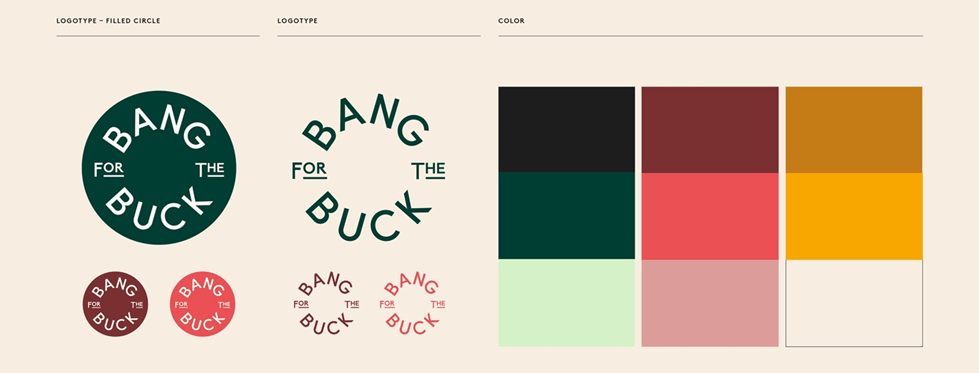
    Brand identity is not about selling the company’s product, it is about selling the company itself. They want to set themselves apart from their competitors, and using these visual elements is how they do it. This idea of ‘selling themselves rather than their products’ is further explained in the scholarly article Building a unique brand identity: measuring the relative ownership potential of brand identity element types by Ella Ward, Song Yang, Jenni Romaniuk, and Virginia Beal. “Described as an integrated system of cues, the purpose of brand identity is to provide a physical, proprietary representation of the brand (Perry and Wisnom 2003). In this sense, rather than providing a reason to buy the brand, the primary function of brand identity is to create a synergy amongst disparate brand elements and establish a unique brand look and feel for relatively homogenous goods (Perry and Wisnom 2003; Underwood 2003; Romaniuk and Nenycz-Thiel 2014).” In the image below you can see what an established brand identity might look like.  This mock example is a great representation on how a company creates a color scheme, font, and logo variations that are specific to their company.

    (Photo from BeHance, https://www.behance.net/gallery/57691987/Bang-for-the-buck/modules/375634675)

    While some might not value the artistic side of branding such as choosing colors, logos, fonts, etc., this isn’t just so your brand looks ‘pretty’ or ‘trendy’, it is truly a science to set yourself apart from your competitors.  Brand identity is important because it relates to the psychological ways consumers connect their memory with your brand.  “Brand identity elements can help explain the brand (Kohli et al. 2013), add meaning (Dahlén and Rosengren 2005) and contain imagery such as colours and shapes that expand the way the brand is encoded and stored in memory (Keller et al. 2008; Hartnett et al. 2016). As a result, the brand becomes more readily accessible to the consumer via creating a unique brand identity and artistic presence. (Ward and Yang and Romaniuk and Beal, 2020) Again, when it relates to identity elements, the goal is not to sell the product but the brand itself. Another way to explain this is “Identity elements are the cornerstone to brand identity that helps consumers to recognize brands and distinguish them from competitors (Hoek and Gendall 2010). These elements evoke the brand in the mind of consumers and create a unique look and/or feel that makes it easy to identify the brand (Perry and Wisnom 2003; Romaniuk and NenyczThiel 2014).” (Ward and Yang and Romaniuk and Beal, 2020).

    The biggest takeaways from this article are the importance of brand identity and its key position in successful companies.  It relates to integrated marketing communication in many ways but most of all brand identity can be practiced through campaign and message design.  The corresponding brand identity features are mostly used in the forms of advertising, packaging, and other forms of design.  Integrated Marketing Communication deals with these features of how and why it is necessary to create a brand identity as well as how this will eventually help your company succeed within its marketing and advertising techniques.  

    Source

    Ward, E., Yang, S., Romaniuk, J., & Beal, V. (2020). Building a unique brand identity: Measuring the relative ownership potential of brand identity element types. Journal of Brand Management, 27(4), 393–407. https://doi.org/10.1057/s41262-020-00187-6

  • How can brands stay up to date with user generated content?

    By Courtney Busick

    Brands are constantly changing. They need to stay up to date on how an audience interacts with them on social media. Many companies are finding users who share their content through stories or posts shows more engagement and interaction than counting likes and comments. How can brands engage their audience? By understanding their human values and what makes them want to share user-generated content with others.

    What is user generated content? User-generated content (UGC) is completely created by the user. Many brands are using this by asking users on social media questions about their products. More and more brands are finding that they can get free marketing from social media users with UGC’s. Whether it’s Lays asking for new chip flavors or Coke sharing the hashtag #shareacoke, brands can get reviews from user who share their content on platforms.

    Sometimes it can be hard for a brand to navigate UGC’s so here are some tips I love from other marketers that can help you engage with user-generated content.

    (Photo Pi Datametrics, https://www.pi-datametrics.com/blog/name-game-coca-colas-shareacoke-summer-ad-campaign/)

    Connect Human values to your Products

    Understanding a user is understanding what they value. Brands must look at human values and use those to generate content that users enjoy. “Human values are guiding principles reflecting style goals in life that may impact how individuals judge situations and events” (Nikolinakou 14). Meaning that human values are what drives our decisions. It affects consumer behavior towards certain products. It can also affect what we purchase. There are four levels of human values described by the article a brand should understand. Self- Transcendence (audiences’ stances on political or social issues), Conservation (audience’s desire to maintain security and stability), openness to change (what motivates users to change their opinions about products/services), and Self enhancement (user’s need to achieve success, wealth or influence) (Nikolinakou 14).

    Target actually used this in their “Acceptance” campaign. In 2010, Target pledged to donate $500 million to student’s education and they would double that for the best college acceptance video form their audience. So people sent in videos of them opening their college letters (Siu 2015). This allowed for the brand to connect with the brand personally and have fun showing of their authentic emotions. They touched on self-transcendence and conservation of their audience by showing what they value and how they are going to engage their loyal customers.

    (Photo from Contently, https://contently.com/2012/08/03/target-video-captures-real-college-acceptance-reactions-video/)

    In IMC, we should always be focused on the values of the consumer. This can also be seen through looking at a specific target audience. This is from their demographic to their psychographics and behaviors. What are the values and behaviors of my audience and how can I engage them in user content? For user generated content, you not only want to look at your brand target audience, but the population that is most likely to share you content through reviews or promotions.

    Reach out to audiences with specific human values to share content or promote a brand

    Human values drive consumer decisions. The primary and most popular values is conservation values. Consumers are constantly looking for trust and safety from their brand (Nikolinakou 15). By brands reaching out to the customers for promotions it makes them feel in charge and in control of the brands they love and their purposes.

    An example of this is social media management company Buffer. Instead of creating captions and content on their own, they encouraged their users to engage in their blog and submit their own content. They get the chance to be featured on their account. They post their own content to make you feel a part of their content process. Buffer also makes sure to be quick in responding to comments and dm’s on their pages. It allows for them to be authentic and true to their followers.

    In IMC, brand loyalty is so important. If a consumer picks our brand, we know we have to think of how we can meet their needs and that they want to stay with us. You cannot have customers without brand loyalty. As a customer to certain brand, I want to feel like the brand cares about me and what I value. I like to find brands that are consistent and authentic with what they do. People are influenced by others around them, so it creates a strong community of people who love and will continue to purchase from your brand.

    So what makes it easy for brands to use user generated content? Connection and understanding. In order for brands to immerse themselves into user generated content they must understand their clientele and who is loyal to their brand. They must observe human values and understand what human values they should reach in order to find quality brand users.

    Sources

    Nikolinakou, A. (2019) “Do human values matter for promoting brands on social media? How social media users’ values influence valuable brand‐related activities such as sharing, content creation, and reviews” Journal of Consumer Behavior. 14-22

    Siu, E. (2021, April 15). 10 user generated content campaigns that actually worked. HubSpot Blog. Retrieved February 25, 2022, from https://blog.hubspot.com/marketing/examples-of-user-generated-content 

  • Which Form of Social Media Content Works Best for Increasing Brand Attitude?

    By Shelby Watson

    (Photo from Dreamwealth Films, http://dreamwealthfilms.com/content-is-king-what-bill-gates-said-about-internet-in-1996/)

    Creating content-driven media to share across social channels is one of the most effective ways for a brand to reach their target audience today. However, there are so many different ways to create advertising content. How do you know which one is the most effective? Especially for brands that are looking to increase positive attitudes towards their product or service, understanding the techniques available and being able to decide which one will work the best for your purposes is incredibly important.

    What are the major techniques used by companies on social media?

    First, it will help to understand what techniques are available to you. Content marketing is a more traditional tool used by a brand, where hired social media coordinators will create original content for a brand, share that content, and try to increase brand reputation or sales. Typically, this form of content is heavily curated by the company producing it and is easy to control, which can allow a brand to create a cohesive image of itself.

    Sponsored content is content that a company pays someone to post in order to promote the brand’s image or encourage sales of its products. Often, sponsored content is posted by influencers within a certain niche market or a well-known or respected celebrity. Sponsored content is almost always disclosed as such, so an audience is aware that the content they are seeing is marketing.

    User-generated content is content that an individual posts on their own social media channels promoting a brand or product. Often, user-generated content does not disclose whether or not the poster was paid or otherwise compensated for promoting something. This kind of marketing can be riskier because a brand cannot always predict how an individual will talk about their products or services.

    Which techniques are most effective at increasing positive brand attitude?

    According to a study completed in 2019, there are significant differences in how audiences receive certain types of content. Sponsored content is generally received less favorably, likely because the disclosure that something is a paid #ad comes off as insincere to a targeted audience. For example, in November of 2021, Amazon teamed up with actor Terry Crews in hopes of improving attitudes towards the working conditions within the company’s fulfillment centers. In a TikTok posted to his channel, Crews visits an Amazon warehouse and acts like a kid in a candy store, excited about the work and employee benefits offered by Amazon (which the video says include paid college tuition and flexible working hours). The internet was quick to point out the insincerity within the video, noting that it does not accurately represent what working at a fulfillment center is like. Crews was also criticized for being willing to promote such an unrealistic video for money. In the end, Amazon’s brand attitude, as well as Crews’, took a hit because of the sponsored content.

    (Photo from Business Insider, https://www.businessinsider.com/terry-crews-amazon-ad-video-2021-11)

    On the other hand, content marketing and user-generated content are both better received by audiences because these forms of content are generally trusted more. It makes sense that user-generated content is more likely to read as sincere – if someone who doesn’t work for or with a company promotes a product or service, we are likely to believe they do actually enjoy it. For example, shopping has become a popular niche within TikTok and Instagram. #Amazonfinds on Instagram is filled with all kinds of items people are promoting from the website, and “Amazon Must Haves” videos like this one are incredibly popular across TikTok. Popular ways for brands to encourage positive user-generated content include challenges or giveaways that require users to post something in order to participate.

    It is a little more surprising, however, that content marketing and user-generated content show little difference in how they influence audience brand attitudes. Audiences likely trust content marketing more than sponsored content because the connection between author and message is clearly established. We know that a brand is going to market goods or services to us, so we expect to see ads when we follow a brand on social media. However, when we follow a celebrity or influencer, we expect to see content about them and their lives, not necessarily ads. So, this form of marketing reads as trustworthy.

    To continue with the example of Amazon, the company uses its Instagram (@amazon) as a way to reinforce its brand image and messaging. The company features humorous reviews of items from its website and uses symbols such as Amazon delivery trucks, the trademark Amazon smile, and the brand’s orange, black, and white color palette in order to support the brand image it has already built. Because we expect to see Amazon promoting itself and the items it sells on its own Instagram page, we are more likely to trust the content they are posting and in turn, may be more likely to purchase something through their platform.

    How can this help me market my own brand on social media?

    Understanding how your audience perceives different forms of content on social media can allow you to make informed decisions about how to improve brand attitudes. Depending on what your brand is looking to accomplish, you might determine that sponsored content is not the way to go or that you would prefer the control of content marketing over user-generated content. It’s always important to remember that these are general rules and that specific scenarios may call for specific kinds of content. However, using scientific research and recent case studies can help you make better decisions about your brand marketing in the future.

    Source

    Christandla, F., & Müller, J. (July 2019). Content is king – But who is the king of kings? The effect of content marketing, sponsored content & user-generated content on brand responses. Computers in Human Behavior, 96, 46-55. https://doi.org/10.1016/j.chb.2019.02.006