Tag: Holidays

  • Semiotics of Halloween

    Fall marks the start of the holiday season, none more mischievous than Halloween. Through semiotics we use signs and symbols to interpret the world around us. Ferdinand de Saussure originally defined semiotics as a science that studies the life of signs within society, part of both social psychology and general psychology. When thinking what signs or symbols constitute Halloween, pumpkins, costumes, and candy may come to mind. These are consistent symbols in our society, but Halloween begins to represents different things as we get older. Younger children are only interested in trick-or-treating, carelessly walking through the neighborhood getting candy as a cautious parent or two watch from the bottom of each driveway. Teenagers tend to use the holiday in a more rebellious way as they cover trees in toilet paper, throw eggs at neighbors’ houses, and scare their younger counterparts. College students embrace Halloween as a time for costume parties and excessive drinking.

    Alcohol always seems to increase the chance of risk for any situation. For those who tend to get a little too rebellious, Halloween can represent a night they wish they could forget. Outrageous, appalling actions will also change the image portrayed by an organization, a university, and its students. East Carolina University suffered such an incident last year the day before Halloween when a large party at Riverwalk Townhomes could not keep people from attending and eventually turned into a riot. The following night being Halloween, WITN news reported, “In an email to all students last night, Chancellor Steve Ballard said any student involved in illegal activities on Halloween or the day after will also face possible disciplinary action from the university.” Although a diverse group of people were responsible for the riot, ECU’s image was put to shame and must implement a plan to restore their image to their publics. Semiotics is the science of communication and sign systems and the ways people understand phenomena and organize them mentally. The students that were a part of the riot last year have a different understanding of the semiotics of Halloween than most others would that did not have such an experience. The pumpkins and costumes may have been replaced with handcuffs and drinking tickets, replacing the previous symbols they associated with the holiday.

    Particularly in America, symbolism is inspired by classic film like Dracula and Frankenstein, and characters such as these are artifacts for understanding a typical American Halloween. Black and orange define Halloween as the traditional colors, supernatural forces and spirits of the dead are brought back in the societal light, and black cats and spiders represent the bad omens that the holiday can bring about. For a number of ECU students, Halloween itself was a bad omen and the university is still dealing with image issues as they near the next Halloween. No organization seems like an inviting place after a major controversy that negated societal values. Remember to enjoy Halloween, but not too much!

    – Griffin Weidele, Austin Moody, Allen Wooten, Luci Keefer, Scott Uraro

  • Sexy Drunk Candy Day

    A blog featured by our IMC predecessors two years ago touched on the roots of Halloween, evidently for informational purposes. But if we look at the origin of the holiday, and compare it to the simple consumer monster it is today, what does it say about our culture? How did it transform from a festival rooted in serious meaning to whatever it’s supposed to be today?

    Halloween started with the Celts many moons ago, over time it was adapted and changed by the Romans, and became what we know it as today in the 1900s. None of that is really important. What is important is how we cannibalized the traditions and passed them along, while turning the holiday into nothing more than a consumption animal party.

    The phenomenon that explains this is Social Construction of Reality, but how did it get to this? It seems that most traditions were forged in some pretty substantial fires, but American culture has a way of reducing the importance of history to make some money. The idea behind the tradition is not communicated to growing generations, and the meaning gets lost behind the ways we celebrate. Then the Americans who grow up and pay money to be a part of the “tradition” end up satisfied with their part in the whole ordeal while walking away a little poorer, and just as ignorant.

    A Google Search of “Halloween Sales 2013” turns up a link to coupons from retailers pushing to sell costumes, candy, and other Halloween-related things. A short list of the companies offering these discounts are Aeropostale, The Popcorn Factory, Party City, Amazon, Toys R Us, the Disney store, Babies R Us, Walgreens, Land’s End, Pier 1 Imports, Petco, Hot Topic, The Home Depot, Urban Outfitters, Williams-Sonoma, Cotton On, Sears, Roaman’s, and Target. Apparently Tide is also in on the Halloween action (from my colleagues’ Monday post).

    None of the companies’ ads say anything about the Celts or the Romans.

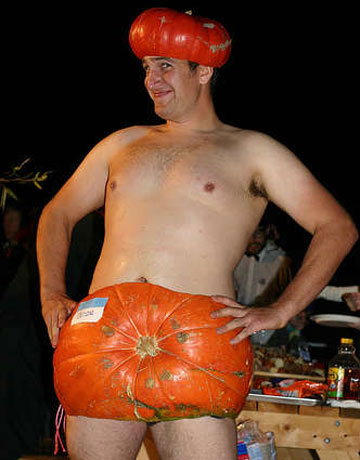
    One Halloween participant properly respecting the Celts.
    One Halloween participant properly respecting the Celts.

    Nobody ever told me what Halloween was about. I just learned to associate it with costumes and candy from my mom. It’s kind of like St. Patrick’s Day, which (you would think) is not too relevant to Americans that lack origins in Ireland, but is extensively used to increase sales and get people drunk. The fact is, today, that all Halloween really is about are costumes, candy, and partying. Most holidays end up being just another reason to party in America, but Halloween is the most notorious for partying being its sole purpose.

    Ask around, especially on campus, and people will have a whole slew of methods for celebrating the holiday. If a person has kids, they will dress their kids up and walk around to get candy on Halloween. Some folks may stay inside and hand out candy to other people’s kids if they feel up to it. Those who don’t have kids will probably dress up and get drunk.

    That’s about it.

    I could talk about the implications of the most prevalent American Halloween costumes featured in our local costume shops (which are perfectly in tune with the holiday’s roots), but everyone knows that it all pretty much ranges from “sexy nurse,” to “sexy M&M”  or “sexy pirate” for women, and “pirate,” to “caveman” for men. Most Halloween emphasis is placed on the costume. The rest is on the party or the candy.

    It doesn’t have anything to do with any of the reasons it was created. Sure, there’re Jack-O-Lanterns that have survived in homage to ol’ Stingy Jack, but does anybody reading this know about him (assuming that any one of the extremely cool tales about him is the one responsible for the tradition)?

    I say, since Halloween seems to just be an arbitrary holiday nowadays, that we change the name completely, maybe to “Sexy Drunk Candy Day.” Let’s reconstruct the reality of Halloween. Why not?

    – Chad Darrah

  • Costumes, Candy, Consumption

    Most Holidays in the U.S. revolve around consumption.  Christmas decorations are out before Thanksgiving, Valentine’s Day candy is in stores before Christmas, and we seem to be developing more and more reasons to shop.  For example, Martin Luther King, Jr. Day Sale, President’s Day Sale, New Year’s Day Sale, and of course Black Friday.  Think about Halloween.  What began as a day to celebrate the dead has now been commercialized as a day to dress up as a princess or a firefighter and get lots of candy.

    Halloween has become more than a children’s holiday in the U.S.  It has become increasingly popular for teenagers and adults to dress up for costume parties as well as the occasional trick-or-treating adventure.  Neighborhoods now encounter issues with, “How old is too old to trick-or-treat?”  Shops and advertisements have created the idea that everyone can be something other than themselves for one day out of the year.  On Halloween, we are allowed to be crazy, go outside our comfort zones, buy an outfit that we’ll never wear again and not feel bad about it. Although Halloween is an old holiday, it continues to evolve due to the branding and commercialism done by candy companies and costume retailers.

    Branding is one of the most important aspects of a holiday. Since Halloween traditionally is not really seen as a national holiday and more recognized as an event, branding becomes that much more important. Halloween gives organizations the opportunity to build relationships with their customers and could even allow for new entry points.

    For example, Apple actually has an application that is known as the Halloween Costume Generator. This unique app gives the user over 200 costume ideas and asks a few simple questions to try and cater to their costume needs. Because of Halloween and Apple’s name, it may have attracted a slew of new customers based off of this app alone. It gives Apple the chance to take a tradition and looks to attract newer customers that are drawn to Halloween. Halloween could also act as bridging capital for companies as they look to connect with customers that typically don’t use apps or may not even own an iPhone or an iPad. By introducing a famous “holiday” into the fold, Apple now has potentially attracted a whole new customer base that is customarily dominated by adolescents, tweens, and teenagers.

    It’s going to be interesting to see how companies respond to the many different holidays that are celebrated throughout the year as the times go by and the technology improves. Keep your eyes open, because you may never know what trend, organization, or seemingly distant customer community will attract you by partnering up with your favorite holiday.

    -Tiffany Evans, Deji Adeleke, Anna Kate Babnik, Carissa Niederkorn, & Katie Eagle

  • Seasons Greetings (For Whom, Actually?)

    The Yuletide season is drawing closer, as stores begin displaying decorations and Christmas music makes its seasonal debut on the radio. Some would say that the holiday spirit is in the air, but what is truly being celebrated? Is it a time of giving and charity, or a testament to our nation’s consumerism and emphasis on material possessions? As our earlier posts pointed out, advertising and marketing campaigns equate holidays to buying products and spending money. This deflects from the real meaning of the season of giving, and even excludes some less recognized holidays. These corporations need to realize that the holidays retain different meanings to different groups of people.

    Most people tend to categorize the month of December as the month of Christmas. Often times, the mainstream audiences overlook other holidays such as Hanukkah and Kwanzaa. This could result from the lack of media attention given to these holidays. Currently, the greeting card industry offers cards celebrating these events, but that is about as far as it goes. The attention is almost always directed towards Christmas. This could be because Christmas is more marketable, thus turning a larger profit for companies. In the end, a company’s main goal is to earn a profit, no matter what it takes.

    These corporate practices are not exclusive to Christmas. Other holidays display the same profit-minded trend as well. With the creation of Black Friday, Thanksgiving has become less about giving thanks, and more about marking the beginning of the shopping season. Valentine’s Day and Mother’s Day are synonymous with showing someone how much you care about them by purchasing a gift for them. Halloween advertises costumes and candy. Almost every holiday has some kind of themed product linked to it (clothing, party supplies, decorations, etc.), all in the name of profit. It could be argued that society has become so wrapped up in consumerism and receiving gifts, that the true meaning of holidays can become lost in the translation. In the corporate sense, holidays are about generating income and creating innovative new products. So who is really experiencing “Happy Holidays” around this time? Is it the corporations gaining substantial revenue, or is it the consumers providing the revenue?

    Sarah McIntosh, Eliza Wadson, Jocelyn Walson, Sean O’Connell