Tag: Happiness

  • The Happiest Place On Earth

    On October 25, 1971, Walt Disney World opened its doors to the world. The theme park is a tribute to the inspirational life of Walter Elias Disney and all of the dedication and loyalty he has contributed to the Disney organization. According to a Disney World history website, “Walt Disney World Resort was first envisioned by Walt Disney in the early 1960s to give millions of residents in the Eastern United States an opportunity to enjoy unique entertainment concepts which had become world-renowned at California’s Disneyland.” The Disney planning team at WED Enterprises (now known as Walt Disney Imagineering) decided to place this park in Florida for many reasons. The main one being that Florida is known for year-round wonderful weather. This allows operation to continue throughout the year so that their vacationers can come whenever they would like. Also, Florida is first ranked among the states in tourism.
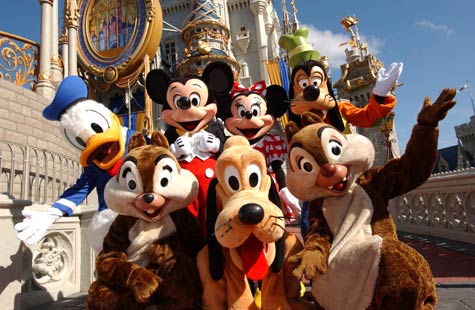
    “The Walt Disney World Resort that burst on the scene in the 1970s rapidly became the world’s best-known destination vacation resort with guests coming from all parts of the world.”  When Disney first opened, there was only the Magic Kingdom Park and two resort hotels. As time passed, it didn’t take long for Disney World to expand. Within 10 years, Disney World welcomed two new parks and six new resorts. By this time, their attendance surpassed 100 million visitors. A few years after this major addition, Disney also created the Disney-MGM Studies, five more resorts including its first luxury resort, Pleasure Island, and a water park. Today, Disney world offers four major theme parks, two water parks, six golf courses, 21 resorts, and the Downtown Disney dining/shopping/entertainment complex. The four Disney theme parks have attracted more than 700 million guests total.

    Disney’s brand is one of the most powerful brands in the world.  Most people think of children’s movies when they hear “Disney,” but the magic appeals to groups of all ages.  The Disney brand encompasses adventure, fantasy, magic, fairytale, and happiness.  Disney World is the place where imagination is not only allowed, but also strongly encouraged.  With over 25,000 acres of enjoyment and possibilities, Disney World has become a staple for anyone planning a vacation.

    -Kelsey Bendig, Brooke Keller, Andrea Blanton, Brian Burch

  • Oh Red, How I Love Too

    There are many legends and stories explaining the history of Valentine’s Day and St. Valentine, but one thing remains the same; Valentine’s Day is a holiday where lovers express their affection for one another.  Every year marketers use the same tactics to attract their love struck consumers into the arms of their products. Valentine’s Day advertisements are flooded with hearts, flowers, and of course the colors of love: red and pink. Red and pink symbolize passion and tranquility and are considered the most romantic colors. However, the appeal of generic pink candy and red roses will eventually run its course. So it’s time to spice it up and show your love that you put some real effort into this Valentine’s Day.

    M&M’s are promoting their brand this Valentine’s Day season by offering a sweet alternative to help consumers express their feelings to their loved ones.  The commercial features “Red,” the helpless romantic candy bite, who cannot respond to the love of his life with the three words, “I-Love-You.”  M&M’s understands that it is not always easy to express your feelings. With that in mind they are here to make it easier with personalized M&M’s. Popular messages include “Be mine,” “You make me melt”, “You Had Me at Hello” and “I Love You.” M&M’s also features a prepackaged Valentine’s Day blend with an assortment of colors, sayings and symbols. If that won’t cut it the Romance Bundle may be for you. It comes complete with a teddy bear and three bags of personalized M&M’s wrapped up in a gift box.  Remember, personalization shows that you took time out of your glamorous day to care!

    Through this strategic marketing plan, M&M’s enhances their brand by making it convenient for their consumers to spice up Valentine’s Day. M&M’s are one of the few companies that offer personalized messages on their candy products. This allows the company to stand out against the assortment of chocolaty competitors. Keep in mind that personalized candies aren’t just for Valentine’s Day, but also for any of life’s sweet moments.

    -Kelsey Bendig, Andrea Blanton, Brooke Keller, Brian Burch

  • What’s the Real Show?

    During a regulation NFL game there is a 15 minute break between the 2nd and 3rd quarters. This halftime break was originally instituted so the participants of the game could catch their breath and re-energize. During the Super Bowl, halftime lasts for a minimum of 30 minutes. Not only is that plenty of time for a player to catch his breath, that could allow him an opportunity to take a nap and check some emails. The mid-game break is actually long enough that coaches usually alter practices leading up to the big game in order to prepare their players for dealing with the extended down time. Despite this, there has never been a serious motion to shorten the length of the break. On the contrary, every few years halftime will run a little long to better accommodate the length of more extravagant halftime shows.

    This presents an interesting phenomenon. The Super Bowl, the game that decides who the best team is in the highest level of the most popular sport in America, is consistently interrupted for at least 15 minutes more than is necessary so an assortment of washed up and unknown artists can perform for a crowd that has paid at least double the average monthly income for a ticket to the game. It is widely known that companies spend millions of dollars for a chance to slip a commercial in between the biggest football game of the year, but this event has become so large that the game itself is being postponed in order to make room for the event that surrounds it. That’s the kind of marketing that is normally reserved for religious holidays and national celebrations.

    So what makes the Super Bowl half-time show so special? It is the second most anticipated part of the event, besides of course, who wins the championship.  The hype of who is performing is always a boost for the performers publicity, but what if Madonna blows it like the Black Eyed Peas did last year?  What will that do to her brand as being Madonna, the Queen of pop? There is a lot at stake when involving yourself in the biggest event of the year.  Let’s just hope there are no wardrobe malfunctions or fumbled lyrics this year.

    Read more about the halftime show here!

  • The Origin and Fun Related to the Easter Holiday

    Spring is just two days away! The flowers are beginning to bloom, and the birds are finally singing a happier tune and this means that Easter Sunday is just around the corner. Easter Sunday falls on April 24th this year (a little late than usual) and the thought of chocolate, egg hunts, pastel colors, and of course the famous Easter Bunny, come to mind.

    However, where do all of these branded traditions relate to the Christian tradition of honoring the day Jesus Christ rose from the dead?

    Well, there is no connection, simply just another day to eat candy. But, there is some interesting history behind the Easter Bunny, eggs, and how they are associated with springtime.

    The origin of the Easter celebration can be traced back to pre-Christian Germany during the 13th century, according to the University of Florida’s Center for Children’s Literature and Culture. In Germany, people worshiped several god and goddesses including the Teutonic deity Eostra. Eostra was the goddess of spring and fertility and interestingly enough her symbol was the rabbit. The rabbit is a pagan symbol for fertility.

    Also, the season of spring symbolizes new life and rebirth.

    The Easter bunny, a counter part to Santa Claus, dates back to the 1500s. In 1680, the first published story about a rabbit laying eggs and hiding them in a garden was printed. Soon after the German settlers arrived to the Pennsylvania Dutch country, the word about the Easter Bunny traveled and became known as one of childhood’s greatest pleasures.

    On April 1st check out the movie “Hop”,  which blends both art animation and live action in a film with the voice of Russell Brand. The teenage son of the Easter Bunny leaves his home on the eve of taking over the family business in pursuit of his dreams, to become a drummer. “Hop” stars James Marsden, an out of slacker business guy, whom accidently hits the Easter bunny. This movie gives the story of the origin behind Easter and provides humor to this holiday that is dated back to the 1500’s. This movie allows the viewer to see someone else’s meaning behind Easter and how this holiday makes a brand for itself.

    -Micaela Fouhy, Lindsey Baggett, Drew Mayer, Will Cosden, Brianna Golden

  • Impossible is Nothing

    I’ll always remember how I felt when I was about to graduate from highschool – excited, elated. I knew I was only a summer away from moving to the beach where I would be at UNC Wilmington for the next four years.

    Once I was here Wilmington soon became my community, UNCW became my home, and the people became my family. But I never expected the past four years to go by so fast. So now, with only weeks until graduation, and as I look back over my experiences, and forward to what comes next, I don’t know how I feel. There is a crazy mix of emotions. I’m excited  for the next step in my life, but sad to close the door on this chapter. I’m confident in my abilities and skills, but terrified of no longer having a safety net to catch me if I fall.

    It didn’t take me long to fall in love with UNCW, and especially the Wilmington community. The idea of staying in Wilmington after graduation was always something that I dreamed about. At the same time, I was always warned to not get my hopes up about that because there just aren’t that many jobs in the communication field in this town. But, there is something to be said about working hard, not giving up and never settling for anything other than what you really want. I am happy to say that I will be staying in Wilmington after graduation with a job in public relations.

    -Nicole Doherty

  • Finding social capital in Wilmington, NC

    We have been discussing social capital and how it contributes to the building of community for several weeks, and now we want to look at examples of businesses and organizations in Wilmington that foster social capital. We hope that by providing examples like this, the concept of social capital will become more concrete.
    For over a year and a half, I worked at a small, locally-owned coffee shop on Wrightsville Avenue called the Smudged Pot. It is no longer in business, but it had been there for over 15 years before the owner finally sold it. The Smudged Pot was small and located in an old building with a rundown-looking parking lot and worn out floors.
    It wasn’t much to look at, but it had the most loyal clientele I have ever known. The same people came in every day, same time of day, same drinks, same stories and jokes. Friendships were built, families were formed and contacts were established – all while getting your morning (or afternoon) cup of coffee.
    Saturday mornings in the Smudged Pot were an experience not to be forgotten. Families with young kids, a few people with their well-known and much-adored dogs, several residents from nearby neighborhoods, a retired man who knew everyone in Wilmington along with their life story, and a couple baristas serving the coffee was the familiar Saturday morning scene.
    Strangers became friends, friends became family, and sometimes they became employers. In a town that can sometimes feel bigger than it is, places like this are essential to building positive social capital.

    Nicole Doherty

  • Are you indispensable?

    Are you indispensable?

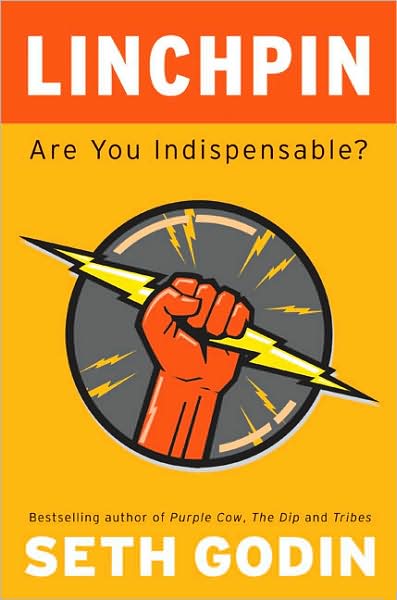
    Seth Godin asks this question in his new book, Linchpin.  And one response is “no, I’m not indispensable, I’m part of a bigger story that will go on without me.”

    But this is not what Godin is saying. He’s not waiting for you to be deemed indispensable by others. He’s asking you to see how acting as a linchpin makes you inherently indispensable, not because of who you are but what you do.

    Full disclosure: I require my Intro to IMC class to follow Seth’s Blog. I don’t do this because I’m a blind Seth Godin parroter who thinks every word he utters is chocolate-covered goodness.  I require my IMC class to follow him so that they are introduced to a new way of thinking, to see the possibilities of a productive, virtue-driven life. Agreeing or disagreeing with Seth is not the issue. What is the issue is that he makes plain what he believes, and he tries to deliver on that every day. This coherence between word and deed is what makes him worth following and reading. Of course you should question what Seth says. I would think he’d be disappointed if you didn’t.

    Back to Linchpin. Reading it is like reading his blog; it’s brimming with short, manageable bites of observation.  He observes that being a cog in a machine is what we’ve been trained to do through school society, culture – what he calls “the industrial machine” (6). Being a linchpin, however, is a process through which we can break free from mediocrity.

    The most applicable parts of this book for undergraduate students are when he talks about how to become a linchpin while in college.  Getting passing grades, finding the easy way through school, and partying all the time are not – surprise!- the ways through which you become a linchpin.

    However, Godin gets a little heavy-handed when he talks about teachers who do nothing more than keep students quiet and unquestioning. I’m sure there are teachers who fit this profile, but I personally don’t know any. I’d like to offer a different perspective – and students, take note: most of the teachers and professors I know are trying to stimulate their students’ intellectual curiosity in every way possible.

    Every academic conference I attend offers formal and informal spaces for sharing teaching ideas that encourage active and engaged learning. We are officially assessed by our institutions in performance reviews for teaching capability, and we are unofficially assessed by students every day, online and off.  We have Centers for Teaching Excellence on campus whose staff offer us training, inspiration, and encouragement to teach, delight, and move our students. I have met faculty at other universities who promote the theory and practice of our field through their online presence. My colleagues in my department and my professors in my graduate program model this commitment to helping students become linchpins. Godin got it almost right in Linchpin; I thought I’d offer a more textured account of what is going on in the academy from a front-row seat.

    To conclude IMC-Hawks Book Week, I’d like to recommend everyone – especially students – read Linchpin and the other four books we’ve reviewed this week. Keep demonstrating the intellectual curiosity that will help you become a linchpin in a productive life.

    Jeanne Persuit, Ph.D.