Tag: Football

  • The Evolution of an Icon: Lady Gaga’s Brand Image

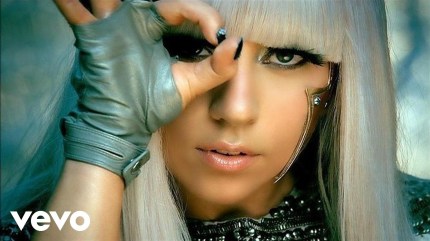
    This year’s Super Bowl showdown between the Atlanta Falcons and New England Patriots is just days away. More than 100 million people tune in to the football game annually, but many of these people only care about the iconic halftime show performance. Over the last few decades, some of the world’s biggest stars have hit the stage, drawing in viewers from all walks of life. This year’s Super Bowl halftime performer is the one and only Lady Gaga.
    maxresdefault

    When Lady Gaga came onto the pop music scene in 2008 with her hit single “Just Dance”, the world did know that a pop culture icon was being born. Over the next few years, she would go on to release single after single that topped the charts. Her fame grew exponentially and she gained a loyal fan following that would praise her every move. Lady Gaga began to refer to herself as “Mother Monster.” Gaga sent a message to the world that she embraces the weird in people rather than criticizing them, and encourages her fans to not be afraid of being a little different.

    Aside from her music, one of the most iconic aspects of her brand image would have to be her out-of-this-world fashion choices. Fashion critics and fans alike would anxiously await for Gaga to arrive at red carpet because there was no telling what she would wear next. Lady Gaga’s raw meat dress from the 2010 VMA’s was arguably (but really there is no argument) one of the most memorable fashion statements ever made. 2010 MTV Video Music Awards - Show

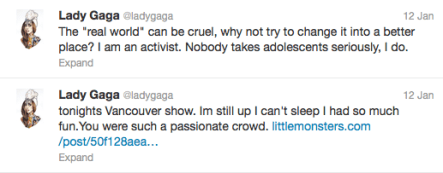
    While Gaga’s fashion choices seem to be a little less extreme in recent years, her advocacy for LGBT rights, women’s rights, and against sexual violence have certainly not slowed down. Lady Gaga has used her voice and massive following to fight for the rights of so many people. She has cemented her brand image as someone who advocates tirelessly for equality.
    lady-gaga-joanne-anderson-cooper-starting-conversation-on-sexual-assault-imasurvivor-whywomendontreport-tweet-3
    screen-shot-2013-01-13-at-8-56-35-pm

    With that being said, there is no doubt that Lady Gaga’s half time performance this Sunday will be anything short of iconic. What will she do with this massive platform? I think it is safe to say that a statement will be made. Do you think Lady Gaga will send a social message? Bring back the (now very very aged) meat dress? Or will she just captivate the world with her amazing vocals?

    Leave a comment down below telling us your 2017 Super Bowl half time performance predictions.

    -Jaime Mangold


  • Making a Difference Off the Field

    October holds several different meanings for the members in our society. It represents the beginning of the fall season and the theatrical holiday Halloween. To a smaller group, it is about National Bullying Prevention Month, which was recognized by the United States since 2006. October also stands for a nationally recognized, very important cause that affects thousands of individuals every year: “Now, therefore, I, Barack Obama, President of the United States of America, by virtue of the authority vested in me by the Constitution and the laws of the United States, do hereby proclaim October 2012 as National Breast Cancer Awareness Month.” As individuals in our society are guided by various narratives and learn from different experiences, Pittsburgh Steelers’ running back and former Carolina Panther DeAngelo Williams finds a special importance in the month as he unfortunately lost his mother to breast cancer in May of 2014.

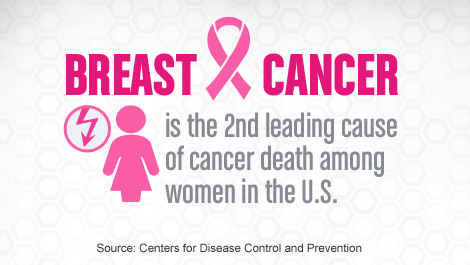
    In the book “Communication Theories for Everyday Life”, Walter Fisher, a contemporary theorist, speaks of how people are strongly influenced through storytelling: “Fisher believed that human beings are by nature tellers of stories… that the world was best understood as a series of stories that compete for our attention and adherence,” (Baldwin, Perry, & Moffitt). Individuals process and evaluate the persuasiveness of competing stories using narrative rationality, but the stories must also be popular or understood by the masses to have a full effect. About 1 in 8 women will develop invasive breast cancer during her life and about 40,290 women in the United States are expected to die in 2015 from breast cancer. However, our society didn’t quite stress the importance on the issue until recently and the actions that DeAngelo Williams has taken along with the NFL community have helped increase awareness immensely. Breast cancer is a part of his family’s story like many others, but he has used his stage as an NFL player to help take the initiative and his passion about raising awareness increases participation from other members of the NFL community and American society.

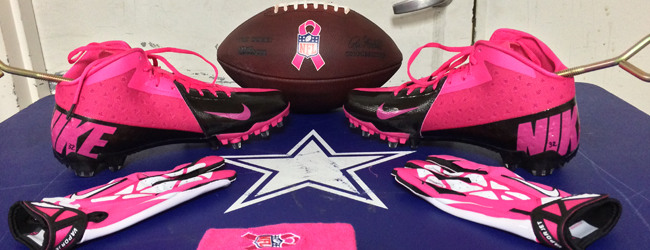
    The color pink is now extremely prominent on the football field during National Breast Cancer Awareness Month and a sport so heavily reliant on the bravado and testosterone of its players are now seen wearing pink gloves, shoes, and towels with a pink breast cancer awareness ribbon. Williams is the pioneer of this tradition and it is amazing to see where it has gone. It initially started in the summer of 2009 when Williams asked Riley Fields, Panthers director of community relations, if he thought the NFL might consider letting players wear pink cleats in addition to other pink apparel the league already planned to allow. Not only do players, coaches, and game officials wear pink, but many of their game-worn items are auctioned off with direct proceeds going to the American Cancer Society.

    The role that breast cancer played in Williams’ life left him compelled to help try to fight a disease that will continue to plague the lives of so many others. The support he has received in his efforts have allowed for the widespread increasing awareness of breast cancer in the month of October. Even the video game “Madden NFL 16” has incorporated the ‘pink treatment’, as Williams’ character in the game reflects his decision to dye some of his dreadlocks pink last September in honor of his mother. In a recent effort to increase awareness, Williams uploaded a two-part video to Instagram with him as the focal point of a commercial to help spread awareness with the caption: “This new TV commercial is dedicated to my mom, my 4 aunts, and women everywhere affected by Breast Cancer. I love you. #WeAreInThisTOGETHER.” It can be seen at https://www.youtube.com/watch?v=F5vahCK0pyg.

    -Griffin Weidele, Austin Moody, Luci Keefer, Allen Wooten, Scott Uraro

  • The Super Bowl will never be the same

    The Super Bowl draws in more than 100 million viewers each year from around the world. Some watch for the game but many of these viewers only watch for the debut commercials. Companies spend upward of 4 million dollars for one 30-second spot during the four-hour broadcast.

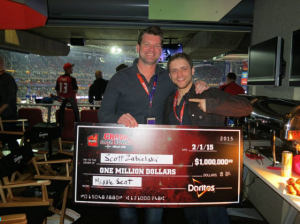
    Although we will still see the classic Budweiser and Coke commercials, Doritos will be ending a 10 year tradition. Since 2006, Doritos has run their “Crash the Super Bowl” campaign, which allows consumers to submit a 30-second ad that could be aired during the Super Bowl. This has generated some of the top Super Bowl commercials of the last decade.

    Screen Shot 2015-09-10 at 2.55.19 PM

    After 9 years, 8 installments, 32,000 entries and 7 million dollars in prizes Doritos is abandoning the project because of risks involved. The company feels the contest would no longer be profitable because of increasing prices for ad space.

    Screen Shot 2015-09-10 at 3.00.28 PM

    On one side, Doritos now has the reins of their Super Bowl ads; however, ending the contest could upset participants and viewers that have followed the campaign. While we still have the 2016 “Crash the Super Bowl” ad, it remains to be seen how Doritos will position themselves for Super Bowl LI.

    Do you think Doritos’ decision to end the campaign will impact them positively or negatively?

    -Nick, Melanie, Mary & Patrick

  • Undefeated since 1947

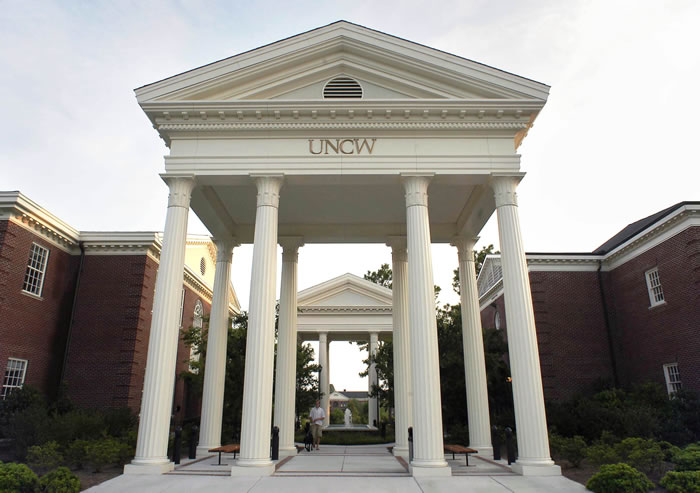
    Hearing the roar of fans painted in teal, navy blue and gold on Saturday afternoons brings excitement to our bones. One can only wonder why UNCW lacks the school spirit that a collegiate football program can provide. If a single sport unifies the student body, then why not take immediate action?

    According to ESPN, more than 600 universities contain collegiate football, 32 teams are located in North Carolina. So, why doesn’t UNC Wilmington have a football program? Location, finances, and UNCW’s brand image can all contribute to that fact.

    The SeahawkUNCW’s newspaper states, a university requires roughly $50 million dollars to start a collegiate football program. Raising the tuition at UNCW would be one option if a collegiate football program were desired. A charity fund needs to be set up, but the amount donated is only 1/6th of the money UNCW receives annually. 

    arch03

    http://uncw.edu/fll/latin/

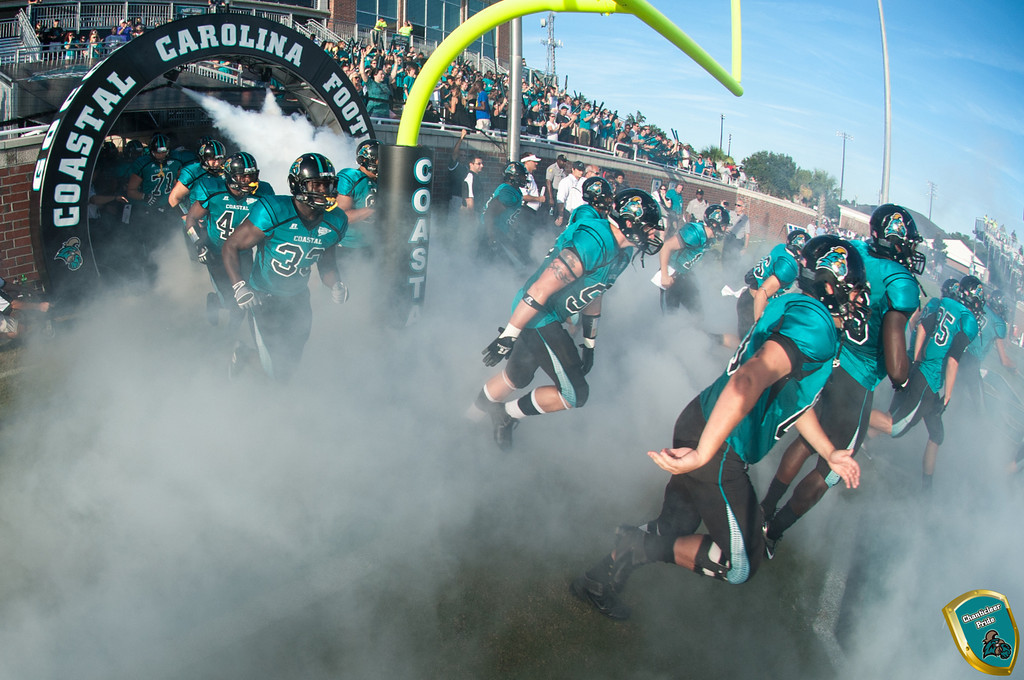
    Size is a factor on whether a university contains a collegiate football program; Coastal Carolina located in Conway, South Carolina recently added a collegiate football program and revamped their stadium in 2003. Compared to UNCW, Coastal Carolina has similar faculty/staff to student ratio, location (distance to local beaches and cities), and similar student enrollment. Bottom line, the main difference between UNCW and CCU- school spirit. Does a university with a collegiate football program contain greater school spirit? According to USA Todayschool spirit within the student body is greater at a university that contains collegiate football. This sport helps to unify the student body unlike any other collegiate programs at universities.

    JLG1838-XL

    http://www.coastal.edu/athletics/form/

    But, does a football program align with UNCW’s brand image? We believe the answer to that question would be no. UNCW encompasses a laid-back, chill, and relaxed atmosphere. Our image is centered around the hype of Wrightsville Beach, rather than tailgating football games. UNCW’s image is reflected to its audiences as a stress-free university and town, and the idea of joining a mellow student body attracts prospective students. Part of what facilitates UNCW’s relaxed and personable image, is the small class sizes and opportunities for hands-on applied learning. If the university shifted its focus from academics to athletics, the financial strain would likely cause a greater faculty/staff to student ratio. This would affect UNCW’s brand image, as the key ingredient that helps build the brand would not be as strong. Are we willing to give up one of the aspects that differentiates UNCW from its competitors? A part of UNCW that provides an academic advantage to our students for the addition of a collegiate football program, making UNCW similar to other North Carolina universities?

    All factors aside, the real question lies with whether students desire a collegiate football program. A good researcher does their homework and we spoke to 10 students to get to the bottom of this matter. A large chunk of the student body opposed having a football team, citing it changed UNCW’s brand image. Of the students surveyed, 65% supported a team, 25% opposed, and 10% was neutral. We did find those who supported a UNCW football program were very passionate. Those students felt football would bring the student populace together. The main sticking points are location and money. However, all obstacles can be reduced if the student population united their efforts. As a UNCW student, is a collegiate football program worth the money? Are you willing to change UNCW’s brand image, evolving UNCW into something more?

    -Jonathan Callahan, Erin Fouhy, Julia George, Joseph Hines, and Sarah Suggs

  • Tailgating Musts or Bust

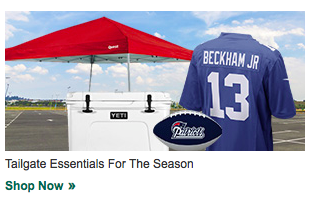
    Football season starting up and so are the advertisements. Target, Dicks Sporting Goods, and Best Buy are some retailers advertising “essentials” for game day and football season in their print ads and online.

    Screen Shot 2015-09-06 at 2.58.57 PM

    http://www.dickssportinggoods.com/home/index.jsp

    By defining particular items as necessities for football season and tailgating, retailers are creating their own definitions of tailgating and narratives of what the tailgating experience should be like for consumers.

    Target’s ad includes food items such as pre-made pizza and Coca-Cola, but also advertises TVs, grills, and fan gear. Dicks Sporting Goods’ ad includes pop-up tents and chairs, fan gear, coolers, and tailgating games such as corn hole. With Best Buy, all of their “necessities” are electronic – including cameras, speakers, televisions, and cell phone cases.

    Screen Shot 2015-09-06 at 3.02.12 PM

    http://weeklyad.target.com/site/#/wilmington-nc-28405/page/Target-150906

    By showing consumers products that are considered “game day essentials,” retailers are building their own narratives about the tailgating experience. Each retailer’s idea of what commodities that experience requires may be different based on the products sold at each business and their target audiences. Those that want the full experience are more likely to buy into a store’s ad and purchase the products retailers suggest.

    It’s not necessarily about what the consumer realistically needs for a tailgate. These ads for “must have” items are more about creating an idea that makes a consumer feel that without those items, they aren’t getting the best game day experience.

    These advertisements are an example of how today’s market is controlled by commodity culture – we define ourselves by the stuff that we buy. Typically, big businesses are able to sell higher ticket items based on a consumer’s need to feel like they fit in. Both the beginning of football season and the end are big opportunities for retailers to convince consumers that these products are what they need for the perfect football celebration. Football fans define themselves by having the best game day items for the season; new TVs, new grills, new gear, new everything. Retailers are ready for football season, and now the fans will be too.

    -Amanda Kluttz, Kendall Catterton, Meleah Lewis, Luke Matheney, and Dan Dawson

  • Are you ready for some football? Tom Brady is!

    With the NFL’s first regular season game on Thursday, sports fan across the nation anticipate returning to their fantasy football leagues, their favorite team’s bar, or even just their living room couches every Sunday to watch professional football. The NFL will dominate the American sports and entertainment industry for the next seven months, especially the TV ratings, and will continue to rake in a massive financial profit. As the NFL and its fans prepare for the new season, they continue to deal with incidents from last season and question if the commissioner of the NFL, Roger Goodell, will be able to retain his position much longer.

    The NFL has been involved with a plethora of negative PR instances in recent years and the organization does not always handle these situations appropriately, which only leads to backlash from the various publics and football community. Commissioner Roger Goodell’s decision to suspend New England Patriot’s quarterback, Tom Brady, for four games at the start of this season was overturned last Thursday by Judge Richard Berman. Tom Brady’s suspension was over the highly publicized “Deflategate” scandal, concerning his potential involvement in the incident that occurred before the Patriots win over the Seahawks earlier this year in Super Bowl XLIX. After the federal judge’s decision to overturn the suspension, the NFL is once again in a terrible position as the season is about to get under way and as reporter Bob Kravitz put it, “leaves the NFL with ‘egg on their face’”.

    It is clear that Commissioner Goodell picked the wrong fight with NFL poster-boy, four-time Super Bowl champion Tom Brady and there are few actions the current commissioner can take to rebuild his image. He has already lost the trust of players, has a dreadful win-loss record in court, has displayed awful values of the NFL, and lost his credibility. For example, Ray Rice was initially only suspended two games for punching a woman, a charge much more serious than a couple footballs being slightly deflated. However, the NFL ultimately suspended him indefinitely, which was eventually overturned in court through an appeal by Rice.

    In addition to Ray Rice, Adrian Peterson, Greg Hardy, CJ Spillman, Ray McDonald, and even Jameis Winston are no longer just incidents dealing with violence or domestic abuse. These negative occurrences are all actively shaping the NFL community and the image that the NFL portrays. It tends to show that the NFL does not maintain outstanding values and they prioritize morals a bit differently from the American public. All of the players previously mentioned are all still eligible to play in the NFL at this current moment, yet Tom Brady was nearly suspended for four games for his knowledge of footballs being deflated, making one question the values of the NFL even more intently.

    Following the Ray Rice incident last year, polls showed that the American public was already calling for his resignation. If Goodell is to maintain his role as commissioner and face of the organization for the foreseeable future, he needs to try to recreate his image since it is viewed so negatively. He needs to speak openly about the instance, consider relinquishing his disciplinary rule, hold a press conference, or use the NFL’s PR department to the best of their ability. As the rest of American society prepares for what is the highly coveted and entertaining NFL season, the NFL organization will attempt to wipe some of the ‘egg off their face’ that the Deflategate deliberation left on.

    – Griffin Weidele, Austin Moody, Luci Keefer, Allen Wooten, Scott Uraro

  • Tackling Consumers

    A round of applause for the Seattle Seahawks as the champions of the Super Bowl XLVIII. Even if you were not a fan of either the Broncos or the Seahawks, it almost a sure bet you tuned into the game. Every year over 100 million people observe what is arguably the sporting event of the year.

    The Super Bowl, however, is known for more than a fierce round of football – it’s known for the commercials. Here is time where advertisers pull out all the stops. Audiences expect commercials of both artistic and humorous grandeur. Prices for spots annually rise, this year topping at $4 million for a 30 second spot.

    Yet companies don’t spend millions for spots merely to entertain viewers. Unlike in decades past, advertisers are no longer in the business of explaining, but in the business of convincing and reinforcing. This is often the purpose of commercials we see every day. So, other than the guaranteed viewership, what is the worth of a Super Bowl spot?

    Credibility, claims Joe Glennon, assistant professor of advertising at Temple’s School of Media and Mass Communication. In an article for the Philadelphia Business Journal, Glennon explains that many advertisers walk away from the exorbitant price tag due to the simple financial standpoint that $4 million for 30 seconds is a largely impossible return on investment. He explains that of those who do justify the expense there are two primary advertisers – large, well known, companies who use the spots to reinforce brand propensities among current users, and smaller companies who use the spot as a means to launch into the market by gaining notoriety.

    So, in the myriad of last night’s entertainment, we have selected four commercials that beautifully represent the two credibility building categories Glennon noted; some attempting cut into, or further into the market, others reinforcing brand attitudes.

    Squarespace

    Squarespace created a spot that was a humorous, but accurate depiction of what the Internet is like – cluttered. Personifying memes, obnoxious advertisements, and the “duck face”, Squarespace offered to consumers that when using their services for website building and maintenance, the company could alleviate such distraction. So, why did Squarespace make it onto the list today? Simple, the Squarespace commercial introduced the company values and brand in a creative, weird, funny, and somewhat true way. Justifying the $4 million dollar expenditure seems to working so far – we are talking about – there’s probably a good chance other people are too.

    WeatherTech

    Although the ad was neither humorous nor heart-warming, WeatherTech’s commercial built on a sacred theme in the Super Bowl: American pride. Their slogan, “American Factories, American Raw Materials, and American Workers”, was enough to draw people’s interest and introduce their company as a defying the odds, sticking with their gut, and overcoming obstacles many American companies have faced. During a time when many gripe about US jobs becoming outsourced, it’s hard to say that WeatherTech didn’t prove their credibility with their national pride.

    Cheerios

    Yes, the adorable little girl is back and this time she is getting a brother. This 30-second ad wraps up what all of us remember of Cheerios and what the Cheerios brand wants us to remember about them; families coming together over love. Here Cheerios is showing how they are continuing to be a hearty and healthy part of growing families.

    Bank of America/(RED)/U2

    What does this commercial not do? It introduces U2’s new song “Invisible” (there is still time to get your free download if you haven’t done it), it highlights and raises money for the charity (RED), increases knowledge of AIDS/HIV, and shows Bank of America’s humanitarian efforts. Reinforcing their slogan, “Life is better when your connected”, Bank of America is giving a chance for its customers and the world to connect by helping to end an epidemic.

    What is your opinion? Do you think these commercials deserve a spot in these categories? What other commercials did you see that introduce the brand or reinforce existing brand propensities?

    Caroline Robinson, Savannah Valade