Tag: Fall

  • Spooky Scary… Roller Coasters?

    If you grew up in the Carolinas, chances are at some point you’ve been to Carowinds, our adrenaline filled pride and joy. For those of you who are unaquainted, Carowinds is an amusement park situated right on the border of the twin Carolinas off of Interstate 77. The park is in service starting March of each year. It closes in November, but not before it’s biggest event of the year: SCarowinds.
    2008_ScarowindsLogo_500

    SCarowinds is Carowinds’s annual Halloween event that was first introduced in 2000. The park is redecorated and showcased as a spooky Halloween adventure. Major traffic areas are repurposed as “scare zones” and several new mazes and attractions are opened with creepy undertones and scares waiting around every corner. Carowinds hires people every year as designated performers to both man spooky attractions and wander around the park scaring guests. SCarowinds is more than just a pretty remodel though. Every year, SCarowinds makes up some of the highest ticket sales and attendance numbers for the park, so much so that they are able to split sales between the daytime park and the SCarowinds event and charge admission for both. For a consumer, this can get expensive very quickly, especially when factoring in parking.

    scarowindsmazelinup2015

    So what is the draw of SCarowinds then? Why does it draw in so many people, even moreso than the regular daytime park? A big part of this is audience engagement. According to S. Alyssa Groom an organization can maintain its relevance , “by first recognizing how this moment of engagement and interactivity changes everything.” SCarowinds is an interactive event consistent with Halloween’s brand. As ghoul’s and goblins roam the park, the screams of fear are also screams of approval.

    Carowinds is a big draw during the summer, when everyone is off of school and work. However, during the later months, specifically after August, attendance numbers start to drop dramatically due to the removal of a large portion of their target market due to school. However Carowinds still has to make money, so shutting down the park for that time is not possible. Instead, Carowinds stops operating during the week, since their visitor counts would be so low, and moves to a more efficient method of opening for weekends with their SCarowinds facelift. Carowinds cashes in on this with their annual event by building on the hype and mystery of Halloween.
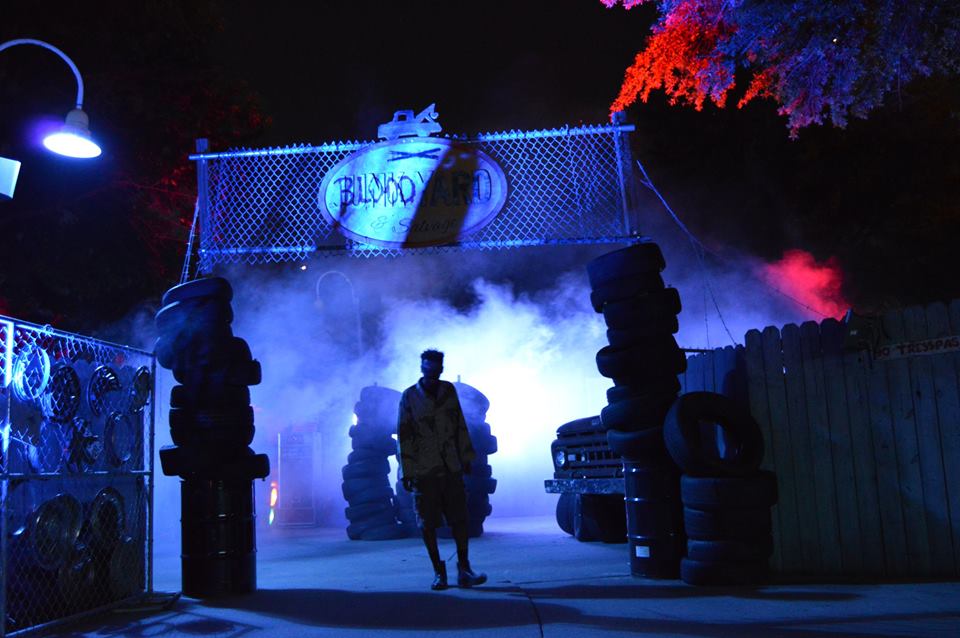
    Scarowinds 2015

    “Second, the pervasiveness of “engagement” as a way of life elevates the centrality of communication to human experience.” By allowing people to be involved rather than just be spectators SCrowinds has become so pervasive it is accepted as a Halloween tradition by many. In its 15th year SCrowinds continues to be an interesting example of a brand shifting their image to better fit the seasonal craze. In a way, it’s similar to pumpkin spice and peppermint in that it plays off of our preconceived notions of holidays. When explaining how SCarowinds became so successful, it really boils down to two concepts: targeted marketing and a unified message.

    “And third, marketing can no longer do it alone.” Carowinds focuses on penetrating the seasonal market during September and October and takes advantage of the craze around Halloween, using it to boost their numbers. Halloween is an incredibly popular holiday among younger children and older students, so Carowinds focusing on engaging the kids which in turn brings parents along. Carowinds unifies its advertising to show the SCarowinds event almost exclusively because then they can market both the park and the event at the same time.Furthermore, kids offer the unique advantage of instant viral marketing. By establishing themselves firmly in kid’s idea of Halloween, Carowinds gets the advantage of becoming the “cool” thing to do around school. While this isn’t a direct effort by Carowinds, it contributes greatly to their brand image and the sales of tickets.The parks ability to effectively communicate its ideas internally and externally allows for successful IMC throughout the event.

    Carowinds’ also engages their audience through their social media accounts. Their Facebook, Twitter, and blog attracts millions of people from the Carolina’s and surrounding areas to this frightful event. These social media outlets allow attendees to share their experiences and give newcomers an idea of what awaits, taking word of mouth marketing viral.

    So really, SCarowinds is just a big audience-centered advertisement for Carowinds. Carowinds knows that fads are powerful when it comes to advertising and caters to exactly what their audience wants to see in the best season to be spooky. By utilizing the engagement approach and cashing in on the seasonal craze, Carowinds firmly cements themselves as a part of Carolinian Halloween tradition.

  • Authentic in Oktober

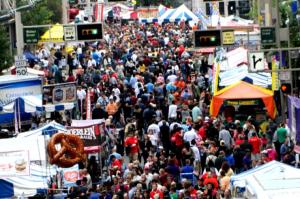
    With the turn of every fall season comes the anticipation of annual festivals, where locals can share in company, good food, and seasonal drinks. Arguably one of the most anticipated festivals every year is Oktoberfest. Oktoberfest was first held in Munich, Germany in the early 1800’s to celebrate the marriage of Louis I of Bavaria and Therese von Sachsen-Hildburghausen. The royal family invited all the citizens of Munich to join in the festivities that have since been called Oktoberfest. Now every year there are hundreds of Oktoberfests nationwide, with one of the more popular ones in Cincinnati, Ohio

    .Adam_Pferderennen_Oktoberfest_1823

    Because Oktoberfest is so popularized in modern society, it is hard to figure out whether it still holds true to its German heritage, as it claims to. The meaning and purpose of the festival has been hidden behind all of  the craft beer and turkey legs and, ultimately, commodified. However, as explained in Andrew Potter’s The Authenticity Hoax, there is a distinction between something being “genuinely authentic” and “fake authentic.” Potter says that to be genuinely authentic, one must recognize itself as a replica (or in our case, a festival based on another festival) whereas the fake authentic becomes something new, in its own right, without any resemblance to the old.

    OfestCrowd

    Oktoberfests are examples of the genuine authentic in our culture. The festivals do not claim themselves as the true Oktoberfest, but a replica of the festival and celebration held in Munich every year.

    Knowing what you now know about the original Oktoberfest, would you argue Zincinnati’s Oktoberfest, and other festivalss like this, is genuine authentic or not?

    – Nick, Melanie, Mary & Patrick

  • The North Carolina State Fair Has it All

    The North Carolina State Fair, an event whose humble origins begin with a small four day agriculture event held in 1853, has become a yearly tradition for many North Carolina natives. Much of the reason for the fairs current success is perhaps the diversity of attractions it offers. Whether you go for the fried food or displays of giant vegetables, livestock judging or pig racing, to peruse the craftsmanship in the Village of Yesteryear or to pursue the coveted prize of a giant stuffed animal at one of the many carnival games, there is a little bit of everything for everyone.

    2015 has already seen record attendance numbers with its first Thursday, the 15th of October, setting an opening day record at 47,677 guests, breaking the previous record set in 2010. Many more visitors will make their way to Raleigh as the week continues and they are drawn to the many events and attractions.

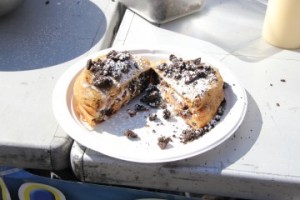
    Of the many events and attractions, perhaps one of the most publicized is the State Fair’s fried food that has become infamous for being as creative as it is unhealthy. As a part of the State Fair’s social media, there is a blog run by the fair called the Deep Fried Blog. Of this years many deep fried sensations, the star of the show is a newcomer called, “Fry Me Over the Moon”, a combination a Moon Pie, Hostess Cupcake, Oreos, and Reese’s Cups, all deep fried into a single creation. Not only has this been publicized on the State Fair’s blog, but many other media outlets have covered this State Fair delicacy such as WNCW, The News and Observer, and WRAL, just to name a few.

    Fry me Over The Moon

    While this modern fried phenomenon draws much attention, a less advertised, but long running tradition for many is the more relaxing Heritage Circle, a place where visitors can get fresh home made ice cream from the Grist Mill and listen to the line up of bluegrass musicians at the Bluegrass Stage. While bustling energy surrounds the novelty fried food vendors as people squeeze their way through the busier segments of the fair, Heritage Circle offers a completely different state fair experience. It is tucked away from the heavy foot traffic of the main paths in a much quieter wooded area where visitors can sit and enjoy the feeling of a simpler time.

    Heritage Circle

    Today’s fair goers are offered a wide variety of attractions that range from experimental to traditional. There is something for everyone this fall at the NC State fair grounds as the festivities continue until October 25th.

  • The fall of network TV

    With the start of fall comes much anticipated television network premieres. Major broadcasting networks debuted new series to compete with the established streaming community. Fox’s Minority Report, Scream Queens & Rosewood, ABC’s The Muppets, NBC’s Heroes Reborn, Blindspot & The Player, and CBS’ Limitless & Life in Pieces were expecting high ratings, but most did not meet expectations. The Muppets and Rosewood were the two exceptions.

    With Netflix growing to over 65 million subscribers, the streaming platform has started to gain control of the TV market. AdAge reported every single TV network drama that aired on Tuesday night suffered a double-digit decline in ratings. One theory that could explain the drop in numbers is the Media Ecology theory.

    Screen Shot 2015-09-25 at 12.04.21 PM

    Media Ecology theory is defined as the study of complex communication systems as environments, furthermore, how the medium in which the message is delivered is equally as — if not more — important as the message, itself. In this case, Netflix is taking advantage of its medium by being more convenient for the consumer. Viewers can stream content on multiple devices, anywhere, at anytime. According to Reed Hastings, Netflix CEO, all TV will move online by 2030, proving true to the theory.

    While Netflix is currently thriving, network TV still has an appeal to viewers. Families still watch TV together and the anticipation of a new episode each week brings viewers back; a few disadvantages of Netflix. Although streaming is convenient, some viewers appreciate the ability to follow a show together as a community. However, Hastings believes the transition to an online platform is “kind of like a horse – you know, the horse was good until we had the car.”

    Netflix-Streaming-Devices

    With networks still releasing shows next week, will they follow the current decline of network TV? As a viewer, do you prefer an online platform or network TV?

    – Nick, Melanie, Mary & Patrick

  • Pumpkin $pice

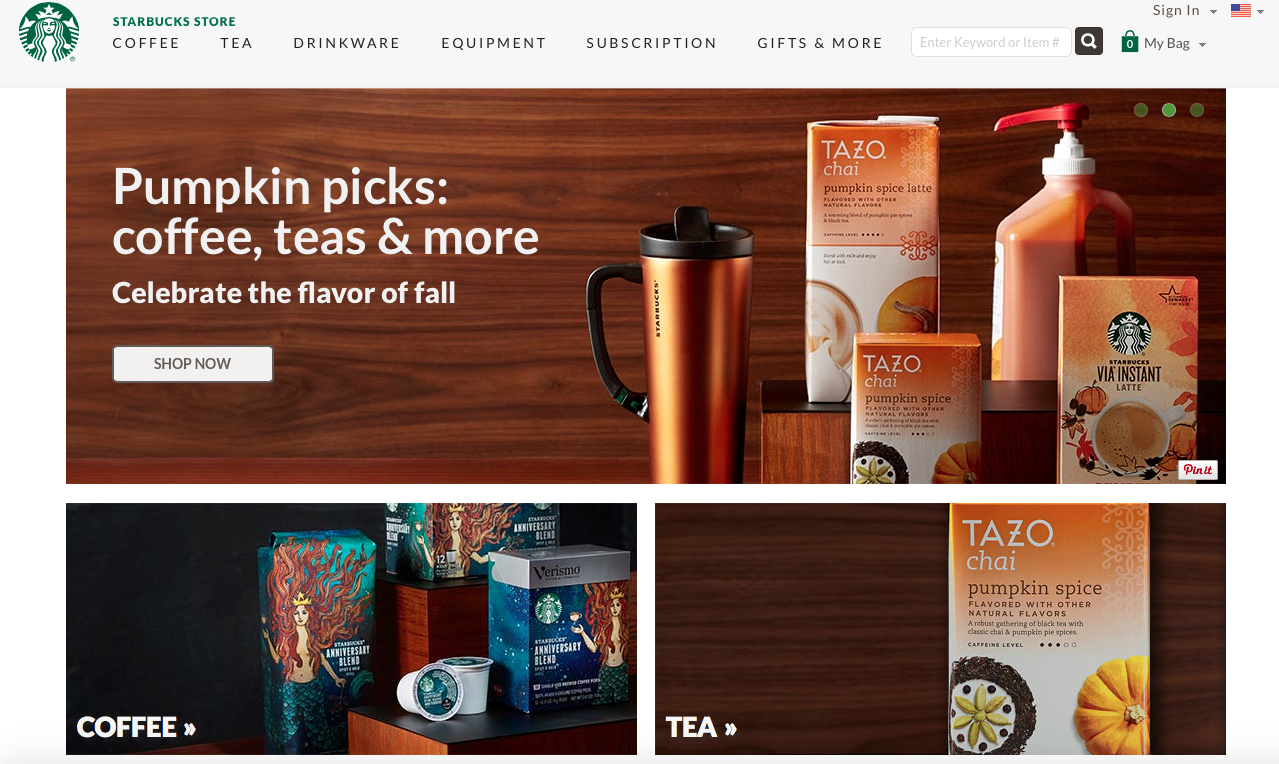
    Although today is the official first day of fall, pumpkin flavored lattes and #sweaterweather advertisements have filled our newsfeeds for weeks.  Preparation for America’s “favorite season” is a prime example of strategic planning when it comes to IMC.  Companies, such as Starbucks, take no mercy on branding fall for a profit.  Take a look at the Starbucks home page:

    Screen Shot 2015-09-21 at 1.45.54 PM

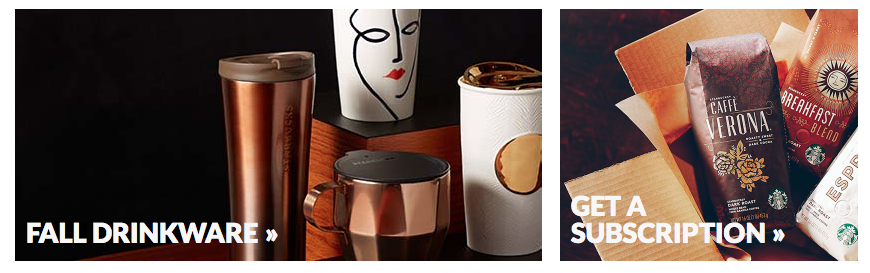
    “Celebrate the flavor of fall” with pumpkin spiced teas and pump bottles of artificial pumpkin flavor.  Starbucks goes above and beyond by defining fall and reminding us it is time to put a dent in the pumpkin population and enjoy this fantastic, fall sensation.  Keep scrolling and you will find the “Fall Drinkware” section of their website, offering a variety of different orange coffee mugs for about 20 bucks a piece.

    Screen Shot 2015-09-21 at 1.45.42 PM

    A little much?  Well, according to Fortune Magazine, Starbucks reported a 10% increase in the fiscal fourth-quarter sales in 2014.  Evidently pumpkin spice does come at a price.  The company is reportedly brewing up more ideas and plan to add to the recipe by creating a “fall flavored” line of sodas, smoothies, and yogurts.  Limiting the availability of these fall treats help build upon the chic image Starbucks maintains to its publics.  Though some may gasp at the thought of paying over 5 dollars for one of these sought after lattes, to many, fall just wouldn’t “be in the air” without them.

    S. Alyssa Groom wrote in her article, Integrated Marketing Communication Anticipating the “Age of Engage”, that it is now impossible to create a marketing plan to follow at the beginning of the year.  Starbucks’ creation of this fall line is a prime example of Groom’s theory.  The company has broken the marketing year into segments and focuses on specific aspects of what is popular and “hip” during that market period.  Groom also mentions that “marketing can no longer stand alone” and the importance of customer engagement.  Through social media pages dedicated to this fall line and the creation of hashtags, Starbucks makes purchasing one of their fall items interactive.  Allowing for customers to post pictures, tag the company, generate new hashtags and register for giveaways.  These strategies get the customer excited about going out and buying Starbucks products.  Customers now “buy into” the Starbucks brand, going beyond a simple cup of coffee.

    -Luke, Dan, Amanda, Meleah and Kendall

  • Semiotics of Halloween

    Fall marks the start of the holiday season, none more mischievous than Halloween. Through semiotics we use signs and symbols to interpret the world around us. Ferdinand de Saussure originally defined semiotics as a science that studies the life of signs within society, part of both social psychology and general psychology. When thinking what signs or symbols constitute Halloween, pumpkins, costumes, and candy may come to mind. These are consistent symbols in our society, but Halloween begins to represents different things as we get older. Younger children are only interested in trick-or-treating, carelessly walking through the neighborhood getting candy as a cautious parent or two watch from the bottom of each driveway. Teenagers tend to use the holiday in a more rebellious way as they cover trees in toilet paper, throw eggs at neighbors’ houses, and scare their younger counterparts. College students embrace Halloween as a time for costume parties and excessive drinking.

    Alcohol always seems to increase the chance of risk for any situation. For those who tend to get a little too rebellious, Halloween can represent a night they wish they could forget. Outrageous, appalling actions will also change the image portrayed by an organization, a university, and its students. East Carolina University suffered such an incident last year the day before Halloween when a large party at Riverwalk Townhomes could not keep people from attending and eventually turned into a riot. The following night being Halloween, WITN news reported, “In an email to all students last night, Chancellor Steve Ballard said any student involved in illegal activities on Halloween or the day after will also face possible disciplinary action from the university.” Although a diverse group of people were responsible for the riot, ECU’s image was put to shame and must implement a plan to restore their image to their publics. Semiotics is the science of communication and sign systems and the ways people understand phenomena and organize them mentally. The students that were a part of the riot last year have a different understanding of the semiotics of Halloween than most others would that did not have such an experience. The pumpkins and costumes may have been replaced with handcuffs and drinking tickets, replacing the previous symbols they associated with the holiday.

    Particularly in America, symbolism is inspired by classic film like Dracula and Frankenstein, and characters such as these are artifacts for understanding a typical American Halloween. Black and orange define Halloween as the traditional colors, supernatural forces and spirits of the dead are brought back in the societal light, and black cats and spiders represent the bad omens that the holiday can bring about. For a number of ECU students, Halloween itself was a bad omen and the university is still dealing with image issues as they near the next Halloween. No organization seems like an inviting place after a major controversy that negated societal values. Remember to enjoy Halloween, but not too much!

    – Griffin Weidele, Austin Moody, Allen Wooten, Luci Keefer, Scott Uraro