Tag: culture

  • Grey’s Culture of Creativity

    Who knew it was possible to turn a small retail shop into one of the world’s most respected advertising agencies? Larry Valenstein and Arthur Fatt found this was possible when they turned their one-room retail store in the garment district of New York City into what is now known as Grey Advertising Agency, one of the most popular creative advertising agencies in the world. Since being founded in 1917, Grey has established a 96-country network as well as a second headquarter location in San Francisco. Grey is often recognized for the strength of their creative ideas. The agency was recently named Global Agency of the Year in 2013.

    So, what is the key to keeping the creative team at Grey inspired? Culture. An official statement from the agency reads, “From where we are and how we work to who we admire and what inspires us, everything at Grey reflects a culture of creativity.” The agency supports a creative culture to encourage creativity among those who work at Grey.

    One of the most unique events that Grey holds in their offices is the quarterly distribution of a Heroic Failures award. The award is given to someone who made a miraculous attempt at achieving a creative goal and has failed. Grey promotes the idea that it is better to attempt at doing something incredible and fail rather than not try anything at all. The creative culture embraces failure in order to emphasize the importance of getting back up and trying again and again. Persistence is a key to success.

    In addition to the Heroic Failures award, Grey has several other ways in which they express the importance of the creative friendly culture in their agency. For example, on Thursday mornings from 9 a.m. to 12 p.m. there will be no meetings held during that time. Those three hours are encouraged to be spent doing something new, challenging and creative. Any and all ideas can be posted on a giant corkboard in the office known as “the corkwall” in order to share the creativity with team members.

    Other locations at Grey where people may go to conjure up some inspiration include the rooftop terrace, the health and wellness center and even a bed. There is a bed located inside of a glass room in the middle of Grey’s busiest work space. Some people do their best brainstorming while comfortably resting!

    Grey works to maintain a creative culture so that people feel inspired to think outside of the box and share their creative ideas. Do you think working in this type of environment would spark your creativity?

    – Hannah Turner
  • High Fashion Hits Home: Dolce & Gabbana

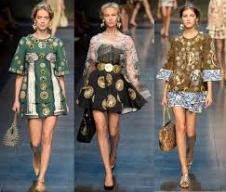
    If there is one fashion name that has never been afraid to add a splash of culture to their line of clothing, it is definitely Dolce & Gabbana. They have already made quite the impression during this Spring’s Mercedes Benz Fashion Week, which began on February 6 and is currently going on until tomorrow. During this particular fashion week, D&G made the decision to advertise the entirety of their displayed clothing line as an Italian tourist department. Their goal is to gear their clothing to those who want a taste of the true Italian culture, while serving as an overall advertisement of the country of Italy itself.

     images

    The decision to dedicate their Spring line to the Italian culture came from co-founder, Domenico Dolce’s wishes to include a taste of his hometown of Sicily, Italy. The team of designers wanted to bring archaeology of the Italian island to life, with its many layers of history, drama and religion. The other part of the collection represents the Greek ruins of Sicily, in all of its springtime beauty. Stefano Gabbana refers to this part of the collection as “a dream of Sicily.” The goal was to represent these different angles, and to invite people around the world to purchase a glimpse into this Sicilian lifestyle.

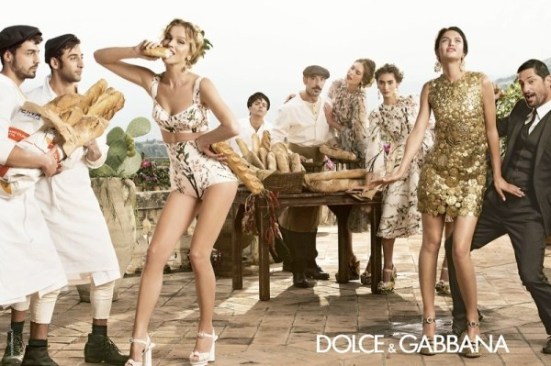
    The Italian theme of Dolce & Gabbana’s recent campaign is clearly depicted in their print advertisements. Each picture plays on stereotypes by humorously portraying the typical Italian culture (all in high fashion clothes, of course). Featured on-location in Italy, the photo-shoot captures the essence of a traditional Italian family, complete with the loud, boisterous women as the life of the party and their large families in tow.

    Dolce-and-Gabbana-Spring-2014-Ad-4-600x399

    Each advertisement exudes liveliness as models forgo their typical high fashion poses, and instead pour energy and Italian charisma into each shot. In the foreground, models can be seen wearing D&G’s new Spring collection, with fabrics and patterns that embody and were inspired by the Mediterranean’s local colors and Greco-Roman temples. The models also engage in stereotypical Italian activities, such as dancing, scorning their children, and buying goods such as fish and bread. Viewers are transported through the lens, across the world to experience traditional Italian culture in Dolce & Gabbana’s new campaign.

    DG PE 12_progetto donna.indd

    There is no doubting that Dolce & Gabbana have, in all their departments, uniquely used their cultural approaches to differentiate themselves in the high fashion world. The embedded concepts of history and culture will attract a vast variety of publics. Through their advertisements and on the runway, D&G have raised the high fashion bar, especially with competing Italian designers (Prada, Gucci, and Georgio Armani). Dolce & Gabbana’s Spring 2014 collection can accommodate any rendezvous a conservative woman may attend. They have taken a sort of “back road” approach which more than likely sells than other high fashion brands. They went for more doable than the over-the-top, un-wearable line that the average woman could not wear to any event.

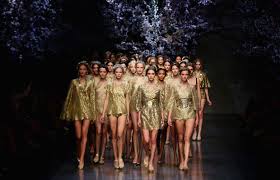
    Gabbana described the collection as “an unconscious dream,” in the sense that the clothes exemplified the blend of the real and the irrational that can only be found in dreams. The line is truly a dream and captivating at that. The Sicilian lifestyle has been opened for all to discover and enjoy through the D&G Spring 2014 line. The genius use of the culture of Sicily has provided limitless ideas of inspiration for Domenico Dolce and Stefano Gabbana, setting themselves apart from the rest of the high fashion domain. For the finale, the gilded army of women that strutted the catwalk offered another vision of female empowerment that has stirred conversations between other designers all week. Dolce and Gabbana have given the fashion world romantic maximalism at its best. The design duo’s cultural orientation without being too common or over the top. Innovative, not so much, but wearable, indeed!ewfew

    D&G have definitely grabbed our attention with their new look. Does adding a splash of culture make their line more desirable? Or do you think the typical “high fashion” is more successful on the runway?

    -Briana McWhirter, Emily Foulke, Hannah Turner

  • Name Changer

    Tailgating, body paint, jerseys, good luck rituals, and an unparalleled fraternity all exist as part of sports fandom. People love their teams – and love anyone else who also loves their team. Such loyalty has become an integrated part of sports culture sociology.

    Social Identity Theory states that by wearing team colors, attending games, knowing the players’ names, positions and stats, a fan begins to feel as if they are an integral part of the team – they connect with the team as if they were playing the game themselves. This connection explains why even poor performing teams have avid supporters. However, it is ultimately marketing that fosters fan identity. After all teams are brands; encompassing colors, logos, and mascots.

    fans, blog 3

    Fan loyalty has elevated sports to become part of our commodity culture; a product to be bought and sold, meaning big bucks for team owners. High-level sport has been transformed into a commercialized, commodified, and massified phenomenon. Therefore, fan identification and brand commitment become two key factors in managing and marketing a team. Building a brand is hard, but building and maintaining a culture of fans is much harder.

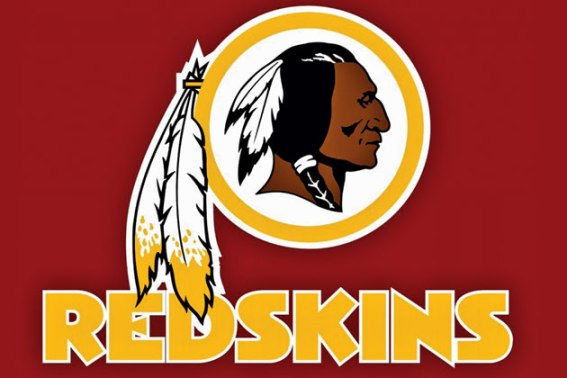
    As we transition into fall, we know that means one thing in sports,  football is king. With the NFL season in bloom, one team in particular, the Washington Redskins, are off to a rough start. The return of RG III has been very anti-climactic and on top of the team’s poor performance, a greater worry looms in the background: the franchise is under pressure to change the team name.

    Many believe the team’s name, “redskins”, is derogatory and racist due to its historical connotation and use to alienate and belittle Native Americans. The acclaimed Peter King from sports illustrated has even decided to stop using the name, saying, “I don’t want to add to the offensiveness.” Pressure to change the team’s name has been mounting for years and this past spring 10 congress members sent letters to the team owner and NFL requesting them to change the name. One Native American group, the Oneida Indian Nation, has started to take action and run ads in D.C. about the offensive name in hopes of rallying up support.

    rs logo, blog 3

    Whether you are an avid supporter for the name change, an avid supporter of the Redskins, or just don’t care, you can’t deny that team names mean a lot in the sports industry. Which leads us to the question: does a new name mean a new team? Does the team culture change when a team redesigns?

    These are exactly the questions the NBA juggled this past summer when they chose to revert the Charlotte Bobcats back to their former team name, the Charlotte Hornets. Coming onto the basketball scene in the ’90s, the Charlotte Hornets created a unique culture. With Hugo the Hornet as the mascot and teal uniforms, the Charlotte Hornets were a recognizable brand. So when the NBA decided to change the team name it was a hard transition for many loyal and devoted fans. Unable to identify with the new team and culture the fans gave up support and the fall of the Bobcat brand ensued.

    Reverting back to the original team name rejuvenated Charlotte fans. There was an immediate increase in the amount of ticket sales; quantitative proof that the Hornet name had been sorely missed. By keeping the team name consistent with what the fans wanted, the Charlotte basketball team re-strengthened their brand significantly.

    However, Washington, unlike the Bobcats, doesn’t have a sorely missed brand. In fact, the Redskins name is so beloved the proposition of changing the team’s name is being met with great opposition. Owner Daniel Snyder commented he would never change the name saying, “the Redskins’ fans understand the great tradition and what it’s all about and what it means.” Even NFL Commissioner, Roger Goodell, described the team name as a “unifying force that stands for strength, courage, pride, and respect.”

    Even if Snyder wanted to change the name it would be hard to change the minds of brand followers who have spent years identifying with the team, purchasing the merchandise, rooting for the players, and most importantly making memories. Ditching the derogatory name may ultimately come to a forced decision but the implications involved are massive. It boils down to a relatively simple equation: fan identification and brand commitment work together to produce the main goal in sport commodity, revenue. So the most important factor to ponder: the fans. How is the team going to remarket and rebrand to get fans to commit to a team they may no longer identify with?

    Savannah Valade, Caroline Robinson, Meghan Carey, Morgan Jones

  • Keep Calm and Party On?

    When I tell most people what my plans are for my 21st birthday, the first thing out of their mouth is: “are you serious?” I don’t plan to be with my friends getting wasted, I plan to be with my family. For any other birthday, this wouldn’t be odd. The 21st birthday, however, no longer belongs to the family. It belongs to friends, alcohol, and the bathroom floor.  21andover

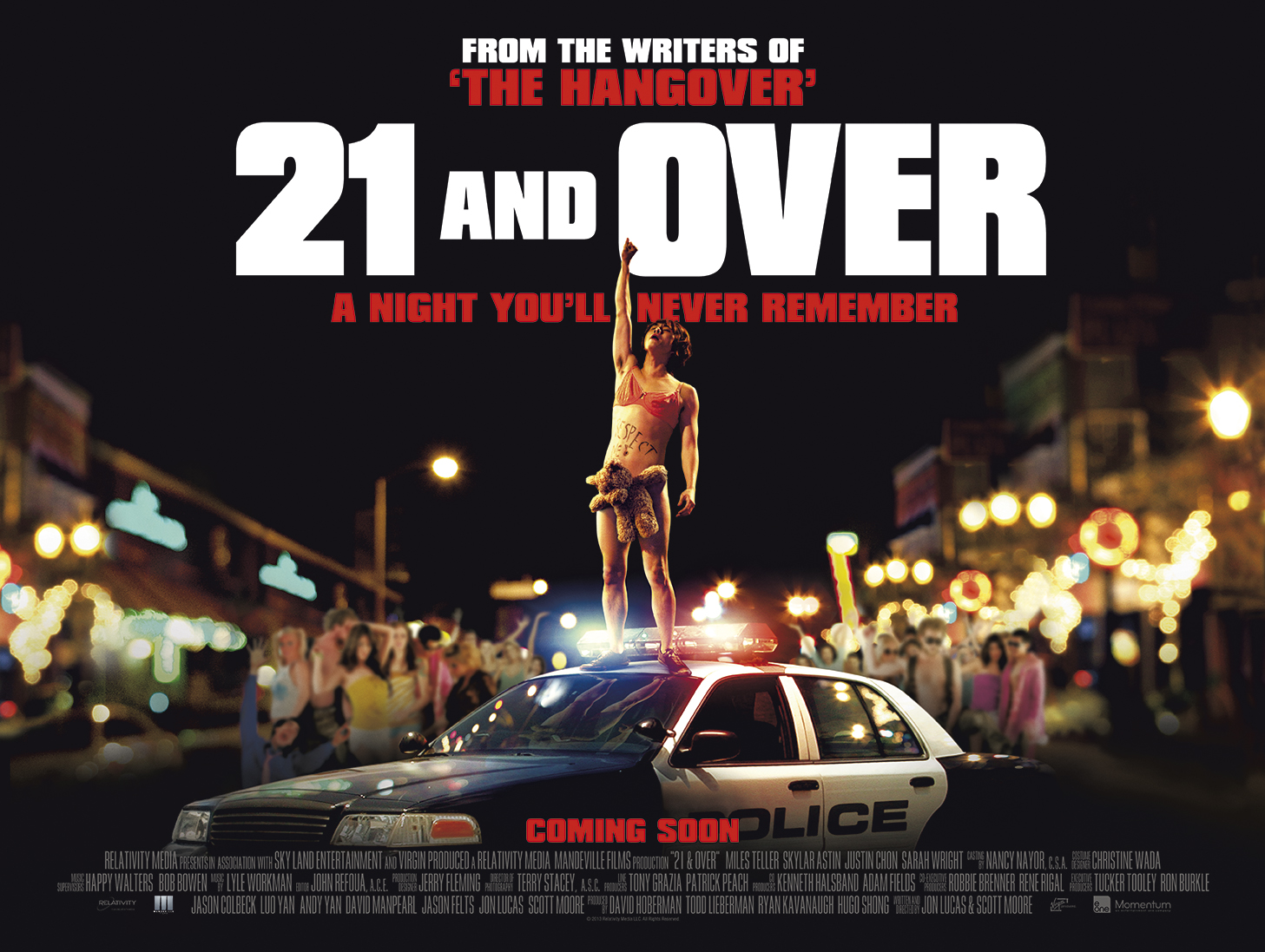
    Movies like The Hangover, Project X, and Superbad have become household names… especially in a college town on a Friday or Saturday night. The newest contender trying to add its name to the list is “21 and Over.” While I was watching the trailer, I couldn’t help but roll my eyes a little bit. Albeit the movie looks hilarious, the cultural stereotypes it perpetuates are getting a little old.

    The three main characters are a set of best friends. One happens to be turning 21 and has been forbidden to party by his father. The other two boys convince him to disobey his father and celebrate in true, over-exaggerated, Hollywood fashion. During the trailer one of the boys exclaims “As his best friends on Earth, we have a moral obligation to get him drunk as f***.” That statement sums up what upsets me the most about this particular genre of movies. The message these movies are sending is that the most important thing in life is getting wasted, partying, and dodging responsibilities. Rather than creating a culture centered on harvesting the potential within an indalcoholividual, Hollywood is creating a culture centered on the effect drugs can have. These movies add to the multitude of pressure young adults are already facing in regards to alcohol, drug use, and partying.

    As educated consumers and college students, these movies present a difficult challenge. It is one thing to watch the movie, it is another to allow the cultural expectations it perpetuates to dictate how you spend your free time. Don’t get me wrong, there is nothing wrong with letting loose every once in a while but we don’t have to prioritize partying over everything.

    Alexandra Huss