Tag: crisis management

  • Dogfish Disaster Averted

    As we have gravitated towards becoming a society submerged in technology, in recent years, outlets of social media have become essential marketing tools for many companies and organizations.Facebook, Twitter, Instagram and Vine are few forms of social media utilized by most. While social media can strongly influence consumer behaviors and increase consumer awareness it can also be detrimental to a company’s image. In some cases social media can be the cause of a PR crisis. Crisis management is the process by which an organization deals with this major event that threatens to harm the organization.

    The American Red Cross is a prime example of an organization who exemplifies strong crisis management skills. This honorable humanitarian organization managed to dodge-a-bullet back in 2011 when an intern fired off a personal tweet on the company’s twitter account. The tweet read “Ryan found two more 4 bottle packs of Dogfish Head’s Midas Touch beer…when we drink we do it right #gettingslizzerd”.

    red cross

    This uniquely unorthodox and unprofessional tweet received a lot of negative attention from the general public. In this particular circumstance social media proved to be the cause of the crisis. When responding to the tweet the Red Cross avoided disaster by acknowledging that the tweet went out, deleting it, and explaining with humor that is was a mistake. This is an example of crisis management where the Red Cross turned a potentially harmful tweet in to an opportunity for engagement.

    Thankfully, the Red Cross realized the potential of social media and understood the power that it has to bring down a major organization. Now, other companies can look at this experience and utilize it to learn for themselves. After understanding the Red Cross’s response it is easy to break down their post-crisis steps and keep them in mind for other emergency situations. First, they were able to assess the situation. They realized the crisis was a major problem but they came to the conclusion that they could handle it which brought them to their second step, adapting their message. They considered their stakeholders and created a strong message to appeal to them. Lastly, they were able to analyze and learn from the situation post-crisis. Although this could have led to a horrific downfall for one of the greatest humanitarian organizations, everyone was able to benefit, understand, and learn from this experience.

    red cross 2

    -Parker Farfour, Caitlin Ford, Alex Corrigan, Kaitlin Batson

  • Hyundai’s “Suicidal” Marketing Crisis

    In April of 2013, Hyundai released a commercial known as “Pipe Job” that left many people in the UK confused and shocked. The commercial’s primary goal was to illustrate the car’s new water engine emissions in a humorous way. However, due to this very commercial, Hyundai soon found itself in a potentially “suicidal” PR and marketing crisis.

    Image

    The ad was written about a topic that should clearly never be joked about and is very personal for many people across the world. The ad shows a man who is attempting suicide through inhaling harmful emissions, but fails due to the company’s new water engine emissions. Obviously, Hyundai released this ad in hopes that their audience would find humor in the failure of his attempt at suicide because of their water engine emissions. The company soon found that the ad produced the opposite effect. One of the main people who caused the uproar regarding this commercial was blogger Holly Brockwell. Holly wrote an emotional post regarding this poor taste in marketing.

    Image

    Unfortunately for Hyundai, this entire crisis could have been somewhat avoided. While of course it could have been completely avoided by simply never allowing the commercial to air, it could have also been avoided if the company had a crisis management plan implemented. Instead, Hyundai was slow in their apologies and even ignored reporters when they reached out for answers. This lack of communication for those with questions is what ultimately left Hyundai in a PR crisis that was nearly impossible to overcome. While Hyundai finally released apologies and statements, the damage that has been done is immeasurable. In the end, companies must be proactive when dealing with crises that involve their products to have a chance at managing them before they have a chance to become something larger.

    -Ryan Nagy

  • Averting Crisis In San Fransisco

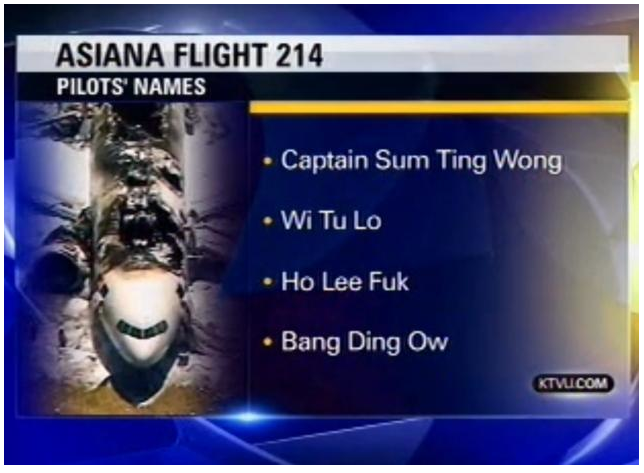
    For most companies, an intern can be a great asset to the inner workings of an organization. However, for one Oakland TV station, KTVU, a single intern from the National Transportation Safety Board (NTSB) managed to put them right in the middle of a national crisis. On July 6th 2013, after an Asiana Airlines flight crashed during its landing in San Francisco, news stations jumped at the opportunity to be the first to report on the crash and have the most up to date information. Sadly, in the rush to get information to the public, producers at the KTVU station verified false information from an intern regarding the names of the pilots on board the flight. The names provided to the news anchor were not only racist but very disrespectful.

    Image

    The negligence of the TV station and their failure to confirm sources and exercise careful editing resulted in negative worldwide media attention. KTVU confirmed incorrect names that were given to them by an intern working at NTSB. Careless editing must have occurred for the producers to think that these were probable names of the pilots. Also, the producers should have done further fact checking because the source ended up being unreliable and unofficial.  The intern at the NTSB who provided the false information was consequently fired from their position.

    Image

    When publishing a news story, it is crucial to not act with a reckless disregard for whether the information shared is false or not because the station could be sued for actual malice. Asiana Airlines could have opted to sue KTVU for defamation but did not to do so. This particular situation portrays why the media has laws such as these in place to prevent false and damaging claims being published publicly. The airplane company Boeing also attempted to manage the crisis through social media, stating in a tweet that “Our thoughts are with everyone affected by today’s incident at SFO.  We stand ready to assist the NTSB.” Boeing stood by the NTSB and supported them because although they had nothing to do with the racist remarks, they knew that the incident was the effect of careless editing and negligence.

    As part of their crisis management plan, the Office of Public Affairs issued a press release on behalf of the NTSB formally apologizing for the “inaccurate and offensive names.” They issued a statement of regret followed by corrective action, “We work hard to ensure that only appropriate factual information regarding an investigation is released and deeply regret today’s incident. Appropriate actions will be taken to ensure that such a serious error is not repeated.”

    Do you feel that the NTSB and KTVU handled this crisis to the best of their ability?  What other incidents have you seen in the news that have resulted in a formal public apology?

    -Aaron Love, Kara Zimmerman, Rachel Clay, Rebecca Hobbs

  • 5 Days of Carnival Hell…but the Bathrobes are Complimentary

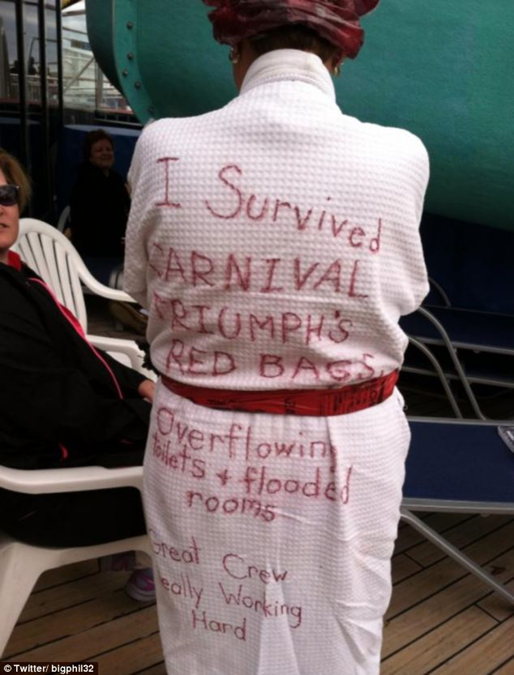
    Some companies serve as guinea pigs of how not to handle crisis brand management. Unfortunately for the 4,200 suffering passengers, Carnival Cruise Line set an example for the public relations world. The cruise line took a hit, after multiple incidents including the shipwreck of Costa Concordia off the coast of Italy, this past year. Most recently, America followed the second incident of the Carnival Triumph with horror, now commonly referred to as the “poop cruise,” after the ship lost electricity after an on-board fire. Passengers were stranded without electricity, air conditioning or working toilets for five days. As pictures of the floating cesspool emerged, the public watched carefully to observe how Carnival was handling the disaster.

    Carnival Cruise Line did irreparable damage during and immediately following the days of the rescue. Often in crisis management situations, people remember how companies handle the problem more than the actual incident itself. If Carnival had handled the incident accurately and swiftly, our memories of the event could be quite different. In retrospect of the cruise disaster, Carnival took a few costly missteps.

    1. Carnival did not communicate information clearly with passengers and press about the breakdown and rescue efforts.
    2. The CEO, Gerry Cahill, was spotted at a Miami Heat game while passengers were still on board in toxic conditions.
    3. During the press conference before passengers were able to get off the ship, not only did Cahill not properly apologize and take responsibility for the events, his comments minimalized the trauma the passengers endured. He was quoted saying, “We pride ourselves in providing our guests with a great vacation experience, and clearly we failed in this particular case.”
    4. The worst public relations move of all would be the tone-deaf tweet @CarnivalCruise sent out when 2,400 miserable passengers were disembarking from the ship. They tweeted, “Of course the bathrobes for the Carnival Triumph are complimentary.”

    Image

    http://i.dailymail.co. uk/i/pix/2013/02/14/article-2278616-1796A0C1000005DC-636_634x83

    Public relations and crisis management should understand the importance of how one incident can affect a brand. America’s limited attention span means acting strategically and promptly. Several months later, CEO Gerry Cahill resigned and Carnival Cruise Line offered their customers a “Great Vacation Guarantee” for unsatisfied customers to be able to get off the ship within 24 hours with a full refund. Brand management becomes more difficult once the damage is initially done. Will Carnival Cruise Lines campaign to regain trust be successful? Only time will tell.

    -Rachel Edwards, Ashley Creps, Dylan Fowler, and Ryan Nagy