Tag: Costumes

  • Halloween or ‘Howl’oween?

    As Halloween approaches, children and adults have been preparing for the holiday by buying costumes, decorations, and candies. Halloween is known as a night for children to walk around dressed up and get candy. However, recently the holiday has expanded to include all family members, even the pets

    This year, PetSmart has taken to Halloween just as much as other retailers, such as Walmart and Party City, usually do. The pet retailer advertises everything from pet costumes and collars to Halloween themed treats and toys. They also offer Halloween events such as in-store trick-or-treating, pet photo contests, and even Halloween “pet camp” for those that don’t want to leave their pets at home that night.

    Screen Shot 2015-10-25 at 12.49.54 PM

    https://www.petsmart.com/

    The home page for PetSmart’s website features everything a pet owner could need for their pet to be a part of the Halloween festivities. While the majority of their advertising is for their own products, the site also advertises at home do-it-yourself recipes and costume ideas. This form of advertising says to consumers that the retailer truly cares about the pets and wants them to be just as much a part of the holidays, therefore making pet owners trust their brand more.

    The communication design that PetSmart implements makes pet owners believe they need these Halloween items just as much as any other pet necessity. The company is making consumers buy into their narrative and purchase costumes for their pets. PetSmart holds a brand image that presents itself as a company for everything pet related. The company is seen as a go-to for food, toys, training, grooming, and in some stores, even veterinary services. By offering pet supplies and events for the holidays, even Halloween, PetSmart solidifies its image as still being the one-stop-shop for pet owners.
    One of the main aims of Integrated Marketing Communication is to affect behavior and not just attitudes. PetSmart has turned a once silly idea of dressing your family pet up for Halloween into a business opportunity to make a larger profit. The creation of not just products, but events too, draws customers in so that they feel they have a reason to buy character costumes for their pets and Halloween themed toys. For most pet owners, their animals are members of the family, and should be included in family fun. PetSmart allows that to happen with their holiday apparel and pet-oriented events.

    The pet Halloween industry has grown significantly to the point that CNN even offers the top 5 dog costumes of 2015 in their recent online article about Halloween Fast Facts, which can be found here: http://www.cnn.com/2013/06/13/us/halloween-fast-facts/  The top five costumes were as followed: pumpkin, hot dog, Batman, devil, and a bumblebee. Of those five, PetSmart offered every single one, some with multiple options, even for different sexes of dogs. Is it a coincidence that PetSmart sells the top five costumes? Probably not.

  • Anna Rexia Makes Another Appearance

    Zombies. Ghosts. Serial killers. These are some popular symbols of Halloween that are frequently seen in movies, haunted houses and decorations. However, what I find more frightening are some of the costumes that I see while trying to find my own “original” costume idea each Halloween. This year, I came across the most frightening costume of them all, not because of a scary mask or fake blood, but because it is poking fun at a serious mental illness that affects millions of people around the world. The “Anna Rexia” costume first caused some serious uproar back in 2011, when retailers like HalloweenStore.com and Ricky’s NYC began carrying the costume, manufactured by Dreamgirls International, but they stopped after a great deal of media backlash and thousands signed a petition on Change.org.

    Now, two years later, this controversial and insensitive costume is apparently back up for sale on the website HalloweenParty13.com, which I discovered from a Facebook posting of a more recent Change.org petition. At first, all I could think about was how disgusting a costume like that is, and how I would judge anyone wearing it, but I want to turn this into a learning opportunity by relating this controversy to public relations. My question is: Did the companies handle the outrage and negative publicity surrounding this costume appropriately?

    As I did my research, I found articles on news sites such as The Huffington Post and other blogs, about the resurrection of “Anna Rexia.”  I saw on Buzzfeed that the retailer HalloweenStore.com posted a status to their Facebook page about one week ago, explaining that people should do research before signing a petition because the retailer hasn’t sold that costume since 2011.  This status was calling out people who angrily emailed the store about their distaste, when they weren’t actually the retailers currently selling the costume.   The wording was harsh, with certain words fully capitalized and many exclamation points, which detracts potential customers and pushes current customers away.  The post has since been deleted.

    enhanced-buzz-32177-1382713416-25
    via BuzzFeed

    During the original controversy in 2011, Dreamgirls International said the costume was a form of “dark humor,” and that people wearing it is a “matter of taste.”  However, the company is now saying that the costume was discontinued in 2007 and the matter is now out of their hands.  At first, Dreamgirls International was using the communication theory of framing, which highlights specific aspects of an issue and “frames” people’s perspective on it.  The company was trying to downgrade the offensive costume as being humorous and describing themselves as a “company run by women for women”; that just wanted to create an “eccentric” way for a woman to express herself on Halloween.  Now, they are denying all responsibility for any current sales of the costume.  This denial is not only inconsistent, but it is the opposite of what any student in an introductory PR class would learn—don’t deny ownership of a problem.

    I believe that neither of these companies handled the “Anna Rexia” backlash well.  If you, the reader, were the spokesperson of either company, how would you handle this situation?

    -Maggie Dowicyan

  • Sexy Drunk Candy Day

    A blog featured by our IMC predecessors two years ago touched on the roots of Halloween, evidently for informational purposes. But if we look at the origin of the holiday, and compare it to the simple consumer monster it is today, what does it say about our culture? How did it transform from a festival rooted in serious meaning to whatever it’s supposed to be today?

    Halloween started with the Celts many moons ago, over time it was adapted and changed by the Romans, and became what we know it as today in the 1900s. None of that is really important. What is important is how we cannibalized the traditions and passed them along, while turning the holiday into nothing more than a consumption animal party.

    The phenomenon that explains this is Social Construction of Reality, but how did it get to this? It seems that most traditions were forged in some pretty substantial fires, but American culture has a way of reducing the importance of history to make some money. The idea behind the tradition is not communicated to growing generations, and the meaning gets lost behind the ways we celebrate. Then the Americans who grow up and pay money to be a part of the “tradition” end up satisfied with their part in the whole ordeal while walking away a little poorer, and just as ignorant.

    A Google Search of “Halloween Sales 2013” turns up a link to coupons from retailers pushing to sell costumes, candy, and other Halloween-related things. A short list of the companies offering these discounts are Aeropostale, The Popcorn Factory, Party City, Amazon, Toys R Us, the Disney store, Babies R Us, Walgreens, Land’s End, Pier 1 Imports, Petco, Hot Topic, The Home Depot, Urban Outfitters, Williams-Sonoma, Cotton On, Sears, Roaman’s, and Target. Apparently Tide is also in on the Halloween action (from my colleagues’ Monday post).

    None of the companies’ ads say anything about the Celts or the Romans.

    One Halloween participant properly respecting the Celts.
    One Halloween participant properly respecting the Celts.

    Nobody ever told me what Halloween was about. I just learned to associate it with costumes and candy from my mom. It’s kind of like St. Patrick’s Day, which (you would think) is not too relevant to Americans that lack origins in Ireland, but is extensively used to increase sales and get people drunk. The fact is, today, that all Halloween really is about are costumes, candy, and partying. Most holidays end up being just another reason to party in America, but Halloween is the most notorious for partying being its sole purpose.

    Ask around, especially on campus, and people will have a whole slew of methods for celebrating the holiday. If a person has kids, they will dress their kids up and walk around to get candy on Halloween. Some folks may stay inside and hand out candy to other people’s kids if they feel up to it. Those who don’t have kids will probably dress up and get drunk.

    That’s about it.

    I could talk about the implications of the most prevalent American Halloween costumes featured in our local costume shops (which are perfectly in tune with the holiday’s roots), but everyone knows that it all pretty much ranges from “sexy nurse,” to “sexy M&M”  or “sexy pirate” for women, and “pirate,” to “caveman” for men. Most Halloween emphasis is placed on the costume. The rest is on the party or the candy.

    It doesn’t have anything to do with any of the reasons it was created. Sure, there’re Jack-O-Lanterns that have survived in homage to ol’ Stingy Jack, but does anybody reading this know about him (assuming that any one of the extremely cool tales about him is the one responsible for the tradition)?

    I say, since Halloween seems to just be an arbitrary holiday nowadays, that we change the name completely, maybe to “Sexy Drunk Candy Day.” Let’s reconstruct the reality of Halloween. Why not?

    – Chad Darrah

  • The Spooky Branding Reality of Halloween

    What is the most important thing about Halloween?  Your costume!  When we were younger, we thought running around the neighborhood for a few hours trick or treating was the essence of Halloween.  But as college students, we start pondering our costumes weeks or even months in advance, while candy and parties are afterthoughts.  A Halloween costume allows you to express yourself more freely than you can in everyday clothes, and for many college students it is the most important outfit of the year.  Some people spend hundreds of dollars putting together the perfect costume, complete with make-up, wigs and props.  Last year, the costume most searched on Google was Lady Gaga.  This year, the two top searches appear to be Nicki Minaj and Charlie Sheen.  Among other popular searches are Pan Am, Amy Winehouse, Rihanna and Katy Perry.
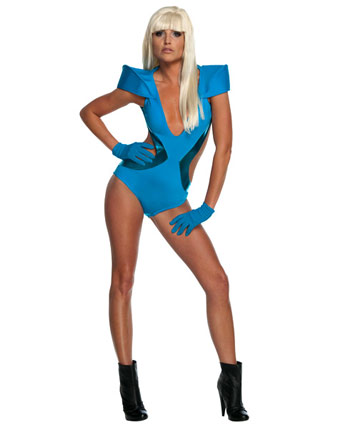
    When we were children, we dressed up as witches, robots, zombies and the occasional super hero.  Today, we dress up like celebrities.  Maybe this indicates that during college, our behaviors are influenced by ethos more than when we were younger.  The fact that many college students transform themselves into their favorite stars for Halloween may correlate with the general spending habits of people ages 18-24.  If many people are buying things to look like celebrities for Halloween, it is safe to assume that they are buying things related to celebrities for everyday items as well.

    Being in the headlines helps celebrities promote their brand whether it’s intentional or not.  Halloween gives celebrities the greatest opportunity for celebrities to increase their brand awareness.  Those featured in the news and by other media outlets are getting their brand out there.  The people dressing up as these celebrities for Halloween are ultimately walking advertisements for the celebrity they are trying to imitate.

    -Stephanie Bakolia, Claire Outlaw, David Glaubach