Tag: Communication Studies

  • Answering the Question: “What is COM Studies?”

    By Courtney Busick

    I still remember the day I was accepted to UNCW; I jumped up and down and hugged my mom. That day changed my life forever. However, I had no idea what I was going to do. I moved back and forth on what major I wanted, but I knew where my passions were: advertising. I wanted to work in advertising and be as creative as I could be. The business and studio art majors stuck out to me, but I felt a calling towards something different. After searching other programs, I looked into the Communication Studies department. The major offers me both the art and business aspects I was looking for. I told my mom I wanted to study COM, and she looked at me and asked; “what is that?” At that moment, I could not give her a definitive answer of what the major held, but it was what I wanted to do so it had to be great.

    Looking back at my journey at UNCW, I was continually asked the same questions; “What is that?” “What are you going to do with that major?” Professors would even prepare us for this question by giving us answers and things we are doing in our classwork. From that day when my mom first asked me to two months out from graduating, I cannot help but think of the different opportunities the COM department has given me. I have changed and learned to understand the study of communication in a new way than when I came. When I think about my answer to the question; “What is COM Studies?” I can answer with a plethora of experiences and life lessons I have found from the department. 

    COM Studies opens doors and opens minds

    Coming into the Communication Studies department, I was unsure of what I was getting into. I knew they had marketing, and that was what my heart was set on. The more classes I took for the major, the more I opened my mind to what COM offered. I learned that the study of communication was understanding how and why people communicate, and specializations like IMC and broadcasting were ways that exemplified and used this as a foundational skill.

    I was able to see this during my trip to Italy with the COM Studies Department over break. We understood the practices and lifestyle of another culture and how that affects their communication with one another. We learned a lot about business and practices that have been in place for many years. I was able to understand more about brand values of wineries and restaurants that have been around for hundreds of years.

    COM Studies is a community

    I have met some incredible people through the COM department. Each student strives to be their best self and understand the problems in front of them. We are a community because each of us is studying different specializations, but we are all learning and building community with one another because our skills are transferrable within any department or class. The department works to develop strong collaboration skills, so students can understand each other’s strengths and feel bound together by them.

    I have worked on many group projects and all have shown me the different styles and strengths of other people. It helps to create a strong project. I have seen this through my IMC classes as well. Each person is assigned a role in the project that showcases their strengths and what they love. We have learned to see how it creates a stronger project and we build community by knowing more about our differences.

    Every experience and project I have been a part of in the COM department has allowed me to understand a share with other people my ideas and knowledge to help us solve the problems at hand.

    COM Studies changes the world

    In COM 105, Dr. Weber teaches us about “Tikkun Olam,” which means contributing to the repair of the world.  Communication Studies can literally and figuratively repair the world. In other classes, I have learned that how you communicate, verbally and non-verbally, affects how you are perceived and the messages that you put out to others. Every choice you make is a communication choice, and it can affect your world and the others around you. In IMC, you learn quickly that the choices you make, matter. How you represent your brand, or a specific issue, will affect how the world sees you. You always have to be cautious about the message you are putting out, how you are putting it out, and who it is for. It can impact your brand and what you want to let the world see.

    With weeks left to graduation, I cannot help but wonder back to the moment I decided I wanted to major in Communication Studies. How I felt, what I thought, and the person I would become. The Communication Studies department has helped me grow professionally in understanding different aspects of my world. Now, I can confidently answer the question; “What is Communication Studies?”


    (Photo from chabad.org)
  • Five Tips for An Upcoming UNCW COM Major

    By Sydney Jones

    (Photo by Bradley Pearce via uncw.edu)

    Upon exploring communication studies as a major, I was not sure what to expect. My initial thoughts were that I would be writing a lot of speeches, presentations, and papers. After all, communication means talking, right? In reality, the communication studies major explores a multitude of subjects, and many different contexts of communication. Being a COM major can also benefit students in many ways beyond academics. Students have opportunities for networking, internships, and potential jobs, along with the opportunity to meet some amazing people. Here are some things to consider if you are planning to become a COM major:

    Get To Know Your Professors

    Seriously. The professors in the COM department are some of the coolest people you will ever meet. Most of them, if not all, are truly rooting for you to succeed. By getting to know your professors, asking for help or feedback will come easier. For me, it made me more comfortable asking questions or reaching out when something didn’t quite make sense.

    Also, getting to know your professors could allow for potential networking and/or references. As I said, your professors are rooting for you to succeed. The professors in the COM department are very seasoned and may know of potential employers and internships. They could also prove to be valuable references for future job applications. Even without all the perks they may provide, the professors in the COM department are also very cool people who will make your experience in the major downright fun.

    Take Advantage of Workshops

    Throughout your experience as a COM major, you will do many things other than writing. There will be a lot of hands-on work with Adobe and video platforms, things that many students do not have much experience with right out of high school. Lucky for us COM majors, many COM professors put on workshops to allow students a little bit of extra help in these areas. For example, Dr. Stuart (an IMC professor) puts on workshops over zoom for Adobe Suite platforms such as InDesign and Spark. Some of these platforms may seem self-explanatory, but they can be difficult to navigate once you get in there. Take advantage of these free workshops, as they can help you with your projects in COM and add a new skill to your resume.

    Utilize the University Writing Center

    Of course, one of the main aspects of the COM major is writing, lots and lots of writing. Whether it’s research papers, justifications, or projects, you will inevitably spend a lot of time writing. COM professors do place a lot of emphasis on writing mechanics, but it may prove worthwhile to visit the university writing center. The UNCW learning center has a free writing center that provides free one-on-one writing consultations for all students for any academic writing purpose. Sessions are led by faculty-recommended and trained peer writing consultants that help students identify areas in the draft to improve while assisting in the development of specific revision plans. Students can work on their writing skills as the consultant guides them through the revision process. Utilizing the writing center can take a lot of stress off your plate, especially if you have multiple writing deadlines coming up at once.

    Get To Know Your Fellow COM Majors

    One of the most valuable resources you can acquire as a COM major is…other COM majors. Getting to know your fellow COM students will not only immerse you in a great community but may also help you with future projects. Many COM classes place a large emphasis on group work. In fact, COM 200 (a qualifying class for the COM major) is mostly made up of group work and writing. Getting to know your fellow COM majors may make this group work much easier in future courses, allowing you to see firsthand how your peers work and who you get along with. Aside from helping with work, your fellow COM students could become great friends and a wonderful community for you in the future.

    (Photo by Jeff Janowski via uncw.edu)

    Save Your Best Work

    Throughout your experience as a COM major, you will constantly hear “be sure to save your best work for your portfolio.” This will be for the communication studies capstone course (COM 400). While it is important to save all your best work and certifications for this course, these items may also prove valuable for other endeavors. Some jobs require a sample of previous work depending on the nature of the job. Having easy access to your best work from school will make the process of applying for the job much easier and may help you to be a stand-out candidate for the job.

    While these are just a few things that can help future students, there are so many other wonderful benefits of being a COM major. Throughout my education in the major, I feel that I have gained valuable tools and experience that will help me tremendously in my future endeavors.

  • Social Media: The universal power move

    By Hope Weaver

    (Photo from Unsplash)

    The Power Move

    The use of social media is skyrocketing. Individuals resort to sharing their lives on the internet now more than ever. It is constant being updated, retweeted, shared, liked, disliked, and deleted. Most  use Instagram to stay connected, Facebook to scout out their next restaurant visit, and Twitter to share what’s on their mind. As a result of this cycle, brands must resort to meeting their audience where it makes the most sense . . . on these digital platforms. The use of social media is an effective tool in boosting company performance and customer traction. Building a client base on social media is a new form of communication that is no simple task. As evolutionary as social media is, many companies rely on its algorithm to survive. Understanding the ins and outs of posting and growing on social media is a job in and of itself. Discovering what consumers want to see and how to provide that desired material is key to social media mastery.

    (Photo from Unsplash)

    Power Move Explained

    Researchers Jun Li, Woo Gon Kim, Hyung Min Choi conducted a study centered around the effectiveness of social media. More specifically the study focused on how social media pages enhanced the performance of casual-dining restaurants. The results of the study suggest that first, social media is a measurable component, and second a selective approach must be taken when cultivating a brand’s media presence.

    Social Media as a Measurable Component

    It may seem pointless to assume that social media is its own science. To the consumer, advertisements, products are marketed to you, images are posted, and you consume the media you want to see … scrolling past the rest. Yet, ads are planned, items are marketed to specific media accounts, and the algorithm is an ever-changing resource. Businesses benefit greatly from understanding the algorithm and guiding their focus toward learning more about media sites like Twitter, Instagram, and Facebook. Li, Kim, and Choi mention in their article that “customer engagement metrics (customer reviews, ratings, likes, shares, and positive comments), in the social media environment, were directly related to overarching corporate goals, such as revenue” (2019). This means that competence in a variety of social media sites and their algorithms is vital to the success of customer engagement and overall company morale.

    Cultivating a Consistent Media Presence

    Brand consistency is an important concept in the methods of social media marketing. The overall aesthetic of each company should be presented on their online platforms as well as in person. In order to maintain customer loyalty and brand consistency, attention must be placed on the social media pages. For example, as cosmetic details like colors, typeface, and logos are important to the physical brand, the same ideas must be translated into media marketing. Maintaining consistent activity is also important to mastering the ‘power mover’ of social media. Posting on a schedule and with a theme will ensure that you reach your niche audience. New content is a must but keeping it consistent with the aesthetic and posting schedule is important.

    Tips and Tricks

    Based on the evidence compiled from the article mentioned above, proper use and selection of social media sites are important for a successful brand. Choosing the best site is important for finding the right users and followers for your page. Additionally, it is necessary to implement promotional activities that your users will show interest in. This way investing time in what they consume, and such information leaves a lasting impression. There are companies that make it easy to post consistent scheduled content allowing brand consistency and media mastery to be more attainable.

    Source

    Li, J., Kim, W. G., & Choi, H. M. (7 August 2019). Effectiveness of social media marketing on enhancing performance: Evidence from a casual-dining restaurant setting. Tourism Economics, 27(1), 3-22. https://doi-org.liblink.uncw.edu/10.1177/1354816619867807

  • Social Media Connoisseurs: The Adaptability of Content Creators

    By Michalah Matthews

    (Photo by FreePik)

    Content Creators in IMC?

    Influencers and content creators are an ever-growing demographic, directly influencing what it means to be in social media strategy. As COM majors, we are expected to have experience with social media along with some knowledge of how to curate posts and increase visibility of a brand. Social media influencers are not just a face for promotion of specific brands, but they also make up their own brand and have to work a platform to their advantage.

    The Evolution of Social Media

    Technology and social media platforms are constantly updating and becoming more innovative in terms of what they offer their consumers. App developers want to continue to have users interact with their app so they’ve even adopted features on their sites similar to other platforms to encourage their users to keep using it. Instagram started to develop and change several different functions of their app. They’ve added a shopping feature, Reels, and have allowed users to start posting “stories” to showcase snippets of their life. While these updates have made things easier for the consumer, they have had some pretty big impacts on content creators who rely on social media for their brand.

    Making Apps Better…

    Social media moguls have had to adapt to the constantly changing platforms. These adaptations have had positive and negative effects on their ability to promote their brands. One adaptation they’ve had to make is choosing the correct platform to advertise their brand. Not long ago, sites like Tumblr and YouTube were “on and poppin” making them the app that produced the most visibility for content creators. People no longer have the patience or time to read a blog or watch a 15-minute long review about a product. This is where the creation of Instagram comes in. Instagram started as a platform to simply post a photo allowing increased visibility through use of hashtags. This technology created a very straight-forward system benefiting users and creators alike, making it a positive impact for their brand, but this update didn’t seem to be enough for consumers.

    …Or Worse?

    With these changes, comes a challenge for those who depend on these apps to make a living. One of these updates that had a negative impact on content creators was the development of the algorithm for Instagram feeds. Technology has updated and allowed us to curate experiences for people based on the things they frequently look at online. For example, I love a good human hair wig so every now and then I see a banner ad for some stranger’s hair on my browser. That is a benefit to the curation of ads and content based on what an individual likes to see when they’re on the Internet. Although I view this innovation as beneficial, the curation of content for users is actually a content creator’s worst nightmare. In creating posts for an individual based on what they usually view, it erases the visibility influencers may have had prior to the update.

    Content Creators Adaptation to Change

    Views are one of the ways content creators receive money but if their posts are not being seen, it makes it hard for them to profit. While this is a negative to having social media as a main source of income, it has allowed them to be creative in finding ways to combat this update to the algorithm. According to Arturo & Ibáñez, who have studied and dissected the adaptability of content creators, one way content creators have been able to work against the decrease in visibility is collaborations with other influencers. Arturo and Ibáñez have given this technique the name, “cooperative algorithm hacking”(p. 2). If you have an Instagram and you happen to follow a few beauty or fashion influencers, this is a common occurrence among that community. They do a type of series that is composed of several different influencers of the same category or community. For example, not too long ago the Bratz dolls were trending due to the influx of people becoming interested in the Y2K theme. This resulted in a few influencers doing a Bratz doll challenge, where each influencer selected a doll to create a look for. In doing this, their followers not only saw the content of someone they liked seeing but they saw similar content from a different creator. This is an example of how content creators successfully adapt to the constant updates of social media platforms.

    How does this relate to IMC students?

    As IMC students, we are content creators ourselves! We’ll have to be just as innovative in our ability to adapt to the ever-changing rules of social media. Experience in breaking down the reports and analytics that our posts generate will be necessary, as well as the familiarity with navigating any changes to apps themselves in order to maintain a successful marque. Our ability to be adaptive and innovative are some of the many things labels are looking for in individuals to represent their brand.

    (Photo from Jackie Aina via YouTube, https://www.youtube.com/watch?v=tbQ-a-4xVwA)

    Source

    Arturo, A., & Ibáñez, F. (2020). “You need at least one picture daily, if not, You’re dead”: Content creators and platform evolution in the social media ecology. Social Media + Society, 6(3) doi:http://dx.doi.org/10.1177/2056305120944624

  • It’s not you, it’s the process: What to actually expect when creating content

    By Abigail Morris

    (Photo from Adobe Stock user Kittiphan)

    As I sit here writing this post, I find myself “stuck” on how to introduce this topic. I’ve spent hours on collecting, organizing, and summarizing data to include into this article. Yet, I’m sitting here clueless and hesitant. I’ve spent years of my academic career honing my skills to create content such as this and still I find myself constantly in this headspace. And because I aspire to do this as a career, the pressure of continually creating post and visuals that are interesting an engaging can become extremely discouraging – especially when I’ve dedicated so much time to the practice. But when I take a moment to step back and analyze where this disconnect is coming from, I begin to understand that this stagnant headspace is part of the process. 

    With every creative industry (especially in areas of art and literature), there is a tedious and straining side of content creation that hardly ever is mentioned or noticed. And when you’re creating relatable/interesting text and visuals – one might find themselves more inclined to interject personal elements into their work (that are deemed professional and relatable to the topic).  Diana Bossio in the article, Burning Out and Turning Off: Journalists’ Disconnection Strategies on Social Media, she states that “These exchanges [emotive intrapersonal communication within a professional context] are a kind of labor, and they can also be seen in the context of building and engaging with community, being ‘creative’, expanding personal and professional networks, and engaging in a pleasurable activity. Baym (2018) characterizes this as relational labor, or practices and strategies that creative professionals have adopted to create stronger emotional and thus commercial relations with audiences.”

    So, whenever a post receives positive feedback and attention, the creator of that content will feel a sense of accomplishment that validates their passion to keep creating. In the same sense, this kind of personal connection with content creation can cause emotional fatigue and burnout whenever they feel that they aren’t “hitting the mark” with their work. And with the added pressure of one needed to meet their quota, this can further discourage an individual within this field.

    Like how writers and artist cope with creative blocks, understanding social media burnout can help content creators to identify aspect of their work that are causing stress or lack of fulfillment, so that one may be able to find ways to fix this disconnection.

    This kind of persuasive and engaging rhetoric is heavily used within social media marketing, especially when one uses this to convey their brand identity as relatable. According to Demand Metric, 82% of consumer’s have a more positive perception of an organization after reading custom content. Because of this, 90% of organizations use content as a method for marketing. This desire for a brand to articulate an active, positive and informative image to their audience has become a necessity when creating brand trust and loyalty. With this push to create a positive and engaging public narrative for an organization, those assigned to accomplish such task many find themselves mentally and emotionally drained in order to provide their clients with quality work.

    (Photo from Adobe Stock user Drobot Dean)

    So, what should someone do then they are creatively “stuck”?

    Disconnect by creating a professional persona.

    The journalist interviewed for this study recommended that content created for work should not be used or posted on personal accounts. This ability to divide your personal and professional life is a way that any content creator can ease the stress of work so that they have the mental capacity to think outside of the box and create. In the article, Bossio states that “For journalists using social media as a professional communication tool, disconnection strategies actually work in tandem with the different ways they connect online, positioning those connections more strategically as professional labor and thus inscribing particular meanings and uses for social media interactions.”

    Now, this ability to disconnect doesn’t mean that you’re sacrificing effective “personal” quantities of the brand identity that draw the attention of your target demographic. This just means that your personal and professional social media post shouldn’t be intertwined. Similar to the concept of dividing your physical workspace from your bedroom – the same concept should be used within your creative process. Although these personas differ, they’re still a part of who you are.

    Just like how your able to decorate your desk at work with personal little nick-nack and trinkets – you can bring elements of yourself into the work you create. At the same time, you’re not going to put your queen-sized mattress in your office cubical. The professional persona that you create for work can embody a similar presence of your personal self. But when you start to associate the stresses of work into areas of your life in which you mentally and emotionally escape (in this case, social media), you begin to lose that sense of security that once was there (which is the number 1 way for any level-headed individual to lose their sanity).

    As easy as I make this advice sound, one’s ability to successfully disconnect and create a professional persona is not something that can accomplished overnight. This kind of self-discovery takes time to properly analyze and evaluate.

    (Photo by Adobe Stock user WavebreakmediaMicro)

    In the meantime, if you find yourself in a creative limbo, remember that:

    1. This is absolutely normal
    2. Many people who work within the creative field experience this at some point within their career.
    3. Even though you feel creatively stagnant, YOU ARE DOING SOMETHING.
    4. It just takes time to see those results.
    5. If you’re aware of what you’re experiencing, IT WILL PASS.
    6. Understanding the source of stress and creative fatigue is vital when creating your “plan-of-action” to overcome the creative block.

    Applying these steps into your workflow can tremendously help the stress created that can manifest itself into creative blocks. Also, acknowledging this aspect can lift the internal frustration that comes with constantly creating and posting content.

    Allowing yourself the time to self-reflect and implement what you’ve discovered into your workflow not only lifts the pressure of expectations that you and those around you create, but it also allows you to focus on creating work that efficiently conveys the intended message.

  • Establish your brand identity and you will guarantee success

    By Kelly Geiger

    Imagine you are walking through the mall and every store looks the same. Décor, logos, colors… everything is exactly the same. How could you possibly find the store you are looking for? This is where brand identity shows its importance. When you walk through the mall and see the check mark of a Nike store, the cursive sign reading Free People, or the navy-blue color surrounding the Gap, there is no question as to what brand you are looking at. Establishing a brand identity through colors, logos, fonts and more will not only set you apart from other brands, but also improve recognition and memorability for customers.

    This article will do two things. It will help you understand what a strong brand identity is and show you the importance of visually building a brand that sets themselves apart from their competitors.

    What is brand identity?

    “Brand identity is a combination of the name, terms, signs, symbols, and design used to identify a brand’s goods or services and distinguish them from competitors (Aaker 1991; Kotler 1991; Zaichkowsky 2010)” (Ward and Yang and Romaniuk and Beal, 2020). This is the part of the brand that people associate with visually. When you see Coca-Cola, what color do you think of? Red. When you see the words ‘Just o It’ what brand do you think of? Nike. When you see the golden arches what brand do you think of? McDonalds. “Brand identity elements are the building blocks that contribute, creatively, to enhancing brand presence in advertising content and purchase environments. For example, many McDonald’s advertisements contain no direct brand name, but instead favor brand identity elements such as the “Golden Arches” and “I’m lovin’ it” jingle” (Ward and Yang and Romaniuk and Beal, 2020). These are all examples of how successful these companies were in creating a strong brand identity. 

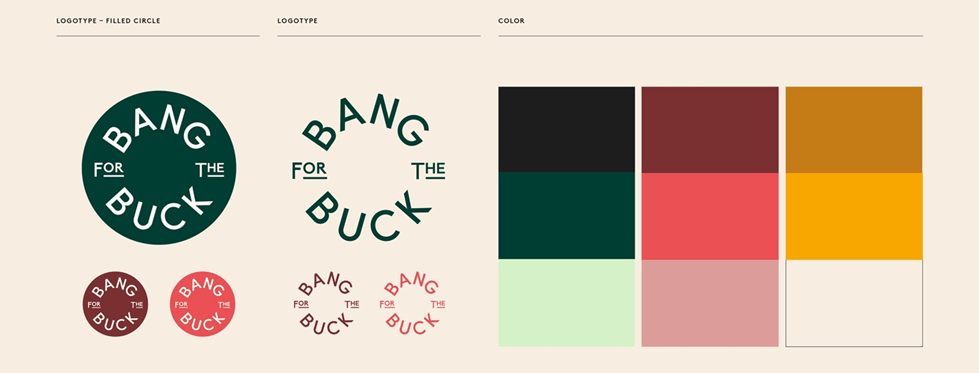
    Brand identity is not about selling the company’s product, it is about selling the company itself. They want to set themselves apart from their competitors, and using these visual elements is how they do it. This idea of ‘selling themselves rather than their products’ is further explained in the scholarly article Building a unique brand identity: measuring the relative ownership potential of brand identity element types by Ella Ward, Song Yang, Jenni Romaniuk, and Virginia Beal. “Described as an integrated system of cues, the purpose of brand identity is to provide a physical, proprietary representation of the brand (Perry and Wisnom 2003). In this sense, rather than providing a reason to buy the brand, the primary function of brand identity is to create a synergy amongst disparate brand elements and establish a unique brand look and feel for relatively homogenous goods (Perry and Wisnom 2003; Underwood 2003; Romaniuk and Nenycz-Thiel 2014).” In the image below you can see what an established brand identity might look like.  This mock example is a great representation on how a company creates a color scheme, font, and logo variations that are specific to their company.

    (Photo from BeHance, https://www.behance.net/gallery/57691987/Bang-for-the-buck/modules/375634675)

    While some might not value the artistic side of branding such as choosing colors, logos, fonts, etc., this isn’t just so your brand looks ‘pretty’ or ‘trendy’, it is truly a science to set yourself apart from your competitors.  Brand identity is important because it relates to the psychological ways consumers connect their memory with your brand.  “Brand identity elements can help explain the brand (Kohli et al. 2013), add meaning (Dahlén and Rosengren 2005) and contain imagery such as colours and shapes that expand the way the brand is encoded and stored in memory (Keller et al. 2008; Hartnett et al. 2016). As a result, the brand becomes more readily accessible to the consumer via creating a unique brand identity and artistic presence. (Ward and Yang and Romaniuk and Beal, 2020) Again, when it relates to identity elements, the goal is not to sell the product but the brand itself. Another way to explain this is “Identity elements are the cornerstone to brand identity that helps consumers to recognize brands and distinguish them from competitors (Hoek and Gendall 2010). These elements evoke the brand in the mind of consumers and create a unique look and/or feel that makes it easy to identify the brand (Perry and Wisnom 2003; Romaniuk and NenyczThiel 2014).” (Ward and Yang and Romaniuk and Beal, 2020).

    The biggest takeaways from this article are the importance of brand identity and its key position in successful companies.  It relates to integrated marketing communication in many ways but most of all brand identity can be practiced through campaign and message design.  The corresponding brand identity features are mostly used in the forms of advertising, packaging, and other forms of design.  Integrated Marketing Communication deals with these features of how and why it is necessary to create a brand identity as well as how this will eventually help your company succeed within its marketing and advertising techniques.  

    Source

    Ward, E., Yang, S., Romaniuk, J., & Beal, V. (2020). Building a unique brand identity: Measuring the relative ownership potential of brand identity element types. Journal of Brand Management, 27(4), 393–407. https://doi.org/10.1057/s41262-020-00187-6

  • How can brands stay up to date with user generated content?

    By Courtney Busick

    Brands are constantly changing. They need to stay up to date on how an audience interacts with them on social media. Many companies are finding users who share their content through stories or posts shows more engagement and interaction than counting likes and comments. How can brands engage their audience? By understanding their human values and what makes them want to share user-generated content with others.

    What is user generated content? User-generated content (UGC) is completely created by the user. Many brands are using this by asking users on social media questions about their products. More and more brands are finding that they can get free marketing from social media users with UGC’s. Whether it’s Lays asking for new chip flavors or Coke sharing the hashtag #shareacoke, brands can get reviews from user who share their content on platforms.

    Sometimes it can be hard for a brand to navigate UGC’s so here are some tips I love from other marketers that can help you engage with user-generated content.

    (Photo Pi Datametrics, https://www.pi-datametrics.com/blog/name-game-coca-colas-shareacoke-summer-ad-campaign/)

    Connect Human values to your Products

    Understanding a user is understanding what they value. Brands must look at human values and use those to generate content that users enjoy. “Human values are guiding principles reflecting style goals in life that may impact how individuals judge situations and events” (Nikolinakou 14). Meaning that human values are what drives our decisions. It affects consumer behavior towards certain products. It can also affect what we purchase. There are four levels of human values described by the article a brand should understand. Self- Transcendence (audiences’ stances on political or social issues), Conservation (audience’s desire to maintain security and stability), openness to change (what motivates users to change their opinions about products/services), and Self enhancement (user’s need to achieve success, wealth or influence) (Nikolinakou 14).

    Target actually used this in their “Acceptance” campaign. In 2010, Target pledged to donate $500 million to student’s education and they would double that for the best college acceptance video form their audience. So people sent in videos of them opening their college letters (Siu 2015). This allowed for the brand to connect with the brand personally and have fun showing of their authentic emotions. They touched on self-transcendence and conservation of their audience by showing what they value and how they are going to engage their loyal customers.

    (Photo from Contently, https://contently.com/2012/08/03/target-video-captures-real-college-acceptance-reactions-video/)

    In IMC, we should always be focused on the values of the consumer. This can also be seen through looking at a specific target audience. This is from their demographic to their psychographics and behaviors. What are the values and behaviors of my audience and how can I engage them in user content? For user generated content, you not only want to look at your brand target audience, but the population that is most likely to share you content through reviews or promotions.

    Reach out to audiences with specific human values to share content or promote a brand

    Human values drive consumer decisions. The primary and most popular values is conservation values. Consumers are constantly looking for trust and safety from their brand (Nikolinakou 15). By brands reaching out to the customers for promotions it makes them feel in charge and in control of the brands they love and their purposes.

    An example of this is social media management company Buffer. Instead of creating captions and content on their own, they encouraged their users to engage in their blog and submit their own content. They get the chance to be featured on their account. They post their own content to make you feel a part of their content process. Buffer also makes sure to be quick in responding to comments and dm’s on their pages. It allows for them to be authentic and true to their followers.

    In IMC, brand loyalty is so important. If a consumer picks our brand, we know we have to think of how we can meet their needs and that they want to stay with us. You cannot have customers without brand loyalty. As a customer to certain brand, I want to feel like the brand cares about me and what I value. I like to find brands that are consistent and authentic with what they do. People are influenced by others around them, so it creates a strong community of people who love and will continue to purchase from your brand.

    So what makes it easy for brands to use user generated content? Connection and understanding. In order for brands to immerse themselves into user generated content they must understand their clientele and who is loyal to their brand. They must observe human values and understand what human values they should reach in order to find quality brand users.

    Sources

    Nikolinakou, A. (2019) “Do human values matter for promoting brands on social media? How social media users’ values influence valuable brand‐related activities such as sharing, content creation, and reviews” Journal of Consumer Behavior. 14-22

    Siu, E. (2021, April 15). 10 user generated content campaigns that actually worked. HubSpot Blog. Retrieved February 25, 2022, from https://blog.hubspot.com/marketing/examples-of-user-generated-content