Tag: Communication

  • Politics Are Funny

    The emails were really just used for “Fun woman talk” and the ‘“Unsexiest email ever to Bill Clinton”- Kate McKinnon impersonating Hillary Clinton in an Saturday Night Live spoof in March of this year.

    Beyond Bernie Sanders epic declaration “the American people are sick and tired of hearing about your damn emails”, McKinnon’s SNL spoof may be most well remembered moment in the Clinton email saga.

    McKinnon played Clinton in an SNL episode soon after the private email scandal first broke loose, while Clinton herself made a guest appearance on the show. In October Clinton made a second appearance on SNL taking full advantage of SNL’s comedic twist yet again. She tweeted after the show “A vote for Hillary Clinton is a vote for four more years of Kate McKinnon’s impression #citizens.”  Following the show, audiences began to see Hillary in a different light.  Previously, she had a reputation for being cold and dull.  Afterwards, audiences had a new respect for her and her ability to poke fun at herself, and make light of past situations she has been in.  Performing on SNL was helpful in Hillary’s branding, making her more relateable and “human” to the target audiences she wanted to reach as a democratic candidate for the 2016 presidential election.

    Screenshot 2015-10-29 17.56.31Clinton isn’t the first nor will she be the last politician to appeal to SNL’s satiric take on politics and the scandals that dominate campaigns and news headlines.  Presidential candidates alone who have recently made appearances or hosted SNL during their campaigns include John McCain, Chris Christie, George H.W.  Bush, Al Gore, Bill Clinton, Obama and Hillary Clinton herself. The SNL dynamic provides an alternative and juxtaposed coverage opportunity for politicians whom we associate with stiff suits, stuffy press conferences and distant televised speeches.

    Politicians employ multiple strategies of branding themselves, often with formal news based media, and traditional advertising and campaigning efforts, but SNl proved throughout the years that politicians can also make their campaign worth a few good laughs. When politicians choose to go on a comedy show like SNL is a step further than being interviewed by John Stewart or Stephen Colbert. SNL’s audience includes people who follow politics but also includes a whole segment of people who don’t. Appearing on SNL is a way for politicians to reach these publics and show everyone that they have a personality beyond formal media interactions. This recent movement for presidents and presidential candidates to act on SNL started with Gerald Ford and has been successful in adding positive aspects to their brand, just like the changed perceptions of Hillary Clinton.

    Donald Trump and his quote of the day have become America’s latest source of entertainment, leaving some Americans wondering whether his campaign is little more than a publicity stunt.  Whether you are a Trump fan or not, November 7th is not an SNL episode to miss out on. Trump will be hosting SNL bringing his own Trump style “authenticity” to the table. With SNL delivering its witty and sarcastic take on politics, viewers may just want to stop, put the remote down and kick back for what promises to be much more humorous than yet another presidential debate.

    Donald Trump

    Aki Suzuki, Carey Poniewaz, Carey Shetterly, Lexie Trimnal, June Wilkinson

  • Halloween or ‘Howl’oween?

    As Halloween approaches, children and adults have been preparing for the holiday by buying costumes, decorations, and candies. Halloween is known as a night for children to walk around dressed up and get candy. However, recently the holiday has expanded to include all family members, even the pets

    This year, PetSmart has taken to Halloween just as much as other retailers, such as Walmart and Party City, usually do. The pet retailer advertises everything from pet costumes and collars to Halloween themed treats and toys. They also offer Halloween events such as in-store trick-or-treating, pet photo contests, and even Halloween “pet camp” for those that don’t want to leave their pets at home that night.

    Screen Shot 2015-10-25 at 12.49.54 PM

    https://www.petsmart.com/

    The home page for PetSmart’s website features everything a pet owner could need for their pet to be a part of the Halloween festivities. While the majority of their advertising is for their own products, the site also advertises at home do-it-yourself recipes and costume ideas. This form of advertising says to consumers that the retailer truly cares about the pets and wants them to be just as much a part of the holidays, therefore making pet owners trust their brand more.

    The communication design that PetSmart implements makes pet owners believe they need these Halloween items just as much as any other pet necessity. The company is making consumers buy into their narrative and purchase costumes for their pets. PetSmart holds a brand image that presents itself as a company for everything pet related. The company is seen as a go-to for food, toys, training, grooming, and in some stores, even veterinary services. By offering pet supplies and events for the holidays, even Halloween, PetSmart solidifies its image as still being the one-stop-shop for pet owners.
    One of the main aims of Integrated Marketing Communication is to affect behavior and not just attitudes. PetSmart has turned a once silly idea of dressing your family pet up for Halloween into a business opportunity to make a larger profit. The creation of not just products, but events too, draws customers in so that they feel they have a reason to buy character costumes for their pets and Halloween themed toys. For most pet owners, their animals are members of the family, and should be included in family fun. PetSmart allows that to happen with their holiday apparel and pet-oriented events.

    The pet Halloween industry has grown significantly to the point that CNN even offers the top 5 dog costumes of 2015 in their recent online article about Halloween Fast Facts, which can be found here: http://www.cnn.com/2013/06/13/us/halloween-fast-facts/  The top five costumes were as followed: pumpkin, hot dog, Batman, devil, and a bumblebee. Of those five, PetSmart offered every single one, some with multiple options, even for different sexes of dogs. Is it a coincidence that PetSmart sells the top five costumes? Probably not.

  • Carolina BalloonFest

    Screen Shot 2015-10-19 at 1.52.45 PM

    What is it?

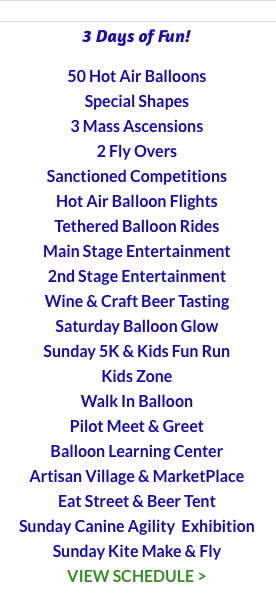
    Every year Statesville, North Carolina hosts the annual Carolina BalloonFest.  This is a three-day event full of hot air and fun.  With over 50 hot air balloons taking to the sky, Carolina BalloonFest will definitely leave you speechless.  This festival consists of numerous family-friendly events to keep everyone entertained.  From hot air balloon rides to a balloon 5k run, this festival has a little of everything.  The festival includes: ballon viewings, balloon flights, live music, beer and wine tasting, kite making and much more.

    Screen Shot 2015-10-19 at 1.52.34 PM

    Tickets are $10 dollars and can be purchased onsite at the festival.  For more information regarding the festival see: http://www.carolinaballoonfest.com.

    For a Cause

    Each year the festival chooses a variety of local charities to support.  Last year, over 17 charities received donations from the event.  Distributing over $76,000 dollars last year, Carolina BalloonFest not only provides fun and entertainment to the community, but also, a helping hand to those in need.  The organization states on their website that over the past five years they have contributed over $274,000 dollars to the community.  Ranging from cancer organizations to Boy Scout troops, many benefit from this weekend of fun.

    Screen Shot 2015-10-19 at 1.52.06 PM

    Com as Design

    Think of words you would use to describe fall.  Was “festival” one of the words?  To many, fall means dedicating weekends to a vast variety of festivals.  County fairs, pumpkin patches, corn mazes, and apple picking are all part of the fall theme.  But what is it we find so attractive about these events?  Is it the goods sold at them?  Or the idea of a group of people coming together for a united reason?  The design an organization or company decides to pursue for an event is very important.  Promoting what their target markets will find most attractive is crucial.

    By focusing on language in their design, Carolina BalloonFest uses phrases such as “help continue our charitable mission” and “experience the magic” to persuade their target audiences to attend their event.  This organization has decided to put a large emphasis on the charitable aspects of the festival.  The website has a section labeled “Our Mission” that describes exactly what charities benefit from the proceeds.

    The festival also places a large emphasis on being family-friendly.  Adding a list of activities that will take place over the course of the event, Carolina BalloonFest uses strategic naming of these activities to catch a parents’ eye.  “Kid Zone,” “Kid Fun Run,” and “Learning Center” are a few examples of designing language to fit a certain target market.

    Screen Shot 2015-10-19 at 2.02.27 PM

    It is clear when dealing with communication, design is key.  Remembering the power of design aspects, such as language, will ensure that you are successful in your communication efforts.

    Sources:

    http://www.carolinaballoonfest.com

  • Making a Difference Off the Field

    October holds several different meanings for the members in our society. It represents the beginning of the fall season and the theatrical holiday Halloween. To a smaller group, it is about National Bullying Prevention Month, which was recognized by the United States since 2006. October also stands for a nationally recognized, very important cause that affects thousands of individuals every year: “Now, therefore, I, Barack Obama, President of the United States of America, by virtue of the authority vested in me by the Constitution and the laws of the United States, do hereby proclaim October 2012 as National Breast Cancer Awareness Month.” As individuals in our society are guided by various narratives and learn from different experiences, Pittsburgh Steelers’ running back and former Carolina Panther DeAngelo Williams finds a special importance in the month as he unfortunately lost his mother to breast cancer in May of 2014.

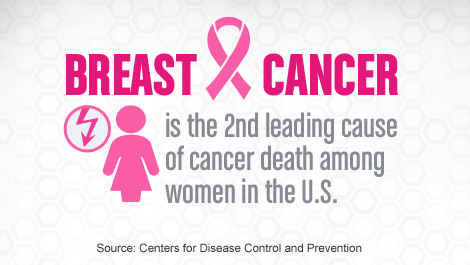
    In the book “Communication Theories for Everyday Life”, Walter Fisher, a contemporary theorist, speaks of how people are strongly influenced through storytelling: “Fisher believed that human beings are by nature tellers of stories… that the world was best understood as a series of stories that compete for our attention and adherence,” (Baldwin, Perry, & Moffitt). Individuals process and evaluate the persuasiveness of competing stories using narrative rationality, but the stories must also be popular or understood by the masses to have a full effect. About 1 in 8 women will develop invasive breast cancer during her life and about 40,290 women in the United States are expected to die in 2015 from breast cancer. However, our society didn’t quite stress the importance on the issue until recently and the actions that DeAngelo Williams has taken along with the NFL community have helped increase awareness immensely. Breast cancer is a part of his family’s story like many others, but he has used his stage as an NFL player to help take the initiative and his passion about raising awareness increases participation from other members of the NFL community and American society.

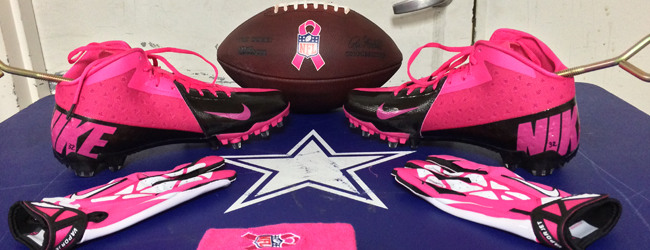
    The color pink is now extremely prominent on the football field during National Breast Cancer Awareness Month and a sport so heavily reliant on the bravado and testosterone of its players are now seen wearing pink gloves, shoes, and towels with a pink breast cancer awareness ribbon. Williams is the pioneer of this tradition and it is amazing to see where it has gone. It initially started in the summer of 2009 when Williams asked Riley Fields, Panthers director of community relations, if he thought the NFL might consider letting players wear pink cleats in addition to other pink apparel the league already planned to allow. Not only do players, coaches, and game officials wear pink, but many of their game-worn items are auctioned off with direct proceeds going to the American Cancer Society.

    The role that breast cancer played in Williams’ life left him compelled to help try to fight a disease that will continue to plague the lives of so many others. The support he has received in his efforts have allowed for the widespread increasing awareness of breast cancer in the month of October. Even the video game “Madden NFL 16” has incorporated the ‘pink treatment’, as Williams’ character in the game reflects his decision to dye some of his dreadlocks pink last September in honor of his mother. In a recent effort to increase awareness, Williams uploaded a two-part video to Instagram with him as the focal point of a commercial to help spread awareness with the caption: “This new TV commercial is dedicated to my mom, my 4 aunts, and women everywhere affected by Breast Cancer. I love you. #WeAreInThisTOGETHER.” It can be seen at https://www.youtube.com/watch?v=F5vahCK0pyg.

    -Griffin Weidele, Austin Moody, Luci Keefer, Allen Wooten, Scott Uraro

  • Semiotics of Halloween

    Fall marks the start of the holiday season, none more mischievous than Halloween. Through semiotics we use signs and symbols to interpret the world around us. Ferdinand de Saussure originally defined semiotics as a science that studies the life of signs within society, part of both social psychology and general psychology. When thinking what signs or symbols constitute Halloween, pumpkins, costumes, and candy may come to mind. These are consistent symbols in our society, but Halloween begins to represents different things as we get older. Younger children are only interested in trick-or-treating, carelessly walking through the neighborhood getting candy as a cautious parent or two watch from the bottom of each driveway. Teenagers tend to use the holiday in a more rebellious way as they cover trees in toilet paper, throw eggs at neighbors’ houses, and scare their younger counterparts. College students embrace Halloween as a time for costume parties and excessive drinking.

    Alcohol always seems to increase the chance of risk for any situation. For those who tend to get a little too rebellious, Halloween can represent a night they wish they could forget. Outrageous, appalling actions will also change the image portrayed by an organization, a university, and its students. East Carolina University suffered such an incident last year the day before Halloween when a large party at Riverwalk Townhomes could not keep people from attending and eventually turned into a riot. The following night being Halloween, WITN news reported, “In an email to all students last night, Chancellor Steve Ballard said any student involved in illegal activities on Halloween or the day after will also face possible disciplinary action from the university.” Although a diverse group of people were responsible for the riot, ECU’s image was put to shame and must implement a plan to restore their image to their publics. Semiotics is the science of communication and sign systems and the ways people understand phenomena and organize them mentally. The students that were a part of the riot last year have a different understanding of the semiotics of Halloween than most others would that did not have such an experience. The pumpkins and costumes may have been replaced with handcuffs and drinking tickets, replacing the previous symbols they associated with the holiday.

    Particularly in America, symbolism is inspired by classic film like Dracula and Frankenstein, and characters such as these are artifacts for understanding a typical American Halloween. Black and orange define Halloween as the traditional colors, supernatural forces and spirits of the dead are brought back in the societal light, and black cats and spiders represent the bad omens that the holiday can bring about. For a number of ECU students, Halloween itself was a bad omen and the university is still dealing with image issues as they near the next Halloween. No organization seems like an inviting place after a major controversy that negated societal values. Remember to enjoy Halloween, but not too much!

    – Griffin Weidele, Austin Moody, Allen Wooten, Luci Keefer, Scott Uraro

  • You can’t have your Coke and drink it too

    It’s one of the pillars of successful marketing, target your audience. Individualizing ads to particulars groups or regions of consumers ensure that messages have the most impact. But what happens when a company features a controversial scene in a spot, then removes it for some audiences and not others? Good marketing move or failure to take a stance?

    In its newest global campaign, “Reasons to Believe” Coca-Cola set out to inspire consumers that no matter what happens in life, it’s those small happy moments that make life worth living.

    Check out the commercial below.

    In most European countries the ad contains a scene of two gay men holding hands in front of their wedding party. However, in the Irish version (the video below) the scene has been replaced to feature a bride and groom.

    The Irish LGBT publication, EILE Magazine, brought attention to the issue, calling the removal an “inexplicable move”. In response to the criticism, Coca-Cola said that the advertisement had been tailored to individual markets so that the ad resonates with the people in each country where it is shown. The company defends the decisions saying that grooms were excluded from the Irish version because gay marriage is not legal in the country. EILE Magazine claims the Coca-Cola reasoning moot. The footage of the two grooms is known to be a video clip from a same-sex union ceremony in Australia – equivalent to a civil partnership in Ireland. Yet gay marriage is also illegal in Australia, but shown there. EILE claims the spot should have been suitable for Ireland as well.

    Coca-Cola has unequivocally made public their supporting stance on same sex marriage. Since 2006, the Human Rights Campaign continues to award Coca-Cola with a 100 percent ranking of their company polices and practices regarding LGBT. The Coca-Cola Company notes on their website, “To achieve a perfect score, companies must have fully inclusive equal employment opportunity policies, provide equal employment benefits, demonstrate their commitment to equality publicly and exercise responsible citizenship”

    Many are saying that Coca-Cola’s recent actions were hypocritical. Coca-Cola claims to support gay marriage, but their choice to remove a gay marriage scene from a commercial in Ireland, in which law does not prohibit such imagery, is misleading of the company’s values. Similarly, another beverage icon, Starbucks, has also gained attention for their hypocritical actions.

    Bryant Simon discusses the company Starbucks in his book Everything But the Coffee. Through his research he comes to discover that Starbucks isn’t delivering what they are promising in their brand – good coffee with little environmental impact. Claiming to buy fair-trade coffee from Rwanda and Nicaragua farmers, Starbucks was actually buying from bigger farmers and only buying 5-6 percent of fair-trade out of all the total coffee purchases.

    Much like Starbucks claiming to be environmentally friendly yet not taking the necessary steps in order to be green, Coca-Cola’s actions were just as misleading; claiming to support gay marriage yet removing a scene from one version of a commercial for the sole purpose of trying to please everyone.

    As future and current brand ambassadors we have to remember that every decision we make, including company policy decisions, become an integral part of brand, and when decisions are made that contradicts that it hurts the brand.

    On the other side of things, as consumers (and as Simon states in his book) we have to remember pursuing “solutions to highly complex social problems through buying and buying alone” doesn’t fix the problem or change the ideology. We have to stop relying and believing that buying certain brands is going to change a social issue.

    So, does Coke’s decision to take out the gay marriage scene hurt its brand identity? Should companies take stances on social issues? What practices do you follow to make sure this brand conflict doesn’t occur in your company or with your clients?

    Savannah Valade, Caroline Robinson, Elizabeth Harrington

  • What was that word again?

    “Four score and seven years ago our fathers brought forth…” and the rest I can’t remember. I know I’m not alone in the painstaking task of memorizing the Gettysburg Address, but are current junior high students the first generation to not participate in this tedious tradition? Dating back to 5th century BCE Sophists, memorization has been considered a great asset for rhetoricians. Sophists are known for their emphasis on teaching effective dialectics. One aspect of their teachings included encouraging their students to memorize long discourses to persuade their audiences. Sophists, who were masters of persuasion, considered memorization an art form of delivery.

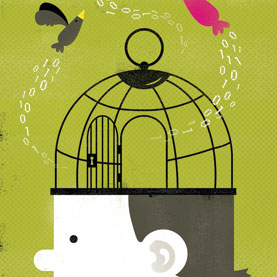
    Now we have the ability to look up any information at the touch of a screen. If we don’t remember something right away, we don’t have to struggle for that tidbit to rise to the top of our brains-we can just ‘Google’ it. Some scholars suggest memorization is simply not a part of the modern student’s duty. Has this asset now become irrelevant?

    Image

    Image: Shaw Nielsen

    The Shallows, written by Nicholas Carr, analyzes the impact technology has on our brains and our thinking processes. We may not be able to measure if there have been long-term consequences of being glued to technology but some short-term alarms have been noted. Carr and other researchers have noticed technology’s impact on our attention spans. We are unable to sit to stay concentrated on one thing for a substantial amount of time with flipping to different webpages, checking our phone and flipping through TV channels…and all at the same time. The debate is whether we are learning more simultaneously or losing something we once valued: our memory. Carr comes to the conclusion that, although technology makes us smarter in certain areas, it makes us less intelligent in others. Is one impact of the rise of technology on mankind the loss the art of memorization? Or is this simply technology opening our minds for other tasks? The Sophists are surely turning over in their graves.

    -Rachel Edwards