Tag: coffee

  • Pumpkin $pice

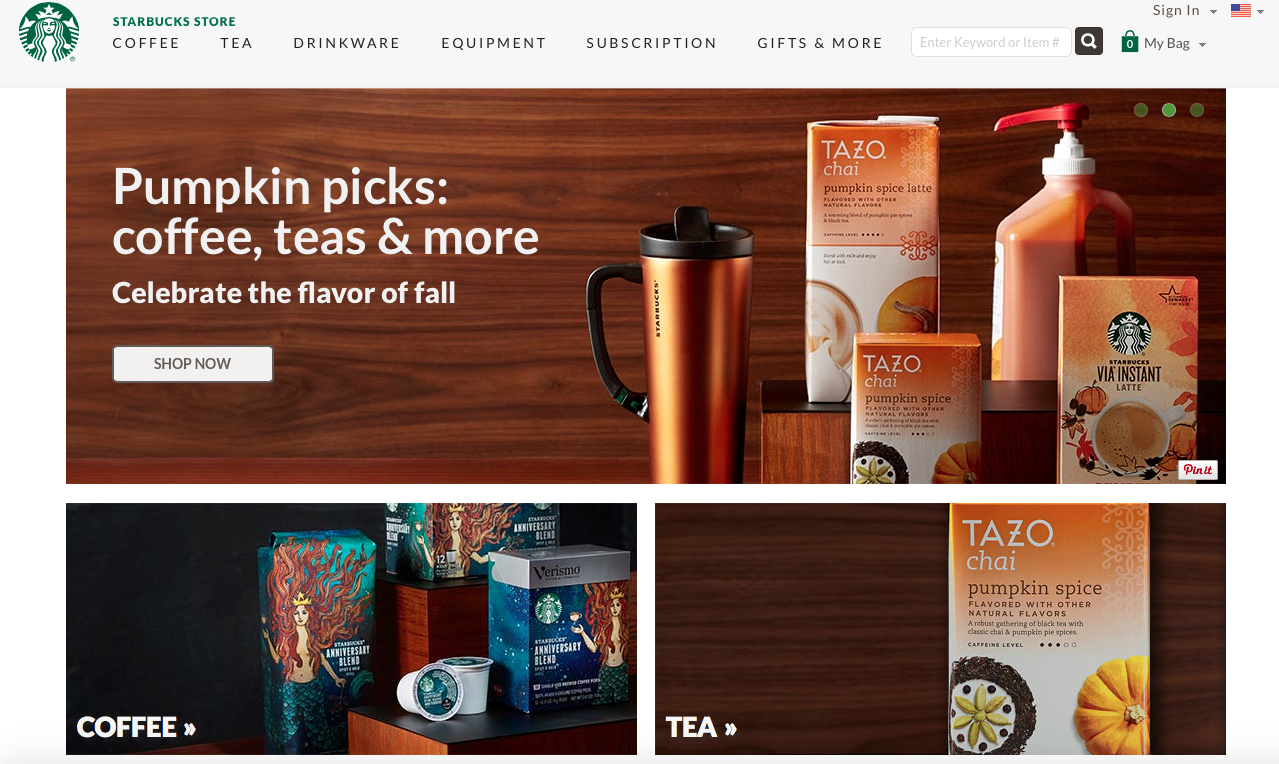
    Although today is the official first day of fall, pumpkin flavored lattes and #sweaterweather advertisements have filled our newsfeeds for weeks.  Preparation for America’s “favorite season” is a prime example of strategic planning when it comes to IMC.  Companies, such as Starbucks, take no mercy on branding fall for a profit.  Take a look at the Starbucks home page:
    Screen Shot 2015-09-21 at 1.45.54 PM

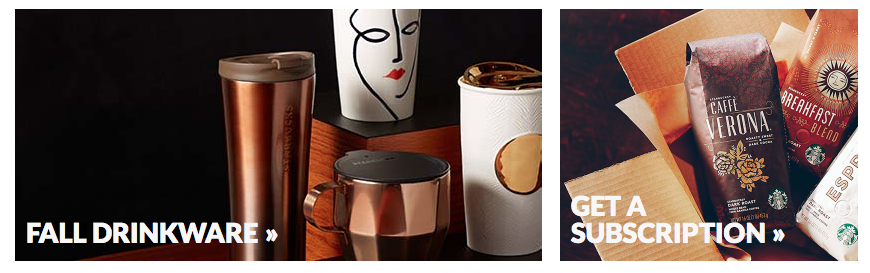
    “Celebrate the flavor of fall” with pumpkin spiced teas and pump bottles of artificial pumpkin flavor.  Starbucks goes above and beyond by defining fall and reminding us it is time to put a dent in the pumpkin population and enjoy this fantastic, fall sensation.  Keep scrolling and you will find the “Fall Drinkware” section of their website, offering a variety of different orange coffee mugs for about 20 bucks a piece.
    Screen Shot 2015-09-21 at 1.45.42 PM

    A little much?  Well, according to Fortune Magazine, Starbucks reported a 10% increase in the fiscal fourth-quarter sales in 2014.  Evidently pumpkin spice does come at a price.  The company is reportedly brewing up more ideas and plan to add to the recipe by creating a “fall flavored” line of sodas, smoothies, and yogurts.  Limiting the availability of these fall treats help build upon the chic image Starbucks maintains to its publics.  Though some may gasp at the thought of paying over 5 dollars for one of these sought after lattes, to many, fall just wouldn’t “be in the air” without them.

    S. Alyssa Groom wrote in her article, Integrated Marketing Communication Anticipating the “Age of Engage”, that it is now impossible to create a marketing plan to follow at the beginning of the year.  Starbucks’ creation of this fall line is a prime example of Groom’s theory.  The company has broken the marketing year into segments and focuses on specific aspects of what is popular and “hip” during that market period.  Groom also mentions that “marketing can no longer stand alone” and the importance of customer engagement.  Through social media pages dedicated to this fall line and the creation of hashtags, Starbucks makes purchasing one of their fall items interactive.  Allowing for customers to post pictures, tag the company, generate new hashtags and register for giveaways.  These strategies get the customer excited about going out and buying Starbucks products.  Customers now “buy into” the Starbucks brand, going beyond a simple cup of coffee.

    -Luke, Dan, Amanda, Meleah and Kendall

  • Falling in Love with Pumpkin Spice Lattes

    psl-starbucks.0.0Pumpkin is the flavor of fall. Products that offer limited edition seasonal pumpkin flavors and scents include pumpkin beer, pumpkin M&Ms, pumpkin spice marshmallows, pumpkin candles, pumpkin scented shampoo… and according to testers at the TODAY Show pumpkin spice Oreo’s are “especially tasty”.

    But no one does it better than Starbucks and the Pumpkin Spice Latte.

    Pumpkin Spice Lattes first appeared on the Starbucks menu in the fall of 2004. This is the beverage that kicks off their holiday seasonal drinks, even though it comes out in late August. The creamy pumpkin pie sensation mixed with a subdued coffee flavor created a taste that consumers immediately latched on to. One sip can bring you down memory lane, sharing an evening with your family, exchanging laughs and stuffing your bellies.

    Along with scarves and sweaters, sipping on a Pumpkin Spice Latte has become a new fall accessory. The drink option reminded loyal customers why Starbucks was their brand of choice and offered incentive for potential new customers to engage in their products.

    Seattlemet.com states that in October 2004, just one month after releasing the Pumpkin Spice Latte,  Starbucks noted an 11 percent spike in their company sales compared to the previous year. It was official…the brand had struck orange.

    In 2013, forbes.com reported that Starbucks has sold over 200 million pumpkin spice lattes and generated a revenue of over 80 million dollars.

    But popularity has a price. The seasonal drink got so popular that it seemed to reach a tipping point. Last year in 2014, some consumers were losing their sense of identity from feeling too conformed by the Starbucks pumpkin spice fad. Customers became critical of the product and and found some weak spots to pick on. The beverage’s ingredients did not actually include pumpkin and did include caramel coloring. These two things were enough to start an anti-PSL movement. This movement grew to such a size that Starbucks revisited its IMC plan.

    tumblr_nu0dm5sSD81tg0kfio1_500After 11 years with the same successful recipe, Starbucks reformulated to accommodate disgruntled customers. In addition to adding real pumpkin, the company devoted a large IMC effort towards branding this product. They have created a tumblr, an instagram, a twitter, and an entire brand identity just for one drink. The real Pumpkin Spice Latte now takes selfies and interacts with its audiences. Starbucks Efforts include having its own trending hashtag (#PSL), offering an iced version for warmer weather, and even a password that allows people to buy the drink earlier than it is official release date.

    Will Starbucks be able to revive the pumpkin spice latte trend once again? Or will the PLS critics find some other problem to cling to?

    Love Pumpkin Spice Lattes? Use the #PSL on Twitter, Instagram, or Facebook to gush about your love for this hot beverage. Or leave us a comment below and let us know what you think!
    Watch Starbucks 2015 Campaign here: https://www.youtube.com/watch?t=112&v=la-h1sE3igs

    -Aki Suzuki, Lexie Trimnal, Carey Shetterley, June Wilkinson, Carey Poniewaz

  • You can’t have your Coke and drink it too

    It’s one of the pillars of successful marketing, target your audience. Individualizing ads to particulars groups or regions of consumers ensure that messages have the most impact. But what happens when a company features a controversial scene in a spot, then removes it for some audiences and not others? Good marketing move or failure to take a stance?

    In its newest global campaign, “Reasons to Believe” Coca-Cola set out to inspire consumers that no matter what happens in life, it’s those small happy moments that make life worth living.

    Check out the commercial below.

    In most European countries the ad contains a scene of two gay men holding hands in front of their wedding party. However, in the Irish version (the video below) the scene has been replaced to feature a bride and groom.

    The Irish LGBT publication, EILE Magazine, brought attention to the issue, calling the removal an “inexplicable move”. In response to the criticism, Coca-Cola said that the advertisement had been tailored to individual markets so that the ad resonates with the people in each country where it is shown. The company defends the decisions saying that grooms were excluded from the Irish version because gay marriage is not legal in the country. EILE Magazine claims the Coca-Cola reasoning moot. The footage of the two grooms is known to be a video clip from a same-sex union ceremony in Australia – equivalent to a civil partnership in Ireland. Yet gay marriage is also illegal in Australia, but shown there. EILE claims the spot should have been suitable for Ireland as well.

    Coca-Cola has unequivocally made public their supporting stance on same sex marriage. Since 2006, the Human Rights Campaign continues to award Coca-Cola with a 100 percent ranking of their company polices and practices regarding LGBT. The Coca-Cola Company notes on their website, “To achieve a perfect score, companies must have fully inclusive equal employment opportunity policies, provide equal employment benefits, demonstrate their commitment to equality publicly and exercise responsible citizenship”

    Many are saying that Coca-Cola’s recent actions were hypocritical. Coca-Cola claims to support gay marriage, but their choice to remove a gay marriage scene from a commercial in Ireland, in which law does not prohibit such imagery, is misleading of the company’s values. Similarly, another beverage icon, Starbucks, has also gained attention for their hypocritical actions.

    Bryant Simon discusses the company Starbucks in his book Everything But the Coffee. Through his research he comes to discover that Starbucks isn’t delivering what they are promising in their brand – good coffee with little environmental impact. Claiming to buy fair-trade coffee from Rwanda and Nicaragua farmers, Starbucks was actually buying from bigger farmers and only buying 5-6 percent of fair-trade out of all the total coffee purchases.

    Much like Starbucks claiming to be environmentally friendly yet not taking the necessary steps in order to be green, Coca-Cola’s actions were just as misleading; claiming to support gay marriage yet removing a scene from one version of a commercial for the sole purpose of trying to please everyone.

    As future and current brand ambassadors we have to remember that every decision we make, including company policy decisions, become an integral part of brand, and when decisions are made that contradicts that it hurts the brand.

    On the other side of things, as consumers (and as Simon states in his book) we have to remember pursuing “solutions to highly complex social problems through buying and buying alone” doesn’t fix the problem or change the ideology. We have to stop relying and believing that buying certain brands is going to change a social issue.

    So, does Coke’s decision to take out the gay marriage scene hurt its brand identity? Should companies take stances on social issues? What practices do you follow to make sure this brand conflict doesn’t occur in your company or with your clients?

    Savannah Valade, Caroline Robinson, Elizabeth Harrington

  • America Runs on Dunkin’, but Will They Stay?

    Dunkin’ Donuts prides themselves in promoting their image as the coffee spot for the average Joe. However with Starbucks and McDonald’s as competitors, Dunkin’ Donuts has decided to revamp their stores in an effort to pull in more upscale coffee drinkers. Dunkin’ Donuts is now attempting to reach customers that are interested in the coffee-drinking experience rather than just a quick morning pit stop. Owners have the ability to choose from four different schemes that they can remodel their store as. These themes include “Original Blend,” “Cappuccino Blend,” “Dark Roast,” and “Jazz Brew.”

    Image

    -Pictured above is the “Jazz Brew” scheme.

    By redesigning their stores, Dunkin’ Donuts hopes to give their customers a better overall experience. In turn, customers will be more likely to form a strong attachment with their brand and chose them over Starbucks or McDonald’s.  Just as the CEO of Starbucks states in a quote from author Bryant Simon, “I think we have managed to, with a simple cup of coffee and a very unique experience, enhance the lives of millions of people, by recreating a sense of community, by bringing people together and recognizing the importance of place in people’s lives.” If Dunkin’ Donuts would like to be able to brand itself as what we call in IMC, a “third place,” they will have to take a page out of Starbucks’ marketing plan to create an atmosphere that draws people in to not just drink coffee, but stay.

    Image

    -Pictured above is the “Cappuccino Blend” scheme.

    So far the new change in atmosphere has led to positive results for Dunkin’ Donuts. The remodeled locations include new additions such as faux-leather chairs, digital menu boards, and relaxing music. These changes have already fostered a greater sense of community because more business professionals are stopping in around lunch time for business meetings and interviews.

    Improving the consistency in the appearance of their locations, Dunkin’ Donuts can reach a stronger brand identity. It is evident that their stores need to be redesigned after receiving the second lowest atmosphere score for beverage and snack shops in a 2012 survey done by Nation’s Restaurant News and WD Partners. As of June the company had redesigned 90 locations and hopes to have 600 finished by the end of 2013. Have you recently been to a Dunkin’ Donuts and noticed a difference in the atmosphere? Have you wanted to actually sit down and stay a while?

    -Aaron Love, Kara Zimmerman, Rachel Clay, Rebecca Hobbs