Tag: Advertising

  • Has the Branding of Humans by Companies Gone Too Far?

    Marketers and advertisers have been getting more and more creative with how they choose to promote their brand and products. A recent trend has been the one of the “walking billboard.” Many people have been willing to brand almost any part of their body for the right price.


    In more recent years, tattoos have been seen as both as cultural icons as well as innovative methods to deliver a specific message. Web sites such as LeaseYourBody.com, TatAD.com, BodyBillboardz.com, HumanBanner.com, and LivingAdSpace.com connect brands and potential advertisers with individuals who are willing get “branded” for money.

    Many popular brands such as Volvo have used these creative tattoo advertisements to further promote their cars. Linda Gangeri, national advertising manager of Volvo Cars of North America, said their tattoo man was a way to get people to think differently about the Volvo brand.  Being a “walking billboard” is an extreme example of how people are being used to creatively advertise for brands in today’s society.

    There are less permanent and drastic ways in which someone can brand themselves for a company. Clothing is a great example. Clothing will always be a great tool for human branding because it is one of the first things we notice about the appearance of others.  In recent years, there have been rumors circulating that Abercrombie and Fitch pays individuals to come into their store and shop whilst wearing their clothes.  Even more recent are the allegations that the company has done the exact opposite as well. In 2011, the company reportedly offered the cast members of MTV’s “Jersey Shore”, specifically Mike “The Situation”, to not wear their clothes while filming the popular TV series. They felt that the cast members wearing their clothes affected their brand negatively rather than positively and did not want to be affiliated with the show. Clothing is also largely used by brands that are not restricted to apparel to benefit both the clothing store, and their own brand. For instance, the clothing store “Hot Topic” sells a variety of different t-shirts from many different companies. One of the big examples is the “Twilight” series. By selling shirts that relate to the book or movies, the people who buy these shirts then become walking billboards for both “Twilight” as well as “Hot Topic”. Clothing has been and remains to be a great tool for human branding for the simple fact that in society, appearance really does seem to be everything. If someone is attractive and is wearing a t-shirt that promotes something, most people that see this person are likely to be influenced by what is being advertised on the shirt.  The “Legalize Gay” shirts from “American Apparel” are a great example. Not only does the shirt promote a cause, but some people even think it’s trendy. This caused the design to become a quick success for “American Apparel”.

    Along with self-branding through choice of apparel, companies use celebrities to promote their brand by paying them a great deal of money to wear their clothes, jewelry, hats, sunglasses, etc. In 2003, famous tennis player Serena Williams signed a sponsorship contract with Nike which agreed to pay her over 8 million dollars a year just to wear Nike’s logo on her uniforms and visors while playing. Not only is Serene getting paid; she does not even have to buy her clothes from Nike because they are given to her. The better and more popular the athlete, the more money companies choose to invest into that particular person or team. Tiger Woods is another athlete that has been ridiculous sums of money just to wear and boost certain brands. Before his sex scandal, Tiger allegedly made between 55-60 million dollars from endorsements.  After, the controversy, he makes about 20 million less, but still an incredible amount of money just to wear Nike apparel.  This marketing strategy applies to fashion and luxury brands as well. On the “red carpet”, interviewers are constantly asking who designed celebrities’ dresses or what brand of jewelry are they wearing. Throughout the past couple of years, the number of film stars that accept fees for wearing a brand’s designs or jewels at the Academy Awards and other red-carpet events has significantly increased. Lucie Greene, the author of many articles located in FT Magazine, stated that “last year US Weekly reported that Oscar host Anne Hathaway was paid $750,000 by Tiffany & Co to wear its jewels throughout the ceremony. The same story said that Gwyneth Paltrow was paid $500,000 to wear Louis Vuitton baubles during her live performance” that same night of the Oscars. Businesses are looking for every possible way they can find to market their brand and increase sales and participation. Phillip Bloch, a professional stylist who works with the popular celebrity Sandra Bullock, along with many other famous clients, views this pay-to-wear trend a smart branding strategy. “It’s a business more than ever now”, Bloch says.

    Over time, the ways in which people are used to promote and essentially brand a company have evolved.  While clothing has been around for quite some time, the creative ways in which it is used has been changing in recent years.  Celebrities have been used to wear a brand and increase revenue.  As notes, extremes such as being a “walking billboard” have become more and more prominent.  As is natural in a social setting, people are extremely influential upon one another.  Thus starts the argument that as technology develops over time, the ways in which humans are used to advertise will as well.

    Sasha De Vecchi, Lindsay Gallagher, Jay Reilly, Cary Welborn

  • Hollywood’s Attempt to Stay Alive: The Era of Movie Remakes

    In the recent years, a surplus of movies and TV show remakes has been surrounding society. From examples such as “Footloose” and “21 Jump Street,” it seems that producers are running out of gas and dwelling on the idea of making past success future successes as well. Remakes are nothing new and in some instances, can be even better than the original. This has also held true within the music industry due to a variety of songs being revamped and remixed by more recent artists.

    With a currently unstable economy, Hollywood is no exception to the “Remake Era” that is upon us. Directors and producers are sticking with older titles and storylines that have proven to be profitable.  Remakes have become a lower-risk tactic that ensures a steady purchase in ticket sales, which leads to a higher profit.  In fact, according to New York Magazine, next year, one in three movies will be based on previously published or filmed material. People will show up to watch a title they already love or have an emotional connection with. If it is good, it brings them joy and allows them to reminisce.  On the contrary, if it is bad, it rekindles a nostalgic flame within them.

    In addition to completely remaking movies, the film industry has also been re-releasing movies in 3-D. Films such as “Titanic” and “Finding Nemo” have endured incredible success and in return have made their way back to the big screen. They are essentially the same movies that were in theaters years ago except that they are now three-dimensional. Some people are marveled by this twist, but others may think this tactic is a little flat and almost lazy. Instead of coming up with new and thrilling ideas, they are releasing movies they predict are going to be making money, because they already did in the years prior. The idea that they are new and exciting just because they are three-dimensional may be a bit of a stretch, but consumers seem to be buying into it.  “Titanic 3-D” grossed 25.6 million dollars in sales the first week it was in theaters, adding to the 1997 overall sales of 1.84 billion.  While this is extremely successful, the movie still fell behind both “American Reunion” and “The Hunger Games” during the first weekend it was shown, proving that remakes will not necessarily boast the same success as original versions.


    Movie remakes aren’t an extremely new idea, but they seem to have become more prevalent in recent years. Hollywood is trying desperately to maintain to stay alive and profitable by focusing on films that feature accustomed titles and brands.  There has been even more pressure to do that recently due to the lack of different movie ideas as well as the unstable economy.  Basically, most Hollywood filmmakers believe that “fan reminiscing” can be its own brand of effective marketing. As time passes, new ideas and evolving technology allow older movies to be redone to reach their full potential.  Even if these movies are more technologically inclined, some fans want more out of a remake. Some directors are even resorting to creating new versions of movies that are already remakes, which hints that Hollywood is simply running out of new and profitable ideas. In result of this, the term “remake” is often being associated with a negative connotation.  Also, many older movies are viewed as a “classic” and people are hesitant to see change in such movies.  An example of this would be the remake of “E.T” that has been released this year.  This is a landmark movie from thirty years ago, and many people do not like the thought of it being redone to include the technology of 2012.

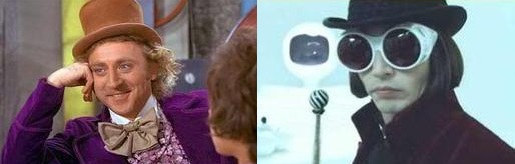
    Another great example of a drastic remake is “Charlie and the Chocolate Factory”.  Many fans were outraged by the 2005 remake of the 1971 masterpiece.  While the movie was very created and technologically advanced, many people enjoyed the simplicity of the original version.  While this is all open to interpretation and based merely on opinion, many can agree that it is a lot harder for fans to openly accept a remake when they loved the original version.

    In today’s world, new and exciting story-lines are hard to come by.  While revising original versions can deem profitable, there are consequences to be considered.  Reactions of audiences that enjoyed original versions can be an issue as well as gaining support from people that did not like the original in the first place.  Also, these movies can be successful from a financial point of view, but it is not likely they will be as successful as the original was.  Regardless, we will not be escaping the “Remake Era” any time soon, which is evident by the fifty remakes that were made in 2012 alone.

    Sasha De Vecchi, Lindsay Gallagher, Jay Reilly, Cary Welborn

  • Tumblr: The New Frontier of Advertising?

    When you hear the words ‘social networking’ images of Twitter, Facebook, Instagram, and Pinterest will most likely flash through your mind.

    But have you ever heard of tumblr? If you haven’t, it’s because tumblr thrives on an almost underground vibe, where users can post original content or reblog posts they relate to.  If you have then you are most likely a tumblr user, who prides themselves on the individualized, and therefore authentic, blogging experience. As a precursor to Pinterest, tumblr pioneered the use #’s and reblogging as a way to drive traffic to blogs.

    While Twitter and tumblr are very similar -in the sense that you can follow other users and use #’s – tumblr attracts a different kind of blogger. These bloggers are generally highly creative, or artistic and do not hesitate to post their own artwork or current thoughts about the world around them. There is almost a prestige to tumblr that is not present on other social media platforms, which is generated by the genuine self-reflexivity of its users.

    With this said, you may think that the presence of advertisements are minimal on tumblr, due to it’s user generated content. In fact, most tumblr users falsely believed the same thing not too long ago. While advertisements aren’t quite as visible as they are on other platforms (i.e. Facebook and Twitter), they are still very present and becoming a more popular way to reach new audiences. Companies are allowed to make as many tumblr accounts as they wish. This leads to the repeated reblogging of their product’s photos, consequently inundating user’s dashboards to promote their brand.

    Users have begun to feel cheated or taken advantage of by the advertisements that target them on tumblr. The belief that this platform was an untapped and authentic society diminishes daily with the growing presence of advertisements. The question is now: will users accept the fact that advertisements are present on every media platform or will they find a way to keep tumblr the way it has always been, advertisement free?

    – Ally WaltonLauren HabigErin KiffmeyerHannah EureGene Lee

  • HubSpot: The Transformation From Outbound Marketing to Inbound Marketing

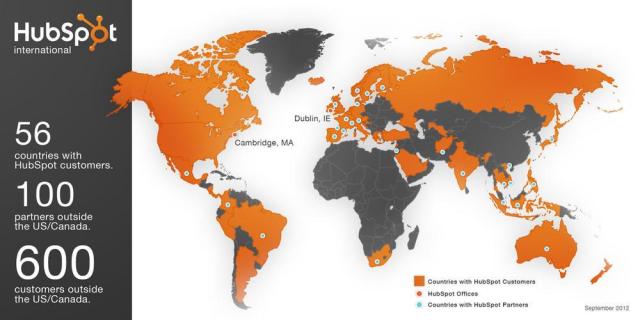
    Among the large variety of social media in today’s society, HubSpot, although not very well-known, has been a major pioneer within its field and has generated great success. HubSpot was created by Brian Halligan and Dharmesh Shah at the Massachusetts Institute of Technology (MIT) in June of 2006 and has been rapidly growing ever since. It is new strategic marketing software that is actively helping over 7,500 companies within 46 countries by generating personal research including blogging, social media, email marketing, etc. Hubspot’s marketing techniques have been used for online companies such as Twitter, LinkdIn, among many others.

    Brian Halligan, one of the co-founders of HubSpot, stated the following in one of his blog posts on the site: “Rather than doing outbound marketing to the masses of people who are trying to block you out, I advocate doing “inbound marketing” where you help yourself “get found” by people already learning about and shopping in your industry. In order to do this, you need to set your website up like a “hub” for your industry that attracts visitors naturally through search engines, the blogosphere, and social media. I believe most marketers today spend 90% of their efforts on outbound marketing and 10% on inbound marketing, and I advocate that those ratios flip.” This is the driving force behind the company today.

    With the competition that is present in today’s business world, it is crucial to have a tactical plan to further market one’s brand. HubSpot achieves this by taking the best inbound marketing techniques and combining them into one spot, which is exactly what HubSpot accomplishes. This innovative tool is not free, but there is a free trial run that one can sign up for prior to buying a full subscription. In a country where the use of social media has increased a whopping 356% in six years, it is no secret that social media is now a competitive market. A company generally needs to be utilizing social media better than their competitors to be successful. HubSpot helps with this because it compares a company to their competitors on a social level and teaches a company how to develop and grow faster than its competitors. It also educates companies on how to create exciting, new content for the public and how to use cross-channel campaigns. These services that HubSpot offers allow businesses to stand out in today’s very crowded business market.

    The proof that HubSpot is effective is in the statistics. Studies show that on average, after three months of use, HubSpot users experience 32% more leads per month and 24.6 times more leads after twelve months of use. In 2011, HubSpot grossed over thirty million dollars in revenue. Internationally, HubSpot is growing at a rate of 200% a year and even has scheduled to open a new headquarters in Dublin in 2013. The opening of this new headquarters is expected to provide 150 jobs for the citizens of Ireland and already employs 300 people in the United States.

    Since the creation of HubSpot in 2006, the company has been quickly evolving. Not only are more companies using it, but the company has provided many jobs in a time where new jobs are a worldwide necessity. With the increase of social media influence in society today, companies such as HubSpot are essential in aiding a company convey its message to a large pool of consumers.

    Sasha De Vecchi, Lindsay Gallagher, Jay Reilly, Cary Welborn
  • I Am.. Authentic?

    What makes an advertisement authentic?  Is it the product, or the ways in which marketers try to make the product seem appealing to you, the consumer?  In today’s society, companies are constantly trying to discover the next great idea that can sell a product.  Whether it is a new logo on the product or a new commercial you see on TV, they are all aiming towards the trend of being considered “authentic.”


    Let’s take this Dr. Pepper commercial for example.  An uplifting ad telling you to embrace your “inner you” by breaking out of your everyday routine and go with the crowd of people that are all doing the same.  What is this commercial really trying to say, that the product is authentic, or the consumer is authentic?  Do people who want to express themselves drink Dr. Pepper?  This is authentic right?  You are going against the norm by showing off your “inner you” and storming the streets in joy.  But in actuality this ad is the furthest thing from authentic.  The entire commercial is just a clever new way that a corporation spent millions of dollars on to get you to buy their product.  They want to appear authentic to consumers because that notion of scarcity and realism is what is driving the consumer market today.

    This is a common misconception among today’s society; the secure feeling of knowing the product you are buying is authentic.  Companies are trying to persuade you into buying their product because of how exclusive and different it is from all the rest; when in actuality, most of them are comparable to one another and the methods they take to explain that to you are exactly the same.

    Dr. Pepper is not the only product employing this notion of authenticity.  It seems that this effort must be working because these products are still thriving.  Are the products you buy and consume daily producing authentic advertisements?  Are these advertisements the reason you choose their brand, their product?  And are these products authentic or are you, the consumer authentic?

    Jessie Butner, Meaghan Beam, Zach Abramo, Jack Lane

  • Does Humor Sell?

    During the 2010 NFL Super Bowl, Old Spice started a new marketing campaign, releasing the above commercial online and on television. It quickly became the “number one all-time most viewed” branded channel on Youtube. How did they achieve that success? By targeting women, who dominate the body wash market, and men with humor, it created for the first time a topic of conversation for couples around the nation. The marketing team also showed the commercials in certain movies where there was a “high amount of couples” were projected to go. So because of the topic of conversation that was generating millions of hits on YouTube, women began to buy Old Spice for their husbands and boyfriends so that they could “smell like the man your man can smell like.”

    But how did this campaign have continued success? Old Spice continued to use the “man your man can smell like” guy and let him interact with fans all over the internet who would ask him random questions that he would answer in his fashion. In one day alone Old Spice generated more hits on Youtube than Obama’s presidential victory speech, on day two he had 8 of 11 top videos on Youtube, and by the end had over 40 million people view his videos.

    The success of this campaign is astounding considering that ; the brands twitter following increased 2700%, Facebook fan interaction went up 800%, and traffic to the Old Spice website increased 300%. This made the bottom line of the company increased 107% 10 months after the release of the first Old Spice commercial.

    Shortly afterwards many companies have tried to have the same success, copying the Old Spice guy commercials to a certain degree but still enjoying some success. By making some of the funniest and memorable commercials of all-time Old Spice increased their brand awareness while making people laugh and had one of the most amazing marketing campaigns for a business ever. So does humor sell? This guy thinks so.

    – Ally WaltonLauren HabigErin KiffmeyerHannah EureGene Lee

  • The Lack of New Advertising Ideas Leads to Controversy

    In the world of advertising, it is becoming increasingly difficult to come up with creative ideas. One market that has witnessed this first hand is the automobile industry.  Car companies are constantly trying to create flashy commercials to catch the eye of the consumer.  Newer companies have felt even more pressure to stand out in order to be successful and survive.

    The company Fiat first released the Fiat 500 in the USA in March 2011. Their most recent commercial gained success, but it also came with controversy. Since Fiat is an Italian company and Italy is where their business originated, they decided that an immigration theme for advertising would deem most successful in gaining support. The commercial, titled “Immigrants,” depicts a bunch of self-driving cars driving around in Italy until they eventually all drive into the ocean. They resurface in New York and the commercial announces, “The next wave of Italians has come to America, and they’ve come to party. The Italian-Designed Fiat 500.”

    Although many thought that the commercial was a stab at the immigration issue disrupting American political waters, Oliver Francois (head of the Fiat brand and chief marketing officer at the Chrysler group) commented “I’m aware that this is a country where you can expect controversy, but we’re just trying to connect the product in the USA to its Italian heritage. Putting the 500 in its context is what we need to do.” He also stated that there is no reference to the vehicles as immigrants, nor to the abnormal way they arrive on the American soil.  Francois obviously disregarded the fact that the commercial was bluntly titled “Immigrants.”

    This particular Fiat commercial is not the only one that has made headlines for controversial reasons.  There are many other examples of ways that advertisers have tried to take a new, innovative approach but failed miserably.  Another example includes that Lung Cancer Alliance’s attempt to fit in with modern day society.  Their billboards consisted of slogans such as “Hipsters deserve to die” and “Cat lovers deserve to die,” insinuating these people should die as opposed to lung cancer victims.  While it is dually noted that someone at these advertising agencies should have exercised more common sense, these examples show just how difficult it is for agencies to find new ways to advertise.  In an age where we are more advanced than ever, there are limited ways left to make advertisements new and exciting, which is what gets people listening and eventually buying.

    Sasha De Vecchi, Lindsay Gallagher, Jay Reilly, Cary Welborn