Tag: Advertising

  • How Kotex Got Almost 700,000 Impressions with their Pinterest Campaign

    In the past few years, Pinterest has been the protagonist of a real-life international explosion, a phenomenon with incredible numbers constantly growing worldwide. The steady growth of their users, combined with the social media’s careful attention to what is now clearly a new platform of communication, has led many brands to explore and take advantage of this viral sensation. Kotex, a famous feminine hygiene brand owned by Kimberly-Clark, partnered with the lesser-known (at least until now) Israeli social media agency Smoyz, for the first Pinterest-based campaign that finds expression in the initiative “Women’s Inspiration Day.” The creative talents of Smoyz searched and analyzed thousands of boards of women who eagerly use the social media site, until they finally selected 50, the muses who would then become the medium itself for the campaign.

    Once the “muses” were selected, they analyzed all of their boards on the website trying to find out what inspires them, after which the brand created individually personalized gift packages with the products they wanted decorating them with different styles that would capture each one’s attention. The 50 users selected to receive the packages did not have to do anything but re-pin Kotex’s original invite. How did this tactical advertising strategy go? Well, the numbers speak for themselves: 50 sent packages, 2284 interactions and almost 695 thousand impressions.

    907098_10200444288963285_716261723_n

    This marketing experiment was a huge success, a buzz that then involved several other social media platforms such as Facebook and Twitter, not to mention the amount of traffic generated to the brand’s websites. Both Kotex and Smoyz did a great job at carefully taking advantage of Pinterest’s peculiarities, such as females’ natural predilection for this specific social media, which holds about 68% of female users. Their careful demographic analysis combined with the use of the website for the production of gifts that were “tailored” around the user was refreshing and original.

    For quite some time now, Kotex has been conducting strong content advertising strategies, starting from their very own official site, which is home to a fairly populated online community. In fact the brand has already hosted several successful initiatives such as the campaign “Stand Up for What’s Real.” The campaign is primarily targeted at young women between the ages of 14 and 24 and it is aimed at helping women to talk about a subject that is usually viewed as taboo. Overall, this campaign certainly opens an interesting new chapter when it comes to online marketing by once again demonstrating how the dynamics of communication, thanks to the new media, are increasingly moving towards a more “tailor-made” approach.


    – Sasha De Vecchi

  • Deceptively Skinny

    How can a company or brand draw traffic to its website? How can a retail store capture people’s attention? Maybe by doing this:

    Released on March 20, 2013, American Eagle invited us to go to their website to purchase our own pair. If this is the first time you have seen or heard about this commercial, you might be wondering what is going on with those jeans and what is American Eagle doing? Thankfully, they are not actually trying to sell these “limited edition” Skinny Skinny jeans. The “jeans” featured in the commercial are in fact spray paint on the models, which American Eagle isn’t trying to sell either. I don’t think anyone wants that trend to start! Their goal with this ad campaign is to grab our attention, which I think it did. The commercial leaves viewers slightly confused and wanting to know more, and the obvious place to look for answers is American Eagle’s Website, which draws in traffic.

    Here you see the two “styles” of jeans, which are indeed spray paint cans. Prior to April Fools Day, it appeared you could buy the spray paint, but it was (always) out of stock. However, you could sign up to receive an email when more paint was available, resulting in the company capturing your email address. Now when you go to their site, you can receive a coupon for $10 off REAL American Eagle jeans.

    This campaign, while strategically deceptive, seems to be successful. As James Twichell explains in Lead Us into Temptation, “What advertising does and how it does it has little to do with the movement of specific goods.” This commercial was strategic in this way because it does not advertise a specific product, or even a product at all. The campaign, I feel, had more to do with American Eagle’s brand image and drawing attention to the brand. As Bob Holobinko, American Eagle’s vice president of brand marketing, said, “we just wanted to have fun, and have fun with our fans, and it was a good opportunity to kind of push it from a brand standpoint and the response has been incredible.” Taking a risk to deceive yet entertain their audience was worth it.

    While I commend their creativity and think this campaign is quite clever, I wonder what the impacts are for the future of advertising, especially the lines of deceptive advertising. While entertaining, it is deceptive from the commercial to the appearance that you can indeed purchase the spray cans. However, people tend to find this acceptable because it is rather funny and ten days later:

    AE April Fools

    So, do you think this kind of deceptive advertising is acceptable because of its entertaining and playful nature? Or do you think advertisements like this could lead to more issues and mistrust about the nature of advertising?

    Laura Tippett

  • Advertising Pranksters FOOL Consumers

    Bacon flavored mouthwash, lunchmeat DVDs, and glass-bottom airplanes?? This year’s April Fools holiday has caused an eruption of many brands’ foolish pranks going viral on social media. Some brands have even gone as far as creating spoof commercials and print ads along with their playful posts and tweets.

    For example, the P&G brand, “Scope” ran an ad on Facebook promoting their new “Bacon Flavored Mouthwash.” As you can see below, the company created a video spoof and several advertisements with catch phrases such as “Taste breakfast while washing it away” to promote this fictitious new product before they came out with the final phrase, “APRIL FOOLS!”

    Another brand having fun with this holiday is the movie rental company, Red Box, who is advertising “Sandwiches at Redbox.”

    To keep up with their April Fools promotional efforts, Red Box noted that they will be offering 50 cents off their rentals today only by entering the promo code “APRILFOOLS.”

    Virgin Atlantic Airways founder Richard Branson fooled customers in his blog featuring a new “glass-bottom airplane.” (Not for those afraid of heights!)

    The main reason marketers have chosen to embrace April Fools Day pranks is to make consumers laugh and create a lasting impression. However, these advertising pranksters may have another prerogative: by playing April Fools jokes via social media, these brands have the opportunity to go viral and target the new generation of social media natives.

    I think this is a smart tactic for advertisers as it shows that they can poke fun at themselves while promoting a playful culture that consumers can enjoy. Furthermore, as these spoofs go viral, they are gaining more traffic to their company webpages where actual products can be marketed and sold.

    Daniel Kahneman, author of Thinking Fast and Slow introduces the idea that our minds are associative machines where there are two systems at work. While advertisers may be promoting fictitious products to fool consumers, they are also taking advantage of our associative minds. By being playful and enjoying the holiday, consumers may associate these brands with being lighthearted and fun, further promoting a positive brand image.

    All in all, these April Fools pranksters have the right idea: using humor in advertising and focusing on building relationships with consumers should lead to a more positive brand image and (hopefully) increasing sales!

    Julia Tompkins

  • You’re So Dead

    So you’re dead, now what? Well, by signing up with LivesOn, an app developed as a new artificial intelligence undertaking, your tweets will not only be immortalized, but will actively continue from beyond the grave. LivesOn advertises itself as “your social afterlife,” and they strive to be just that. With just a few simple steps, you can sign yourself over to the world wide web for all eternity, or, at least until Twitter is replaced by the next advancement in social technology.

    ht_lives_on_dm_130221_wblog

    At its core, LivesOn is an intriguing idea; it’s something that has crossed the minds of many, “what happens to my social networks when I die?” Well, by creating a new algorithm, LivesOn has provided an answer. While still in this plane of existence, members sign up for a new Twitter provided by LivesOn. After the account is created, users then periodically will update their likes, dislikes, favorite celebrities and other information relevant to the post-mortem tweets. Users can even preview the service and see examples of what their future account will say, and are able to edit accordingly. The service, which has been developed by Dave Bedwood, in conjunction with the Queen Mary University in London, then uses an algorithm, one that is still shrouded in mystery, to continue the social networking following death. The algorithm in question will then, and it is still unclear how this happens, continues updating from your profile in occurrence with your pre-chosen likes and dislikes. None of this happens however, until your LivesOn executor, who you choose, gives his or her approval for the service to begin.

    liveson

    However, as impressive as this sounds, one has to wonder how much of this is actually possible. Will the account actually be able to successfully replicate a human being? Or will, in a more likely scenario, the account just occasionally retweet a favorited celebrity or celebrated television show or movie? Of course, this is problematic in itself, do people still want to be seeing a deceased loved one continue to fawn over their celebrity of choice, likely long after the celebrities fame has passed? Also, while to some, the idea of continuing tweeting following death may be fascinating, others find it less than appealing. In reality, how easy could it be to grieve if you’re still seeing the individual in question on your newsfeed every day still complaining about their lives as if they were still living them? And this begs another question, what happens to your account after twitter has long-been forgotten? Do you just continue tweeting about Justin Bieber to an empty newsfeed for all of eternity?

    While the creator himself has said that the intended audience will probably be a niche market, the bandwagon has already begun for LivesOn. It seems that only time will tell as to exactly how well this will work out in the future, but unfortunately, it will require a few members of the living to depart before we’ll ever be able to tell.

    – Jay Reilly

  • New Rules For Celebrities Who Advertise On Twitter

    Not all tweets are created equal: the U.S. Federal Trade Commission has decided to impose new regulations for celebrities who advertise on Twitter. The agency involved in the regulation of business activities has updated the rules on consumer protection for online business, publishing a specific document that explains how the VIPs should be tweeting their promotional messages.

    Image

    When a celebrity mentions a product or a service in social media, the sales can often skyrocket. But is the celebrity really a fan of what is being advertised or is he/she simply being paid to say something nice? After an incident when celebrity Lauren Bacall showed up on “The Today Show” promoting a drug without disclosing she was being paid, the Federal Trade Commission warned celebrities, as well as the marketers that use them, about not disclosing paid endorsements. Afterward, the FTC took steps to ensure social media bloggers disclose when they are being compensated for their comments.

    Image

    To make it as clear as possible, the FTC has invented a fictional celebrity, named Juli Starz. The fake star promotes a pill “Fat-away” that would help her lose 30 pounds in six weeks. The message also contains a direct link to the product’s website for those who may be interested. According to the FTC, this is an example of how one should not tweet promotionally. Juli in fact has made two mistakes: she did not specify that it was an ad, and secondly, the ad also lacked more precise information on the possibility that others could expect to obtain an identical result.

    In a second example, an identical tweet is presented, which contains however the hashtag #spon abbreviation of “sponsored.” In this case Juli still fails to comply with the FTC guidelines. The hashtag #spon, in fact, is still too ambiguous for many potential followers of the diva. It would be much better if the tweet contained the hashtag “ad” ie “advertisement.”

    Image

    Twitter has hundreds of millions of users, and it is interesting to think about the reach and impact of these free forms of advertising and online promotions. Another thing that is important to emphasize on is the ethicality of these advertisements. In fact, celebrities until now have been free to advertise on social media without really having to disclose whether they are being paid for that endorsement. I think it is important that followers and fans not be deceived and know when it is not a personal opinion, in order for them to make an informed choice about whether they also support the brand or product.

    The stars, in either case, are now warned. If you want to advertise, you must comply with the rules. “The same consumer protections laws that apply to commercial activities in other media apply online, including activities in the mobile marketplace,” the FTC said in its guidance. “Required disclosures must be clear and conspicuous.”

    Sasha De Vecchi

  • The New American “Diet”

    If you haven’t dined out, visited the drive through, or stocked up on packaged foods in the past week, I applaud you.  For the rest of us, with too little time, too much to do, and tight budgets, these can make up the majority of our diets.  Let’s face it, eating and cooking fresh can be pricey, and watching your produce waste away in the refrigerator is a little bit depressing.  In a country overrun with obesity and simultaneously fascinated with eating better, lighter options in stores and restaurants have become relatively commonplace.  So if we’re all buying the low-calorie options, why aren’t we getting thinner?

    Diet Coke, turkey burgers, and yogurt parfaits are only a few of the products often advertised and consumed as healthy alternatives to their higher calorie counterparts, but items like these can be the downfall of our healthy lifestyles.  Coca-Cola is a large offender, especially with their “all calories count” message in a recent anti-obesity ad campaign.  This campaign essentially highlights the improvements to Coca-Cola products and frames their beverages in a way that attempts to diminish their reputation as one of the biggest causes of obesity.

    Along with this beverage super-star, fast-food chains like McDonalds have focused ads on their lighter fare, restaurants advertise low-calorie menus, and snacks are packaged in smaller servings. The problem is, not all calories are equal, and not all low-calorie foods are healthy.  These companies position these products for the average American, looking to make improvements to their diet without much hassle, and it works.  Why you might ask?  It’s not because we don’t think about the choices we make, or are easily fooled.  It’s because advertisers utilize the fundamentals to communicate their messages.

    Advertisers are truly the kings and queens of Aristotle’s appeals of ethos, pathos, and logos.  They appear credible with FDA nutrition facts printed clearly on each label, appeal to our emotions by loading their ads with language and messages about healthy living or weight loss, and petition our logic with facts about what goes into different items and how the calories add up.

    This isn’t to say that most people will be quick to believe that a McDonald’s hamburger is part of a healthy diet because it’s part of the “under 400 calories” menu.  However, for those of us looking to do the best we can with the time and budgets we have, these ads can play powerful roles in decision-making.

    The big question about these types of ads, is whether or not it’s ethical to allow unhealthy products to be represented as the means to a healthier life.  For many people, shopping and eating well is a guessing game, largely impacted by packaging, print, and television ads.  In a world where being overweight or obese can cause health problems, social anxiety, and even death, should companies be required to avoid misleading their consumers?  It’s an age-old question unlikely to be answered anytime soon.

    Ally Walton

  • Free Advertising!

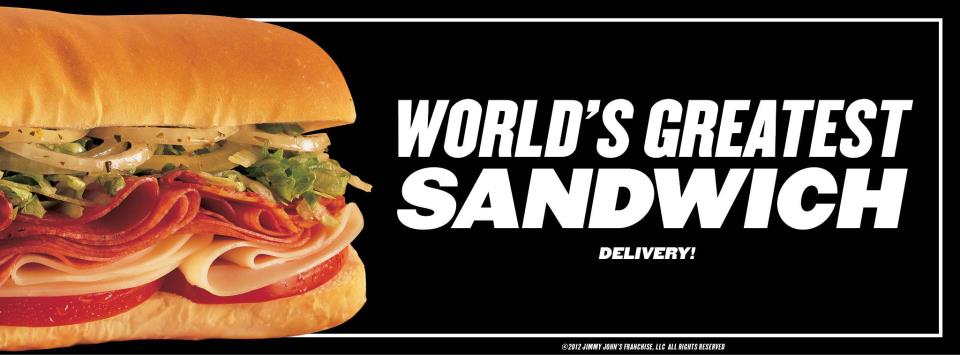
    It was Monday. I was at work. I was hungry. It was hours until my lunch break, and in walks the delivery lady for Jimmy John’s. To my delight she was not dropping off someone’s lunch order but had a box full of FREE SAMPLES! Yes, free sub sandwiches. And guess what, I now love Jimmy John’s.

    freesample-300x300

    Who doesn’t love free samples? Let’s be honest, it is the main reason we go to Costco. Since it is no secret that we love free things, giving away samples is a genius form of advertising. However, companies are not just giving away products for fun but use free samples, or sampling, as a strategic promotion. This type of promotion is nothing new. We can walk through Costco or the grocery store and sample bite size pieces of food. We can buy shampoo with a free trial size bottle of conditioner attached. We can go online and request free samples of dish soap, cosmetics, or toothpaste to be sent to us in the mail. So why am I so excited about Jimmy John’s free samples? Here’s the answer: I was not expecting on a mundane Monday morning for someone to show up with free food. My expectations for Monday were violated, in a positive way.

    According to Judee Burgoon’s Expectancy Violations Theory, expectations can be violated in both positive and negative ways. The value and weight of that violation can affect the relationship between the two parties. For me, Jimmy John’s violation caused my opinion of the company to go from neutral to rather high. The company made a step in forming a relationship with me as a consumer.

    Jimmy John's

    One of the goals of product sampling is to cultivate positive brand attitudes in potential customers. Just the simple fact that they are giving you something for nothing elicits a positive response. Sampling can be the first step in getting people to not only recognize the brand but also feel favorably towards it. While positive attitudes towards a brand are great, it is the future purchase that is the goal. It is too soon to tell if I will consistently choose Jimmy John’s, but I am much more likely to go there than before. If the promotion and the product are successful, consumers are likely to purchase the product.

    As you are witnessing, sampling can have another positive affect for brands: word of mouth. Because people are generally excited to receive free products, they are likely to talk about it. It worked on me (you’re welcome Jimmy John’s). Take a second to search hashtags relating to free samples on Twitter and Instagram, and you will see people advertising for brands through their excitement of free samples.

    So, we know sampling in almost any form can elicit several positive effects for companies, but Jimmy John’s took this normal practice and enhanced it. They brought the free samples to me. I didn’t have to walk around a grocery store or check the mail. By doing this, they are reaching people who might not have ever sampled their food and hopefully gaining new customers.

    Laura Tippett