Tag: Advertisement

  • Tailgating Musts or Bust

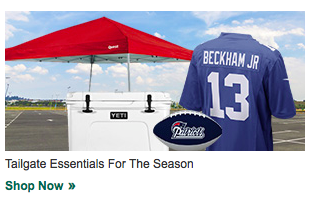
    Football season starting up and so are the advertisements. Target, Dicks Sporting Goods, and Best Buy are some retailers advertising “essentials” for game day and football season in their print ads and online.
    Screen Shot 2015-09-06 at 2.58.57 PM

    http://www.dickssportinggoods.com/home/index.jsp

    By defining particular items as necessities for football season and tailgating, retailers are creating their own definitions of tailgating and narratives of what the tailgating experience should be like for consumers.

    Target’s ad includes food items such as pre-made pizza and Coca-Cola, but also advertises TVs, grills, and fan gear. Dicks Sporting Goods’ ad includes pop-up tents and chairs, fan gear, coolers, and tailgating games such as corn hole. With Best Buy, all of their “necessities” are electronic – including cameras, speakers, televisions, and cell phone cases.

    Screen Shot 2015-09-06 at 3.02.12 PM

    http://weeklyad.target.com/site/#/wilmington-nc-28405/page/Target-150906

    By showing consumers products that are considered “game day essentials,” retailers are building their own narratives about the tailgating experience. Each retailer’s idea of what commodities that experience requires may be different based on the products sold at each business and their target audiences. Those that want the full experience are more likely to buy into a store’s ad and purchase the products retailers suggest.

    It’s not necessarily about what the consumer realistically needs for a tailgate. These ads for “must have” items are more about creating an idea that makes a consumer feel that without those items, they aren’t getting the best game day experience.

    These advertisements are an example of how today’s market is controlled by commodity culture – we define ourselves by the stuff that we buy. Typically, big businesses are able to sell higher ticket items based on a consumer’s need to feel like they fit in. Both the beginning of football season and the end are big opportunities for retailers to convince consumers that these products are what they need for the perfect football celebration. Football fans define themselves by having the best game day items for the season; new TVs, new grills, new gear, new everything. Retailers are ready for football season, and now the fans will be too.

    -Amanda Kluttz, Kendall Catterton, Meleah Lewis, Luke Matheney, and Dan Dawson

  • Artichoke Buttercups, Anyone?

    October 31st is the one day of the year that kids get the chance to dress up in their favorite costumes, carve pumpkins, trick-or-treat, and most importantly eat excessive amounts of sugar. This Halloween season, Crest and Oral-B have teamed up to make a commercial that portrays a child’s greatest nightmare- a Halloween without candy. This innovative and hilarious commercial titled, “Halloween Treats Gone Wrong,” is an unofficial experiment that captures how kids act when they find out healthy treats are replacing candy. This playful scare-tactic is one that parents are sure to appreciate as they attempt to find ways to motivate kids to brush and floss this Halloween.

    Companies consider many different appeals when creating advertisements to grab the attention of current and future consumers. Appeals are often used to influence consumers to purchase a product as well as speaking to their interests.  One appeal that is used often, and in this particular advertisement, is humor. If applied correctly, humor can be extremely successful in marketing a brand. Humor is used in this commercial through the use of children and their innocence and tendency to be blunt regarding their own opinions. The appeal to humor is effective at gaining and retaining the attention of audiences because humor results in better recall. Crest and Oral-B do a good job of effectively keeping their audiences engaged in their commercial while marketing their brands at a time of the year when you would least expect it.  By turning this campaign into a positive and laughable viewing experience, Oral-B and Crest have kept themselves relevant during Halloween and have shown that they too can relate to what parents everywhere are thinking.

    By establishing humor in their commercial, Crest and Oral-B have possibly widened their potential customer bases by creating a memorable narrative to leave with audiences. This emotional link that Crest and Oral-B created with their audiences increases the intent for consumers to purchase their products for themselves and their children. Some appeals to humor are not as successful as the Crest and Oral-B campaign have been.  While this commercial is being shared not only on television but also on social networking sites, other marketing attempts have not been as lucrative. If the humor is not received well by the audience the ad can backfire and create a negative image surrounding the brand.

    Image

    Have you seen any other examples of brands using the holiday season to promote their products? Do you think the use of humor in this ad was successful? What are some examples of humor used in ads that have resulted in you purchasing their product(s)?

    -Aaron Love, Kara Zimmerman, Rachel Clay, Rebecca Hobbs


  • The “Face” Behind the Letters

    Game night has long been a valued tradition in families across the globe, but with new technology some of the long-standing board games have been pushed to the side for virtual games on systems such as Wii and Xbox Kinect. Scrabble, for example, has been a part of the game world for over 60 years, but how often do families still bring out their Scrabble boards?

    Earlier this year, the advertising agency Pereira & O’Dell took over Mattel’s games account. This November, Pereira & O’Dell have released several 30-second spots in several different countries to bring back the association of Scrabble and fun. These advertisements bring personalities to three of the Scrabble squares: P, Q, and Blank. At first, the image of Scrabble pieces as faces on human bodies may seem a little strange. However, after viewing the advertisements a person may find themselves attached to the pieces.

    Each of the Scrabble pieces has their own unique personality. When you “meet Blank” you might notice that he seems to be a bit arrogant and definitely the life of the party. After all, everyone always wants to draw the blank square during the game, right?

    Q, on the other hand, is a bit of a loner. He has his heart broken by U and seems to be a bit timid. What is there not to love about the bashful, lonely Q? A viewer may almost feel guilty for hating the Q piece in the Scrabble game. It is heart-warming to see that, in the end, Q gets the girl.

    Pereira & O’Dell definitely get points for being clever with these advertisements. The strange image of the pieces having personalities seems to work, however, the question is: will the viewers relate to the pieces? Mattel wants to bring people together over their Scrabble game board for decades to come but only time will tell if it will actually work.