In 1971 Coca-Cola launched one of its very first in-color TV commercials. It was named; “I’d like to buy the world a Coke” and has been called, “one of the best-loved and most influential ads in TV history”. It featured a multicultural cast with actors and actresses from over 20 countries singing together on a hilltop in Italy. All holding a cold bottle of coke in their hands.
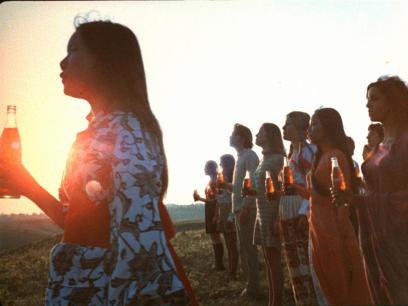
The commercial has been called “groundbreaking” and was a part of the Coca-Cola campaign, “It’s the real thing”. The slogan, as well as the commercial was created by Bill Backer (creative director for the Coca-Cola account at McCann). The idea of the commercial came to Backer while in an airport on the way to London. He quickly wrote down the words, “I’d like to buy the world a Coke and keep it company” on a white napkin so that he would not forget it in the morning.

Backer got help from established song writers Roger Cook, Billy Davis and Roger Greenway to write the full song for the commercial. The song became such a hit it was recorded by the New Seekers, a British pop-band. It was so idolized that it was played on the radio as a full-on song.
The lyrics read;
“I’d like to teach the world to sing in perfect harmony”
“I’d like to buy the world a Coke”
“And keep it company”
“It’s the real thing—Coke is”
“What the world wants today”
The commercial has received praise throughout the years, and rightfully so. Davis truly captured the essence of Coca-Cola’s brand identity explaining that, Coke was more than a liquid refresher. Saying that, Coke is a “tiny bit of commonality between all people”.

The commercial gave hope to a multicultural world in where a bottle of Coke could be shared together amongst anyone in “perfect harmony”. The Coca-Cola bottle was used as a symbol of peace. By using a multicultural cast the commercial aimed for a world filled with greater acceptance and inclusion. Erasing divisions between people with different skin colors, ethnicities, and backgrounds.
The commercial first aired in 1971. The same year as the US voting age was lowered to 18, Disney World welcomed it’s first visitors, the Pentagon Papers were published, and National Public Radio broadcasted for the first time.

A lot of things were changing at this time. You could possibly argue that in a state of doubt and anti-Vietnam war attitudes, Coca-Cola was ahead of its time releasing this “feel good” commercial focused on friendship and happiness. And it might have been a slight nod against the war oversees.
Take a look at the commercial yourself! Why do you think this became such a hit? Why do you think it resonated with people?
P.S. If you watched Mad Men, the final scene of the show is followed by the Coca-Cola Hilltop commercial. Showcasing just how iconic it was and still is today.
– Olivia Nilsson
 IMC Hawks Blog