Category: Technology

  • The Future of Marketing and Social Media

    By Jaime Mull

    (Photo by Austin Distel at Unsplash)

    Social media is constantly evolving, and new trends are occurring every day online. It can be difficult to keep up with the constant renewing and recycling of trends on apps like TikTok and Instagram. Companies, now more than ever, are using their various social media outlets to target consumers with current trends and memes to sell their brand or product. Well-known brands have used social media to sell their products for many years, but it hasn’t been until recently that they’ve truly engaged with consumers and actively participated in the trend cycle that is occurring. If brands are now using social media as their main selling source and are constantly posting and engaging with customers, how will their engagement evolve in the next few years? What will we see from brands on social media in the next few years that we haven’t seen yet?

    How is Social Media Used Today?

    Social media is not just a one-dimensional outlet for people to share their life and thoughts with others. Over the past few years, social media has evolved into so many different things, and has allowed people to communicate and share ideas in various ways. Specifically for marketing, social media has now become the main outlet for brands and companies to share products and communicate with their consumer-base. With apps like Instagram and Twitter, consumers can comment on a brand’s post or tweet, and the brand has the ability to respond right away. This gives brands a huge advantage and allows them to show consumers how reliable of a company they are.

    The growth of social media platforms has also created an omni-social presence, which suggests that almost every aspect of a consumer’s decision-making process is prone to social media influence (Appel et al., 2019). With the amount of different apps and websites that brand’s can post on (TikTok, Instagram, Twitter, LinkedIn, Snapchat), it is almost impossible for the consumer to avoid a product or specific brand message. If a brand wants people to see their message, they have several options for sharing and can pay to promote themselves even more.

    The use of influencers and celebrities in marketing has also increased greatly and is extremely popular today. Considering the possible reach and engagement influencers command on social media, companies have either begun embracing influencers on social media, or plan to expand their efforts in this domain even more (Appel et al., 2019). This means that influencers being used to promote a product or brand isn’t going to change in the near future, because it has shown to be effective.

    Brands will Become your Best Friend

    A safe assumption to make based on past and current trends is that brands will become even better equipped to answer consumer’s questions and meet consumer’s needs. For example, new platforms have emerged to make the connection between customer and firm effortless. Much of this is via instant messaging applications for businesses, which several leading technology companies have recently launched as business-related features in existing platforms (Appel et al., 2019). Brands are going to become even more accessible in the next few years due to platforms like this, that will allow customers to reach someone within the company in less than a few minutes. Consumers are tired of waiting for days to hear back from a brand’s customer service line, and they’re tired of hearing the same excuses for why certain products don’t work. Brands are going to become much more personable and honest with consumers, as well as make themselves available for questions and feedback at a much faster rate.

    The Future of Political Collaboration

    Something we saw in social media in the last few years that wasn’t as evident in the past was the increase in posts regarding politics, specifically from brands. Many popular brands, ranging from Ben & Jerry’s to Bumble, spoke up during the 2020 Presidential election and were very clear about which side they were taking in the race. It is becoming a growing trend for brands to show their support for political figures, which is interesting because there’s always the chance that they lose customers who don’t agree with their stance.

    There is also the case of politicians themselves utilizing social media more in the future, essentially to market themselves. A relevant example of this is with Donald Trump and his run for office in 2016, and 2020. Research has shown that with simple interventions, social media platforms can increase targeted audiences’ likelihood of voting (Appel et al., 2019). We will definitely see more social media use from politicians, as well as brands in support of politicians, in future campaigns and election years.

    Social Media is Always Evolving

    While it is always interesting to analyze social media and predict what trends and themes will happen in the next few years, no one really knows for sure what will happen online. Social media is constantly shifting and changing shapes, and new trends are always being created. It will be interesting to see how social media unfolds in the future.

    Sources

    Appel, G., Grewal, L., Hadi, R., & Stephen, A. T. (2019, October 12). The future of social media in Marketing – Journal of the Academy of Marketing Science. SpringerLink. Retrieved February 24, 2022, from https://link.springer.com/article/10.1007/s11747-019-00695-1

    Distel, A. (2019, July 24). Photo by Austin Distel on unsplash. Beautiful Free Images & Pictures. Retrieved February 24, 2022, from https://unsplash.com/photos/tLZhFRLj6nY
  • Who we are when we think no one is looking

    First of all, I just want to say that if you want to stay living in a bubble thinking humans are unbiased beings that always have fair and good intentions, maybe you should not read this book…. or maybe you should!

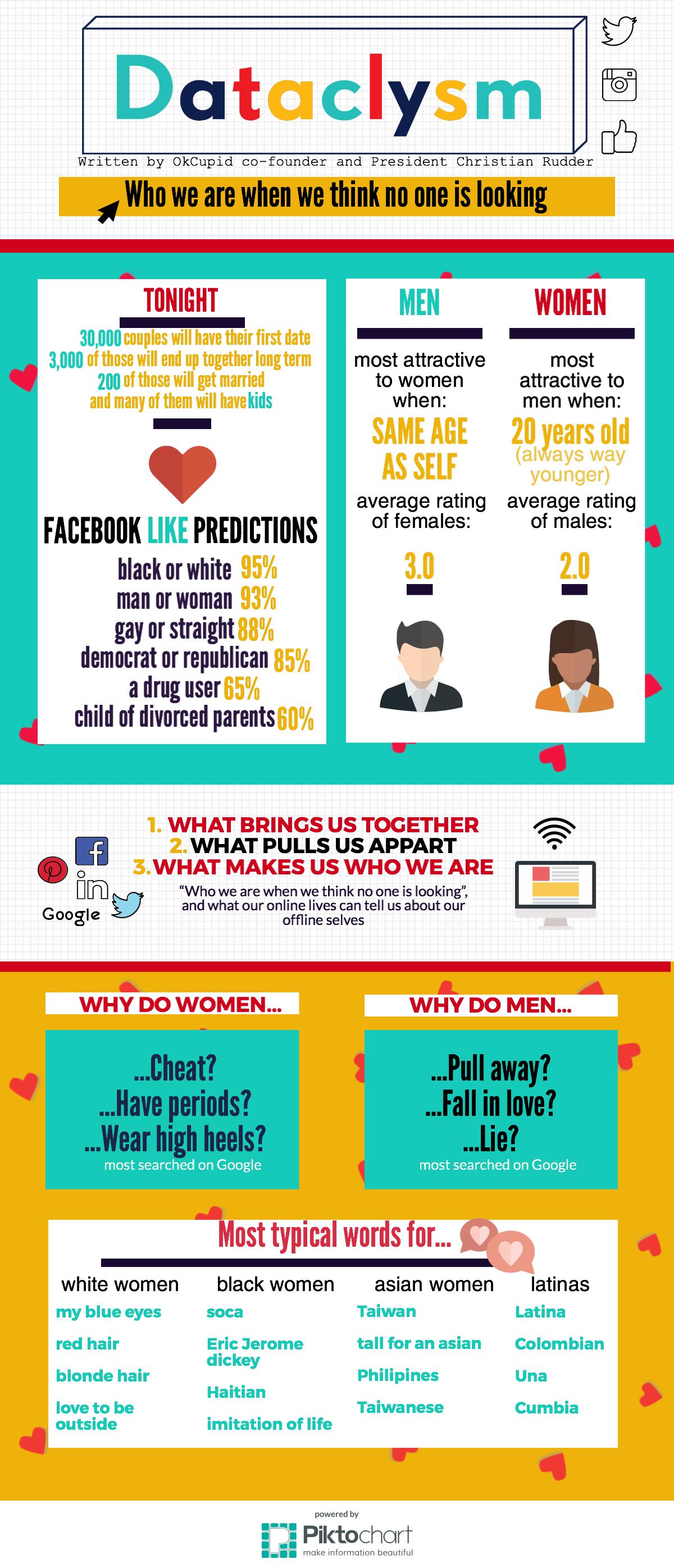
    Dataclysm, written by OkCupid co-founder and President Christian Rudder, dives into the deep world of internet data and how our personal data is used to “spy on us, hire and fire us, and sell us stuff we don’t need”. Dataclysm is a book right in its time, since we now spend most a lot of our lives online.

    DATACLYSMINFOGRAPHIC

    Rudder uses analytics to collect data that explains who we are, what we desire, and want. But also, what we hate, love and fear. He explains that our “true self” is shown when we think no one is looking, however someone always is. Because, the internet is nowhere to hide. If you are on the internet and you are online, you are oh so visible. Just a simple Facebook “Like” can reveal more than you think about a person. 

    Rudder explains that Facebook knows if you brake up with a boyfriend/girlfriend, if you like Dominos, or if you moved to New York City. And sites like Google, knows if you need a new dress for a formal, if you are gay, angry, lonely, or even racist.  

    This book is filled with fascinating statistics, and Rudder uses numerous graphs and charts to showcase his findings. This book is eye-opening and should be read by every millennial since our lives are so very deep centered around the internet and the information that we put there. Dataclysm is both a fun read as well as an important one. 

    I truly recommend this book to anyone who uses the internet! – which is all of you. 

    – Olivia Nilsson

  • The Shallows: What the Internet is Doing to Our Brains

    Have you ever wondered as technology continues to advance and we continue to use this technology, what effects this might have on us?

    It is not something that most people think about every day as most of us only see the benefits that new technology brings. Sure the challenge to stay in the “real” world is evident, as social media has become more and more prevalent, but what about more long-term effects that all of this technology can have.

    The Shallows by Nicholas Carr, a 2011 Pulitzer Prize finalist, answers this question as it relates to possibly one of the most impactful advancement in information technology, the internet.

    The infographic below illustrates Carr’s two central ideas about how the internet is changing the way we think.


    Whether it was books, clocks, or maps, these forms of information technology have always influenced the way humans thought, and the internet is simply the newest tool at our disposal.

    Carr’s First Point 

    Carr’s first point is that the human brain is always developing.

    He refers to experts in neuroscience to prove that the brain continues to change in response to its environment. Depending on the stimulus, the neural pathways in our brains are rerouted in response.

    Once Carr establishes that our brains are susceptible to change, he explains how the internet is forcing us to think in a non-linear fashion, as opposed to the traditional linear way of thinking that books made us think in.

    The Effects of the Internet

    This non-linear way of thinking means that we are now more accustomed to scanning for pertinent information as well as receiving information with minimal effort. So even when we are done using the internet, the effects of the internet do not leave use. Our brains still want to process information in this non-linear way.

    The benefits of using the internet and thinking non-linearly are that we can process more information faster and more efficiently than ever.

    The question now becomes, as we continue to use the internet, will these benefits continue to outweigh the potential downsides.

    Check out The Shallows to find out if the internet is changing the way we think for better or worse!

  • The phenomena of advertisement on YouTube

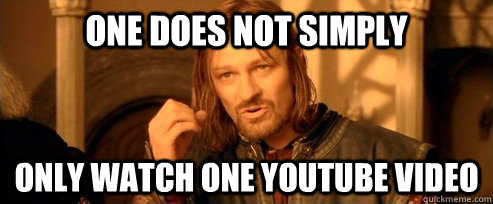
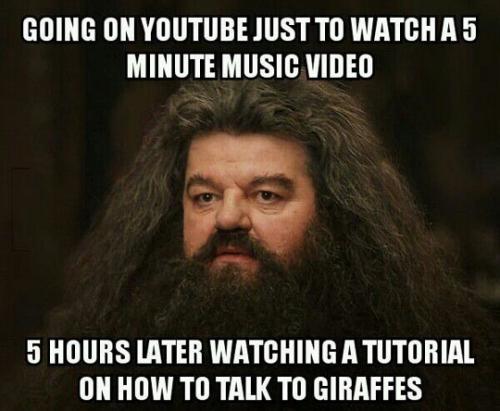
    I don’t know about you all but I love YouTube! I subscribe to a couple of different channels mostly related to beauty, fashion and traveling; but also, channels such as BuzzFeed and VEVO. I have the attention span of a five year old, so watching 10-20 minute long videos is perfect for me to keep my full attention and not get bored or drift off into distractions such as my phone.

    youtubelogo

    YouTube has grown tremendously in the past couple of years, and from what experts are saying it will continue to do so. Did you know that over ONE BILLION unique users visit the site each month? How crazy is that!? Additionally, YouTube is the second largest search engine in the world, only trailing behind Google! Seeing these statistics, it becomes clear that YouTube not only has a massive audience, but an extremely diverse one as well.

    In our modern world, digital marketing is more important than ever and advertisers are realizing that they need to be utilizing numerous different outlets. YouTube has become a fresh new marketing tool which can help advertisers and companies reach their specified target audiences. The success behind YouTube is the interaction and engagement is provides. Users often share, like, and comment content; creating an extremely close knit community among users.

    youtubepicture

    There are many ways to advertise on YouTube, product placement being one. One new trend among YouTube users is video blogging, also known as vlogging. Video Bloggers often rack up millions of views, and have quite the influence to their fan base. A study from Variety asserts that “teenagers’ emotional attachment to YouTube stars is as much as seven times greater than that toward a traditional celebrity”. For this very reason, advertisers are choosing to showcase themselves before, during and in videos which generates a large-scale audience. Sometimes it can be a placement ad that plays before the video (we have all seen the “Skip ad in 5”), but can also come in form of sponsored mentions, gift merchandising, or even partnership reviews.

    youtubepicture2

    YouTube has been around for a long time but it is rapidly becoming more and more influential. With 300 hours of video uploaded per minute, the site gives advertisers a wide variety of advertising opportunities which reaches people all over the world in a constant and visually appealing manner.

    Do you watch YouTube? And if so, what are some of your favorite channels?

    – Olivia Nilsson

  • The “Instructional” Campaign

    According to the calendar, Spring has officially sprung. And while we are still experiencing some chilly days, it’s undeniable most of us are ready to shed our winter gear for shorts and sandals. As with all season changes, clothing companies are eager to help you exchange your wardrobe.

    Recently, clothing company Lands’ End launched their new “How to Spring” advertising campaign, showcasing, “How fun and fashionable it is to add bright colors, graphic prints and floral patterns with a few perfect pieces from the women’s spring collection”. It could be argued that every spring campaign that will launch this season will have a similar goal; however, Lands’ End decided to do something a little different this season by adding a sweepstake to its promotional and marketing strategy.

    The sweepstakes works by first connecting with Facebook or entering your email. Once you’ve connected, you are asked to fill out your name, email, and zip code. Filling out this information unlocks the game. The rules are simple, select an outfit and click “spin”. If the outfit that the player selected matches the three tumblers, the player automatically wins a gift card with a balance of $25, $50, or $1,000. That’s it! Simple right? Not to mention, everyone is eligible to enter every day for the grand prize of $1,000 shopping spree. You can view the official rules of the sweepstakes here.

    While we like to think that games, contests, and sweepstakes’ only motives are for fun and entertainment, they are actually a smart marketing move – encouraging consumption of the product by creating consumer involvement. This involvement builds fan base, engages the audience, and enables consumers to do your marketing for you. Not to mention, user generated content often provides quality, innovative, and creative ads for free.

    In addition to promoting brand visibility, contest and sweepstakes are strategies that provide valuable quantifiable benefits for companies as well. They are cost effective, they help build search engine optimization (SEO), and increasingly important, they provide a rich source of consumer data for the company about existing and potential customers – emails, product preferences, location, etc.

    With every click essentially producing some sort of user information, online contests are growing in use on websites and especially on social media. The most popular initiatives include: photo and video contests, tagging contest, hashtag giveaways, and website raffles.

    Top Rank, an online marketing blog, named some of their picks of the best contest use on social media.
    Facebook: When Frito-Lay began their campaign for searching for new potato chips flavors, the company bypassed focus groups and turned to Facebook to connect directly with the customers who would be eating them.
    Pinterest: AMC Theaters have an entire Pinterest board, AMC Giveaways, where all users have to do is follow the board to stay up to date on the latest AMC contests. The basics are simple, when users see a prize they want, clicking on the image takes them to a landing page that collects their information.
    Twitter: In a “retweet to win” twitter contest, Doritos tweeted a message that simply asked followers to retweet for a chance to win. The tweet was retweeted over 500 times in a day with winners snagging products that ranged from Doritos to widescreen tvs.
    Instagram: As many clothing company are starting to do, Vera Bradely’s instagram contest asked users to post pictures of them and their favorite Vera Bradley bag using the hashtag #VBStyleShare. At the end of the contest, winners received a wrislet, followers of the hashtag could receive fashion inspiration, and staff could see how consumers were pairing their products.

    The benefits contests can provide seem like an almost no-brainer for companies to increase brand awareness while also gaining consumer data, but as they start to trend they are also subject to overuse. To combat becoming another form of clutter, companies will have to make sure their contest are increasingly interactive, engaging, creative, or lucrative.

    Have you ever participated in an online contest? Did you win? Did it make you feel more favorable towards the brand? Scrolling through your social media feeds have you seen brands using contests similar to the ones above? What are some of the best/most creative ones you have seen?

    Elizabeth Harrington, Caroline Robinson, Savannah Valade

  • Big Brother is Watching You FaceTime: 30 Years After “1984”

    apple_1984_ad_5

    On January 24thApple Computer will introduce Macintosh. And you’ll see why 1984 won’t be like “1984.”

    On January 22, 1984, what is widely regarded as one of the greatest television advertisements of all time aired during the third quarter of Super Bowl XVIII. The one-minute spot is a postmodern representation of George Orwell’s 1949 dystopian novel, 1984, which depicts a futuristic totalitarian society stripped of all freedom and individualism.

    In 1983, Apple and IBM battled for market share as the two giants in the computer industry selling over one billion dollars of PCs that year. In 1983, at his company’s keynote address, Apple founder and CEO Steve Jobs made clear that IBM is a fierce competitor gunning to dominate the industry.

    “Dealers initially welcoming IBM with open arms now fear an IBM dominated and controlled future…they are increasingly and desperately turning back to Apple as the only force that can ensure their future freedom.”–Steve Jobs, 1983

    During his address, Jobs unveiled the ad to an exclusive audience for the first time, to thundering applause. The ad, created by Chiat/Day, ultimately positions Apple and Mac as empowering, liberating, and individualistic, unlike the IBM view that computers are nothing more than tools. IBM is gray, cold, mechanical. Apple is colorful, creative, independent. This ad separated Mac to start the “Mac versus PC debate” that is still relevant today.

    mac-pc

    Which of these guys do you picture in an office at IBM?

    In 2009, Hunch did a survey to analyze personality traits between Mac and PC users. They found that Mac users are more likely to see the existing world as the same all the time and want to be seen as different and unique. They are more apt to call themselves “verbal”, “conceptual”, and “risk-takers”.  The Mac brand is still as relevant today as it was 30 years ago at its introduction, and its consumer base reflects it.

    The “1984” ad has also found itself injected into American culture. In 2007, Phil de Vellis used the visuals from the Macintosh ad and made it into “Vote Different”. It uses sound bites and images of 2008 Democratic presidential candidate Hillary Clinton to put her in the role of “Big Brother”—the role IBM took in the original ad. The woman with the sledgehammer that represented Mac became equated to Barack Obama. The video went viral and is a great example of using appropriation to communicate a message.

    From “1984” to “Think different.” to “Get a Mac”, Apple’s advertising for Macintosh has continued to embody the individualism Steve Jobs envisioned for the brand. Now, 30 years after it was introduced, what does the Mac brand mean to you?

    Nathan Evers