Category: Sports

  • Marketing UNCW’s Midnite Madness & Fan Jam

    IMG_2831

    Photo courtesy of the Association for Campus Entertainment.

    In the past two years, UNCW’s Basketball program has grown in prominence and recognition, not only on our campus, but on the college basketball scene as a whole. As a former Spirit Chair for the Association for Campus Entertainment, I was beyond excited when the Men’s team started winning. One of the best ways to garner school spirit on a college campus is to give students something to root for. Events intended to boost that school spirit, like Midnite Madness and ACE’s Fan Jam, are not new to UNCW’s campus, but appear to be getting some new—and well deserved—recognition.

    IMG_2768

    Some decked-out fans at Fan Jam. Photo courtesy of ACE.

    This past Friday, ACE worked with the Residence Hall Association, Athletics Department, Campus Dining, and more to organize the event known as Fan Jam. The purpose of Fan Jam is to get UNCW fans excited about the upcoming basketball season, while rewarding them with free games, shirts, and food. It is a way to thank fans for supporting UNCW’s sports teams. In the past, this event occurred after Midnite Madness and ran late into the night. However, this year Maddie Driggers, the current Spirit Chair for ACE, moved the event to 8 p.m., meaning it would take place before Midnite Madness. As with all her events, Maddie was tasked with discovering fun and engaging marketing techniques to inform students about the event and its new time.
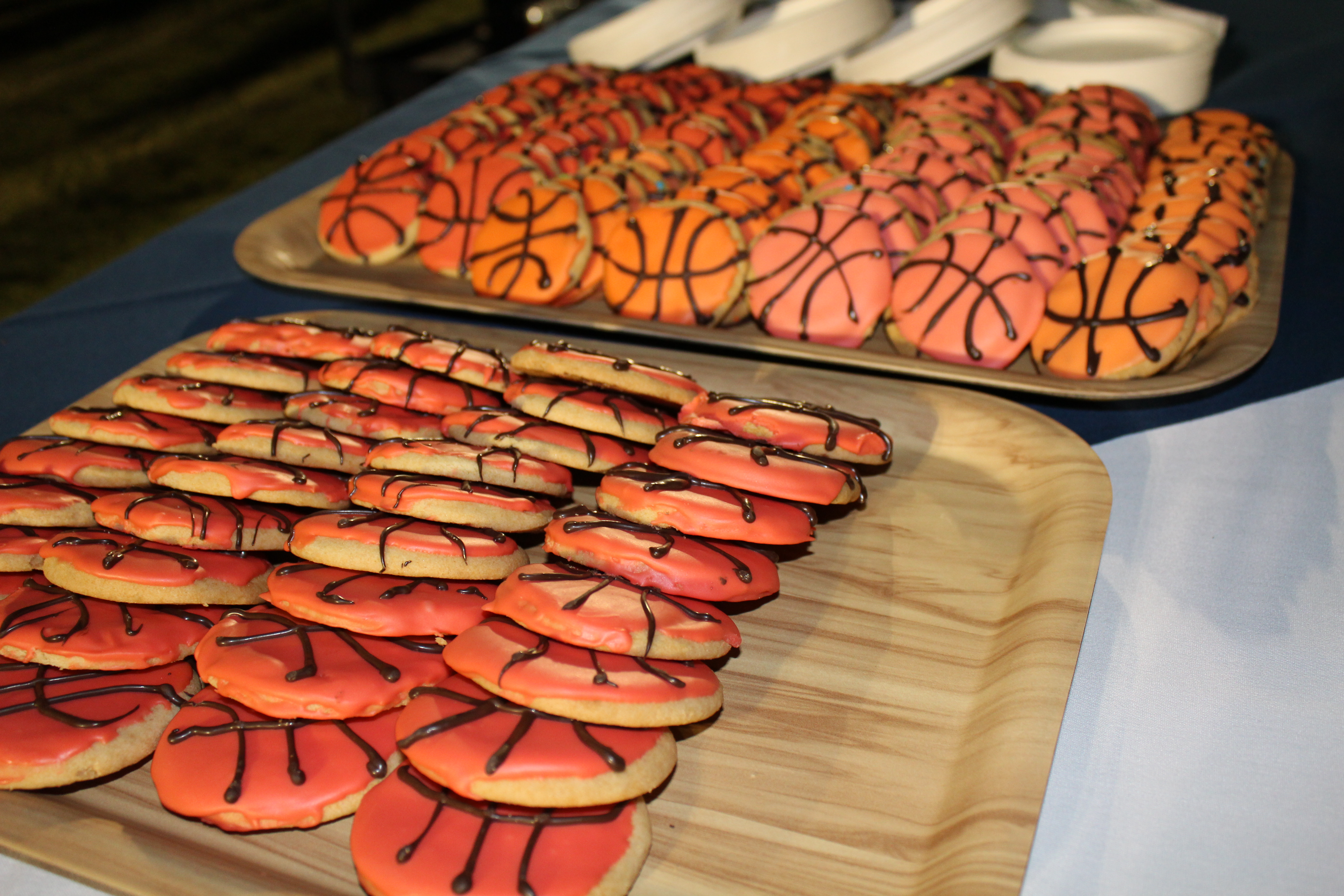
    IMG_2792  Basketball cookies made by Campus Dining. Photo courtesy of ACE.

    Aside from creating a flyer and posting the event details on social media, Maddie and her committee members tabled around campus. At their table, students could win Midnite Madness t-shirts by making a basket in a child-sized basketball hoop. This technique proved effective because curiosity drew a lot of people to the table. Additionally, the students were more engaged with the information because they were getting a reward. The Athletics Department also provided glowing foam sticks with “Seahawks” written on them. This giveaway helped market the event because they were conversation starters and looked amazing in photos.

    22550438_10156687920729097_673450984079421769_o

    The glowing rods in action at Midnite Madness. Photo from UNCW Athletics’s Facebook.

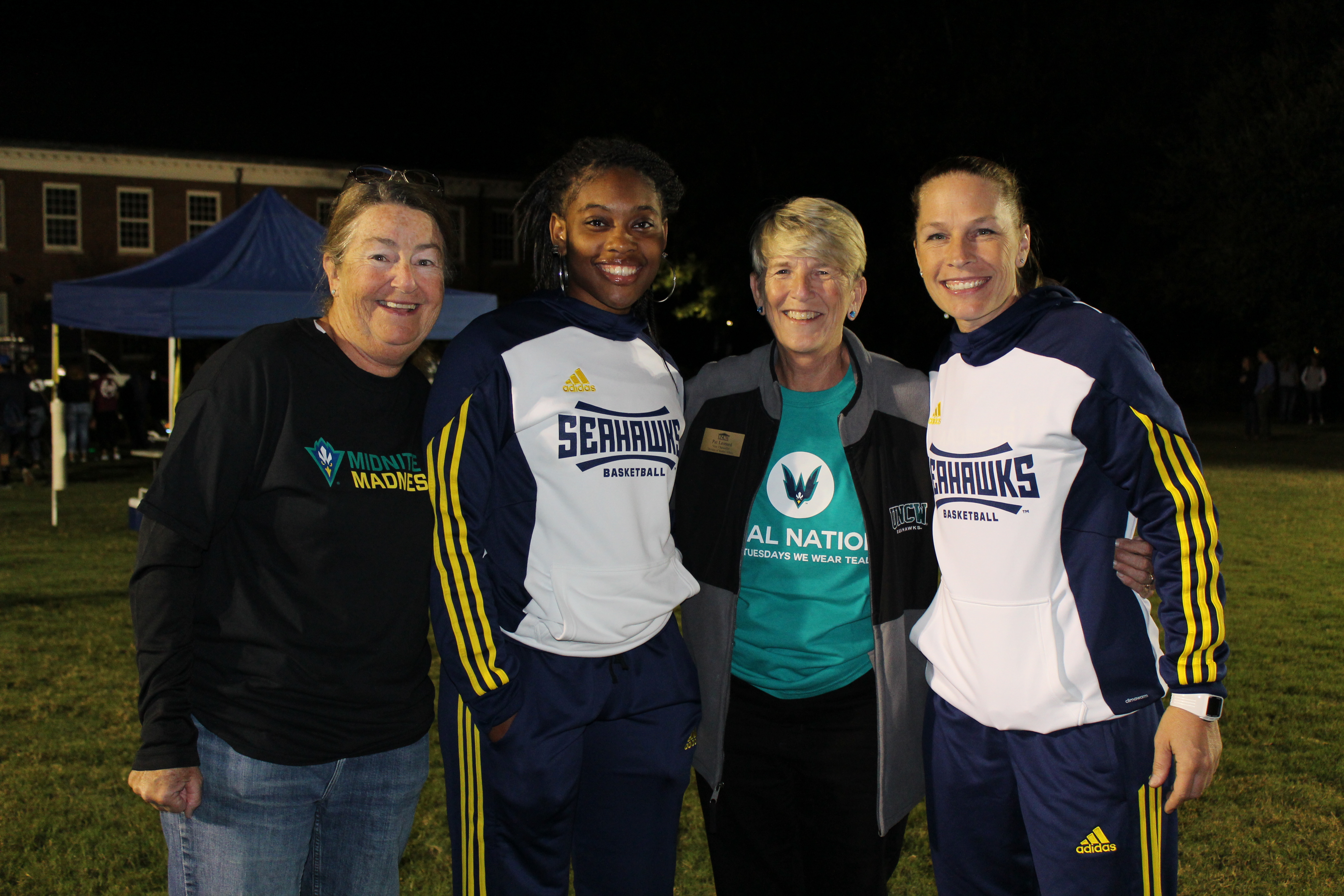
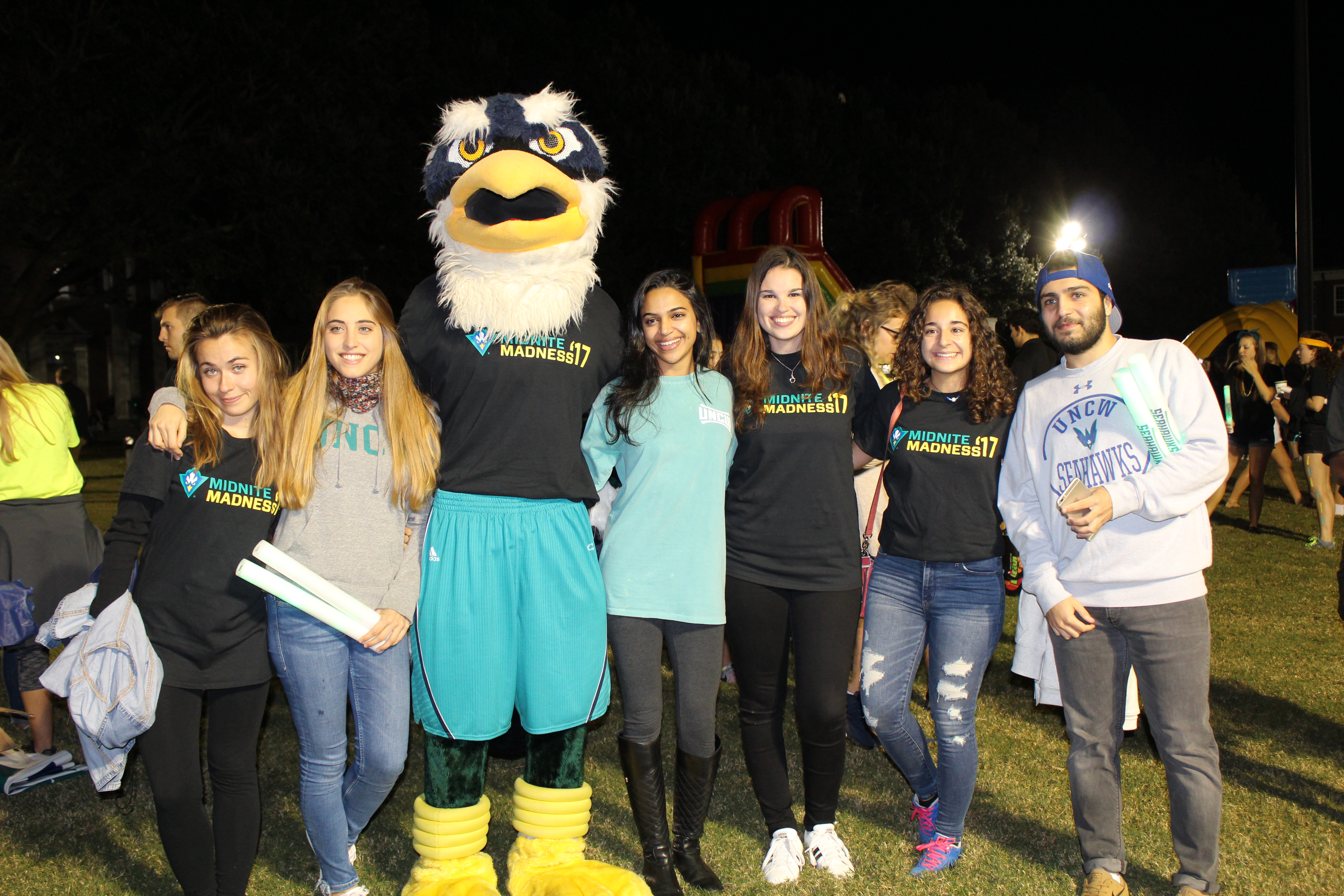
    The foam rods can also be used a sporting events throughout the year and the photos can be used for promotional purposes for upcoming games. On the Tuesday before Midnite Madness, the Athletics Department hosted a Teal Tuesday event where they gave away more t-shirts and free food. They held other events during the week, like an ice cream social. At each of these events, Sammy was present to take photos with students and encourage them to participate.
    IMG_2890

    Sammy at Fan Jam with students. Photo courtesy of the Association for Campus Entertainment.

    Overall, the key marketing strategies used by ACE and the Athletics Department for these events were face-to-face interaction with their key public (the students) and freebies. Both groups were also consistent in their marketing in the week leading up to the big day, maximizing the amount of students who learned about the events. In the end, Fan Jam had an estimated 500 students attend the event, the majority of whom went to Midnite Madness directly after making the day quite the success.


    By: Katie Solinski

  • Banking on Bracketology

    Even if you’re not a fan of college basketball, you’ve likely heard friends and colleagues exclaim about their “busted brackets” as of late. The NCAA Division I men’s basketball tournament, billed as “March Madness” runs throughout the month of March and is one of the most popular spring sporting events. The tournament begins with 64 teams and ends with the championship game in April. Part of the fun of March Madness, is Bracketology, the science of pitting teams against each other to predict the outcome of the tournament. It gets pretty serious–billionaire Warren Buffett of Berkshire Hathaway even offered $1 billion to whoever fills out the perfect bracket.

    Where does Bracketology intersect with IMC? The answer lies in the “good hands” of Allstate. 2014 is the insurance company’s third year as official sponsor of the NCAA tournament. This year, Allstate’s antagonistic character, Mayhem, is breaking brackets in a series of Tweets, Facebook updates, and Vines. While Mayhem is infamously known for causing car wrecks and burglaries, the Leo Burnett-created “March Mayhem” campaign makes light of Bracketology. Watch as Mayhem breaks, bends, and even blends busted brackets.

    March is Mayhem

    “March Mayhem” is Allstate’s social media component of its NCAA tournament campaign. During TV coverage of the tournament, the company sponsors the “Good Hands Play of the Game” and is rolling out increased advertising for its homeowners insurance. Pam Hollander, Allstate’s senior IMC director, points out that the campaign goes on as the tournament progresses, taking into account how different teams perform in the tournament. She says the campaign features direct engagement with fans. Mayhem acts as a direct engagement tool to connect and learn more about Allstate’s social media-savvy audience. With Mayhem, interpersonal communication takes place in an ad campaign, personifying the brand’s relationship with the consumer.

    Mayhem isn’t the only insurance character with social media presence. Representing insurance companies big and small: the Gecko, Flo, Jake, and J.J. Hightail each interact with their Twitter followers. One of the strong points of the March Mayhem campaign is how it takes advantage of the Bracketology phenomenon to establish a connection with the consumer. Using a popular social trend in a social media campaign exemplifies the personification of brands.

    Do you believe using Bracketology in advertising is effective? How have you seen other brands use social phenomena in their advertising?

    Nathan Evers

  • Ambush Marketing, Rule 40, and the Sochi Controversy You Aren’t Hearing About

    Have Olympic advertising partnerships gotten too big? Have rules and restrictions protecting these “official sponsors” gone too far?

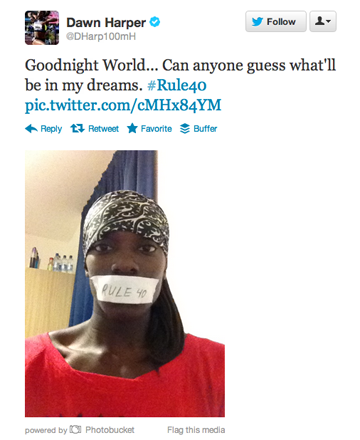
    Dawn Harper Tweets her Opinion of Olympic Rule 40
    Dawn Harper Tweets her Opinion of Olympic Rule 40

    Two-time track and field medalist Dawn Harper thinks so.  That’s why she posted this tweet with #Rule40 in protest of the IOC’s infamous Rule 40 during the 2012 Olympics in London.

    If you aren’t yet familiar with Rule40, it is a total ban on an athlete’s promotion of personal sponsors and their ability to acknowledge those who helped them get where they are today. It is especially focused on social media, where it has become a commonplace for athletes to thank sponsors with pictures and personal statements.

    Harper isn’t the only athlete to voice her displeasure with the effective “gag order” on competitors, but with companies spending upwards of $100,000,000.00 to associate their brands with the Olympics Games, is it really that hard to see why #Rule40 is in effect?

    Some have even gone as far to refer to the situation as a “battle”. Yet, despite the activism surrounding #rule40, without a doubt the biggest threat to the official Olympic sponsors is the ever-pervasive ambush marketers, silently stalking and waiting for their chance to steal some the Olympic brand name.

    These controversial ambush marketing campaigns attempt to capitalize on high-visibility events and locations through brand association without having to pay for the high-cost of officially sponsoring an event. My favorite example of ambush marketing involved the Minnesota Timberwolves selling this advertisement on the side of their stadium, where it happens to only be viewable from inside the nearby Minnesota Twins baseball stadium (where the official sponsor is Target).

    View of Timberwolves basketball stadium from inside the Twins baseball stadium
    View of Timberwolves basketball stadium from inside the Twins baseball stadium

    Ambush marketing may have been around in the advertising world for years, but the Olympics are seen as “the flagship event for ambush marketing”. Creative campaigns by infamous ambush advertisers like Nike often times attract more online buzz and conversation than the actual official sponsors.

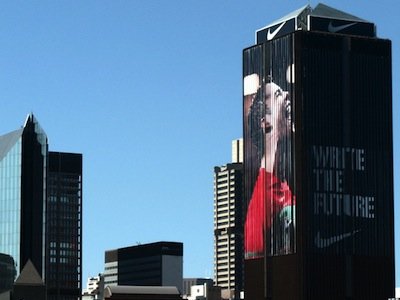
    During the 2010 World Cup in South Africa officially sponsored by Reebok, advertising juggernaut and infamous ambush marketer Nike, placed an eye-catching ad on the fourth tallest building in the entire city of Johannesburg. When paired with a lengthy viral video, many agreed that Nike had effectively hijacked the sponsorship from Reebok and gained closer brand association with the World Cup event.

    Nike ad in Johannesburg during World Cup 2010
    Nike ad in Johannesburg during World Cup 2010

    Another ambush marketing giant, Subway, has already launched its attempt to steal some association from the upcoming Sochi games.  Summer Olympian Michael Phelps and retired speed-skating icon Apollo Ohno both appear in TV commercials for Subway’s “$5 foot long campaign” due to some legal loopholes discovered by Subway.

    So is it reasonable for the IOC to implement Rule 40 to help protect sponsors? Freeskiier David Wise recently commented that, “[he] understand[s] the Olympics are a moneymaking game, but it’s sad for [him] to have all these sponsors who have really taken care of [him]…[he’s] on the biggest stage [he] can possibly be on and [he] can’t give them the representation they deserve.”

    Another athlete and social media enthusiast, Nick Goepper, has stated that he will be completely off of social media for the entirety of the Olympics. “I think it might be safer not to tweet anything,” said Nick, the 19-year-old favorite to win Ski Slopestyle gold. “All I know, it’s pretty much zero tolerance for branding.”

    The Sochi games are only 3 days away, but the media blackout protecting the games’ sponsors has been in effect since January 26. When the final medal is awarded and the closing ceremonies complete, which brands will you associate with the games? Which advertisements and commercials will be the most talked about and discussed? Is $100,000,000 too much to pay for a loose association with the Olympic rings?

    Will the “ambushers” steal the spotlight once again?

    – Greg Rothman

  • “Together We Make Football” and Community

    When I think about the NFL, or football in general, my mind immediately goes to large men with helmets running into each other; granted, I am not a big sports fan.  Most people’s minds wouldn’t imagine a little girl as the face of a major NFL ad campaign.  However, tiny Samantha Gordon, a ten-year-old pee-wee football player from Utah, is featured on the first commercial of the NFL’s “Together We Make Football” campaign.

    0ap2000000247227

    “Together We Make Football” is a contest where football fans of all ages, shapes and sizes are encouraged to share their stories of how football impacts their lives and what it means to them.  The contest narrows down to ten finalists, with five invited to take part in Super Bowl XLVIII festivities.  These stories can be in video, picture or story form and are posted to the “Together We Make Football” website.  The winners are chosen by a panel of judges, and the site’s visitors are invited to “like” the different posts; although these likes don’t have any affect on the contest winners.

    So how can I, someone so inexperienced in all things NFL, take an interest in “Together We Make Football?”  By applying it to what I know.  This campaign is a perfect example of how subcultures form and become such tight-knit communities.  The Social Identity Theory of communication states that people have many different versions of themselves depending on the groups, or subcultures, they belong to.  Different social situations are what drive these separate “selves” to behave in certain ways.  The title alone explains why “Together We Make Football” exemplifies this theory.  Defining fans of football as a “we” takes thousands of people and brings them together into a single unit.

    nfl-rivals-has-arrived-bring-your-rivalries-into-the-game-now_niesg_0

    Social Identity Theory goes further, saying that people belonging to one group tend to favor others within the group at the expense of others on the outside.  This holds true in the NFL regarding team rivalries in which fans become passionately involved.  Rivalries are like a double-edged sword, bringing together fans of the same team while creating tension with the fans of the opposing team.

    “Together We Make Football” reminds us that all fans are the same.  Ultimately, the goal is for their favorite team to win.  The campaign reminds us that all fans have the same goal, though it might be for different teams.  It allows people to share why they love the game so much, which can bridge the gap between rivals.  The different fan groups can become a single football-loving “we” because of the “Together We Make Football” campaign.

    – Maggie Dowicyan