Category: Shopping

  • Farmers’ Markets Galore

    Since Wilmington is a rather large city with hundreds of businesses, the small local businesses can sometimes be overshadowed. However, in my opinion, it is important to support local businesses to show your appreciation for the town you live in live in. One of my favorite ways to support local is to shop at farmers’ markets. Now that the warm weather is here and summertime is quickly approaching, farmers’ markets are back in business and ready to serve their community!

    One of my favorite markets in town is Port City Produce. This shop has two locations, one on Market Street, five minutes from campus, and one on the way to Carolina Beach, fifteen minutes south of campus. They both feature an abundance of fresh fruit, vegetables, and other local goods such as honey, peanuts, and jam. Personally, I love to stock up on the watermelon, peaches, and strawberries. Nothing says summer to me like fresh fruit and PCP is definitely the place to go. Not only are you supporting a family business when you shop here, but you are also supporting the various farmers that source to the locations. You can check them out on Facebook, Instagram, or by visiting their website.

    Source: Port City Produce on Instagram

    Another one of my favorite farmers’ markets is the Riverfront Farmers’ Market in Downtown Wilmington, which is held every Saturday from 8:00 am to 1:00 pm. The 2019 season has already begun, but the market will stay open until November 23rd. It changed locations from last year and is now located on Dock Street on the block between Front and 2nd Streets. The market features a variety of vendors that include local farmers, producers, and even artists and crafters. What I like about this market is that it gives you the opportunity to speak directly with the people who grow or craft their goods. This market is the opportune way to support the town of Wilmington, as it features vendors from all categories. Also, the items change weekly so there is always something new to explore. Learn more about the market, including the weekly vendors, on their website.

    Riverfront Market

    Source: Wilmington-NC

    There are many more farmers’ markets to explore in Wilmington besides the two listed here and they all offer something unique. If you have never shopped at a local market, I highly encourage you to visit at least one, as it might change your perspective on how you buy your food. Supporting local businesses, whether that be a farmers’ market or a clothing store downtown, is essential and will keep money in the community. I would love to know your favorite local spots around town and what they have to offer. Get out there and visit somewhere new everyone!

    Colleen Worrell

  • Yes, I saved $5!

    Why do stores have discount cards? Is it because they want to be nice? Hook you up with some great deals?

    Not really. You might think that you are winning because you are saving two dollars on a loaf of bread or three dollars because you bought two boxes of cereal instead of one. However, you are not the real champion; the store is.
    loyalcards

    By using a store discount card, you are giving away very valuable information. Information about you, what you buy, when you buy it and how often you do so. The store is now able to track your purchases and your spending’s, something that is in their favor. If they can see what you buy and how often, they can specifically target you. When you swipe your loyalty card, the store obtains valued information that they can use to get you back in their store to spend more money.

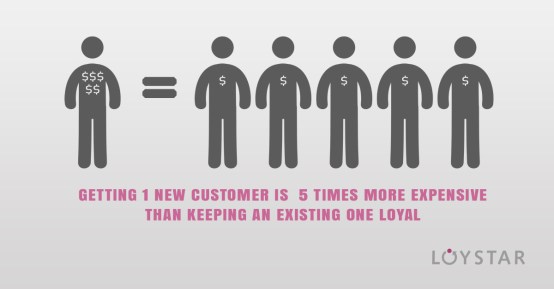
    Of course, the stores won’t tell you this. They want you to think that you are being rewarded for being a loyal customer, and sure, you are, since the word loyal translates to profit in their ears. Because the cost of obtaining a new customer is around five times as high, stores always try to find ways to get you back in the door.

    loyalty5times

    Just think about it, by looking at what you are buying stores know that you prefer a certain brand of soy milk over another, or a certain kind of chips for example. It is not a coincidence that you are getting coupons and offers for items that you frequently purchase. Once you swipe that “loyalty” card your purchase history goes straight into the stores computer system and they can start analyzing it. Your buying habits are being compared to other customers to figure out patterns, trends and other valuable information that can benefit the store.

    I do have a Harris Teeter Vic (Yes, I’m a very important customer) card myself and I do get excited when I save 4 dollars on ice-cream. However, I do understand the idea behind a store card and that every time I swipe that Vic card my shopping spree is being analyzed into a statistic that is used to target shoppers.

    How do you feel about store cards? Do you have a Harris Teeter card, or any other customer loyalty card?

    –  Olivia Nilsson

  • We Love Our Moms (And So Do Advertisers!)

    With just a couple weeks until another one of the biggest card holidays, Mother’s Day, card companies are gearing up their promotions. Last week, American Greetings released their new ad, “The World’s Toughest Job” and with over 14 million views in just one week, it’s safe to say the video has gone viral. This call to action is sure to have you considering whether or not to switch from Hallmark to American Greetings this year.

    Prior to this advertisement, American Greetings ads consisted of mainly cute animals – much like the ones you can find on their actual greeting cards. What these ads were missing were what this recent ad captured – emotion evoking concepts – something competitors such as Hallmark have been relying on and capturing for years. See Hallmark’s “Proud Mom” ad below:

    Yet, it seems that even Hallmark couldn’t capture the raw emotions that the Mullen Agency was able to evoke from the interviewees – simply starting with a job posting and 24 interview candidates. The finished piece was a compilation of honest reactions that left viewer’s hearts melting.

    The American Greetings’ spot isn’t the only ad that has played on the love and appreciation of our mothers this year. Proctor and Gamble’s “Thank You, Mom” series showed the mother as much a part of the Olympics as the athletes themselves. Several other companies including British Airways and General Electric have recently produced ads centered on mothers.

    So what do these “tribute to mom” ads tell us and why do our hearts warm when we watch them? Understanding how advertising works tells us the answer. Ads tell us what is virtuous and what is our ideal world. These “shout out to moms” tell us what we virtue – the compassion mothers have and the love families have for their mother. In the ideal world, that appreciation would be shown by a card everyday, but since this isn’t the ideal world we hope to make it up on Mother’s Day.

    So what do you think about all these ads centered on Mothers? Is it ethical to exploit this relationship that our society holds so valuable? Will you turn to buying an American Greetings card this holiday or stick with Hallmark?

    Caroline Robinson, Elizabeth Harrington

  • The “Instructional” Campaign

    According to the calendar, Spring has officially sprung. And while we are still experiencing some chilly days, it’s undeniable most of us are ready to shed our winter gear for shorts and sandals. As with all season changes, clothing companies are eager to help you exchange your wardrobe.

    Recently, clothing company Lands’ End launched their new “How to Spring” advertising campaign, showcasing, “How fun and fashionable it is to add bright colors, graphic prints and floral patterns with a few perfect pieces from the women’s spring collection”. It could be argued that every spring campaign that will launch this season will have a similar goal; however, Lands’ End decided to do something a little different this season by adding a sweepstake to its promotional and marketing strategy.

    The sweepstakes works by first connecting with Facebook or entering your email. Once you’ve connected, you are asked to fill out your name, email, and zip code. Filling out this information unlocks the game. The rules are simple, select an outfit and click “spin”. If the outfit that the player selected matches the three tumblers, the player automatically wins a gift card with a balance of $25, $50, or $1,000. That’s it! Simple right? Not to mention, everyone is eligible to enter every day for the grand prize of $1,000 shopping spree. You can view the official rules of the sweepstakes here.

    While we like to think that games, contests, and sweepstakes’ only motives are for fun and entertainment, they are actually a smart marketing move – encouraging consumption of the product by creating consumer involvement. This involvement builds fan base, engages the audience, and enables consumers to do your marketing for you. Not to mention, user generated content often provides quality, innovative, and creative ads for free.

    In addition to promoting brand visibility, contest and sweepstakes are strategies that provide valuable quantifiable benefits for companies as well. They are cost effective, they help build search engine optimization (SEO), and increasingly important, they provide a rich source of consumer data for the company about existing and potential customers – emails, product preferences, location, etc.

    With every click essentially producing some sort of user information, online contests are growing in use on websites and especially on social media. The most popular initiatives include: photo and video contests, tagging contest, hashtag giveaways, and website raffles.

    Top Rank, an online marketing blog, named some of their picks of the best contest use on social media.
    Facebook: When Frito-Lay began their campaign for searching for new potato chips flavors, the company bypassed focus groups and turned to Facebook to connect directly with the customers who would be eating them.
    Pinterest: AMC Theaters have an entire Pinterest board, AMC Giveaways, where all users have to do is follow the board to stay up to date on the latest AMC contests. The basics are simple, when users see a prize they want, clicking on the image takes them to a landing page that collects their information.
    Twitter: In a “retweet to win” twitter contest, Doritos tweeted a message that simply asked followers to retweet for a chance to win. The tweet was retweeted over 500 times in a day with winners snagging products that ranged from Doritos to widescreen tvs.
    Instagram: As many clothing company are starting to do, Vera Bradely’s instagram contest asked users to post pictures of them and their favorite Vera Bradley bag using the hashtag #VBStyleShare. At the end of the contest, winners received a wrislet, followers of the hashtag could receive fashion inspiration, and staff could see how consumers were pairing their products.

    The benefits contests can provide seem like an almost no-brainer for companies to increase brand awareness while also gaining consumer data, but as they start to trend they are also subject to overuse. To combat becoming another form of clutter, companies will have to make sure their contest are increasingly interactive, engaging, creative, or lucrative.

    Have you ever participated in an online contest? Did you win? Did it make you feel more favorable towards the brand? Scrolling through your social media feeds have you seen brands using contests similar to the ones above? What are some of the best/most creative ones you have seen?

    Elizabeth Harrington, Caroline Robinson, Savannah Valade

  • Out With The Old, In With The New: Technology Decides It All

    Everyday you as a consumer are exposed to hundreds of thousands of brands. Over the decades the shopping industry has exploded with most brands disappearing at the same rate new ones appear, yet some brands have stood the cluttered test of time – one of those is Macy’s.

    Created in 1858 by Rowland Hussy Macy the Macy’s store was originally a dry goods store. Macy’s started to gain notable recognition in the 1900s with its holiday window displays and the hiring of Santa Claus for the stores. In 1924 the store moved to its current NYC location, on the corner of Broadway and 34th Street. This year was also the first Macy’s Day Parade, which was organized to celebrate immigrant employees new American Heritage.

    macys6n-2-web

    In 1944, Macy’s became apart of the Federated Department Stores, Inc., renamed Macy’s Inc. creating the world’s largest department store. Today, Macy’s has 800 stores in the United States and sells merchandise online.

    Macy’s isn’t the only iconic retailer – Sears Roebuck ring a bell? Starting in 1886, the mail order company prospered as it was able to provide low cost alternative to farmers. As mail order plants transitioned into stores, Sears found their place in city life and the retailer soon became a retailer giant. Today the store owns 863 mall-based operations and 1200 other locations including hardware, outlet, tire, and battery stores.

    sears catalogue

    Nowadays Macy’s and Sears are direct competitors, but it seems Sears, the company who invented mail order, can’t quite figure out online order.

    Holiday sales account for a large indicator of profit margins and often depict the health of a company. Sears seems to be in critical condition – US stores suffered a 9.2 percent drop. In decline for some time now, and with little to no improvement, some speculate the store could be gone by 2017.

    The history of an iconic brand is something that should be cultivated in your identity – it induces credibility, shows longevity, and prompts nostalgia. Yet being historic isn’t merely enough to remain vibrant. Iconic companies remain iconic because they are able to cultivate lasting relationships with consumers – at all time periods – and that means evolving.

    Looking at each retailers attempt to reach customers during the holiday seasons could explain Sears 9.2 percent drop in sales. Both have social media accounts, yet social media presence is widely disproportionate. Macy’s Instagram account has 150,00 followers while Sears has two Instagram accounts – “Sears” and “Sears Style” – yet both of the followers combined don’t even reach 8,000. A huge missed opportunity for Sears – Instagram is leading the way in social media, growing faster than Facebook, Twitter, and Pinterest combined.

    According to Gary Vaynerchuk’s article “The Road to Black Friday: Macy’s vs. Sears”, the use of social media by Sears is lazy. Choosing to ignore the social media culture they have posted irrelevant and uninteresting content such as a link to one of their commercials and an original YouTube video. While Macy’s post content that is culturally relevant, trendy, and formed around pop culture.

    Our culture today has switched, as James Twitchell describes it, “In the last generation we have almost completely reversed the poles of shame so that where we were once ashamed of consuming too much (religious shame), we are now often ashamed of consuming the wrong brands (shoppers’ shame)”. In this day in age a brand establishes and remains relevance by relationship cultivation, reinforcement, and engagement forged through technology – the Internet and social media. It seems Sear’s inability to adapt to technology has prevented them being able to participate in the younger crowds culture leading in profit and brand influence. As an American brand we hope Sears can get back into the groove but as they stand now they are the weakest link.

    In what other ways do old brands stay new? Can you think of any others that have had a hard time capturing new generations of shoppers? Or others that have done well?

    Caroline Robinson, Savannah Valade, Elizabeth Harrington

  • Anna Rexia Makes Another Appearance

    Zombies. Ghosts. Serial killers. These are some popular symbols of Halloween that are frequently seen in movies, haunted houses and decorations. However, what I find more frightening are some of the costumes that I see while trying to find my own “original” costume idea each Halloween. This year, I came across the most frightening costume of them all, not because of a scary mask or fake blood, but because it is poking fun at a serious mental illness that affects millions of people around the world. The “Anna Rexia” costume first caused some serious uproar back in 2011, when retailers like HalloweenStore.com and Ricky’s NYC began carrying the costume, manufactured by Dreamgirls International, but they stopped after a great deal of media backlash and thousands signed a petition on Change.org.

    Now, two years later, this controversial and insensitive costume is apparently back up for sale on the website HalloweenParty13.com, which I discovered from a Facebook posting of a more recent Change.org petition. At first, all I could think about was how disgusting a costume like that is, and how I would judge anyone wearing it, but I want to turn this into a learning opportunity by relating this controversy to public relations. My question is: Did the companies handle the outrage and negative publicity surrounding this costume appropriately?

    As I did my research, I found articles on news sites such as The Huffington Post and other blogs, about the resurrection of “Anna Rexia.”  I saw on Buzzfeed that the retailer HalloweenStore.com posted a status to their Facebook page about one week ago, explaining that people should do research before signing a petition because the retailer hasn’t sold that costume since 2011.  This status was calling out people who angrily emailed the store about their distaste, when they weren’t actually the retailers currently selling the costume.   The wording was harsh, with certain words fully capitalized and many exclamation points, which detracts potential customers and pushes current customers away.  The post has since been deleted.

    enhanced-buzz-32177-1382713416-25
    via BuzzFeed

    During the original controversy in 2011, Dreamgirls International said the costume was a form of “dark humor,” and that people wearing it is a “matter of taste.”  However, the company is now saying that the costume was discontinued in 2007 and the matter is now out of their hands.  At first, Dreamgirls International was using the communication theory of framing, which highlights specific aspects of an issue and “frames” people’s perspective on it.  The company was trying to downgrade the offensive costume as being humorous and describing themselves as a “company run by women for women”; that just wanted to create an “eccentric” way for a woman to express herself on Halloween.  Now, they are denying all responsibility for any current sales of the costume.  This denial is not only inconsistent, but it is the opposite of what any student in an introductory PR class would learn—don’t deny ownership of a problem.

    I believe that neither of these companies handled the “Anna Rexia” backlash well.  If you, the reader, were the spokesperson of either company, how would you handle this situation?

    -Maggie Dowicyan

  • “Everything for U”: Target’s Brilliance…Part Two

    Since Target has proved their brilliance once again with their back-to-school marketing and advertising campaigns, we just had to talk about it again! For years, companies have struggled to invent new and innovative ways to advertise this exciting time of the year.  However, Target has perfected profitable, long-term campaigns and has successfully created fresh, new advertising strategies.

    img-thing

    As Thursday’s post mentioned, Target has been successfully hosting Target After-Hours Busing Events for twelve years.  Adding UNCW to its list of schools this year was very popular amongst students in Wilmington. The idea of getting to shop for trendy dorm and apartment materials after hours gives students the feeling that Target is catering to their needs personally. This year, Target took that personal touch one step further.

    With all the hype surrounding live events and social media, Target decided to try their hand at it as well.  Bullseye University, Target’s back-to-school campaign, created five dorm rooms decorated with Target products that real, soon-to-be college students lived in from July 15th to July 18th.  Viewers could interact with the participants by asking questions through social media, entering drawings, and purchasing products without interrupting the streaming video.  This campaign is the perfect way to reach their target audience, college student. Target has not just promoted their brand, but has given their audience an opportunity to interact with their brand.

    Advertising enforces the idea of a Commodity Culture.  Commodities are marketable items that satisfy the wants and needs of consumers.  In many ways commodities are a central aspect to a culture’s values, traditions, and meanings.  Target has mastered the idea of appealing to the Commodity Culture, especially in its Back-To-College marketing strategies.  On their Back-To-College webpage, the “…for U” theme is prevalent for every category of dorm essentials.  The home page advertises an end of back-to-school-season sale, with “Deals for U” stamped in the corner. When you click on “college bedding,” a picture of the many colorful Twin XL beds that college freshmen are so familiar with, with the phrase “Zzz’s for U” in the same position.  Target’s website is advertising the personalization aspect of their products to college students.  Making sure their dorm room, or apartment, and school supplies are able to tell the story of who they are to their classmates.  Commodity Culture states that people define themselves by what they purchase.  Target understands that young adults are finding themselves in college and want to stand out, which they encourage by allowing this personalization.

    everything-for-you-footer

    -Maggie Dowicyan, Tilson Hackley, Hilary Hall, Kelsey Raskob, Christine Schulze