Category: Scandal

  • Foxy Roxy

    Life near the beach means seeing surf shops by the dozen.  And what do you think lies inside these surf shops? Brands like Roxy, of course.

    In 1990, Quicksilver began a venture to create Roxy, a swimwear brand that encompassed the female surfer, the first of its kind in a sport dominated by men. The brand grew and was well received by the surf-ette, and Roxy even created the first women’s board short.

    sports summer surf surfing skating

    So what can we learn from Roxy’s brand identity?

    1. Their products are for women.

    2. They target these products to women.

    The logo, two Quicksilver logos reflected against each other to create a go to feminine symbol, a heart, encompasses the brand’s feminine spirit.


    Image result for roxy quicksilver logo

    Daring, confident, naturally beautiful, fun, alive: Roxy

    Roxy took a plunge into a market dominated by menswear, and came out drenched in success. But Roxy faces a definite challenge-

    How do you advertise an all women’s surf-wear brand, especially swimsuits, without receiving backlash for objectifying women’s bodies?

    The answer? I don’t think Roxy has been able to do it yet.

    Critics were quick to comment on this ad for the Roxy Pro Biarritz competition from 2013 featuring surf pro Stephanie Gilmore.


    This is the teaser video that doesn’t reveal Gilmore’s face, but the focus on her body was enough to send consumers into a critique frenzy

    Advertisements seek to sell the product to the consumer, and noise, like a consumer not paying attention, can affect the ads effectiveness. The problem is that women’s bodies, even men’s, are often objectified as a tactic to break the noise that can distract consumers. Sex appeal holds attention, it gets consumers talking.
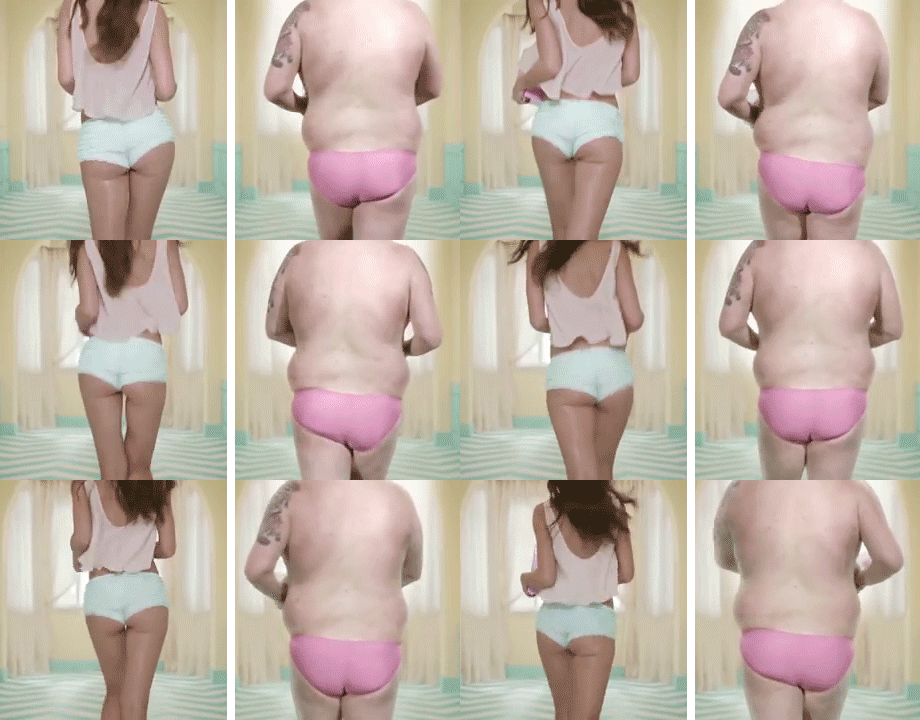
    objectification

    What are some alternatives when advertising a ‘women’s’ brand? Vera Bradley tried last year in 2016 with their #itsgoodtobeagirl  campaign that was supposed to celebrate the everyday woman, and sell the luggage and handbag company’s products of course.

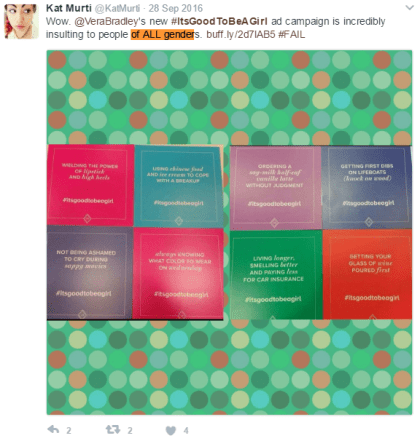
    Image result for #itsgoodtobeagirl

    verabradley
    @KatMurti

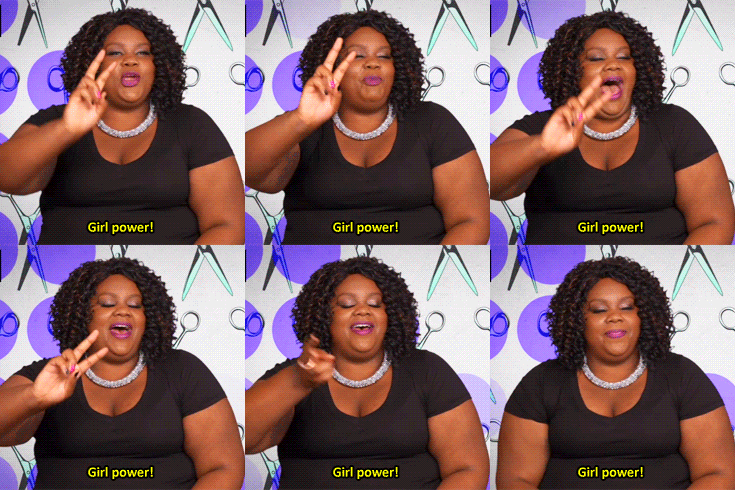
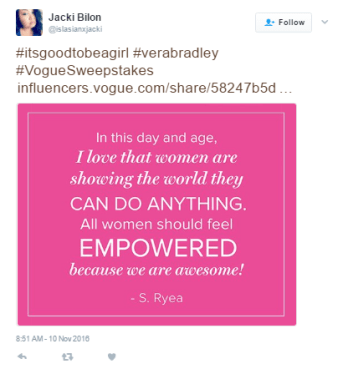
    Consumers were OUTRAGED, calling the campaign sexist and offensive not only to women, but men as well (ouch). The campaign eventually released less abrasive content, and called on a more girl-power type approach by quoting inspiring women.
    sassy model girlpower stumblrndxfblqidm1qk08n1o1250


    The hashtag #itsgoodtobeagirl is still trendy on Twitter today #PRsave.
     

    verabradley.PNG
    @islasianxjacki

    Gender objectification in advertising is obviously a hot topic to critique, but as everyone knows, sex sells. And when you’re trying to sell a product, you need to sell.

    There has GOT to be a way in advertising that can celebrate and use the human body without objectifying it.

    Since the Roxy Pro Biarritz scandal, Roxy has laid pretty low in terms of video advertisements.

    The question is this, if you were Roxy, how would you continue to advertise your all women’s apparel and surf wear? Keep in mind surfing isn’t done in hoodies and sweatpants; it is done in swimwear, boardshorts, and wetsuits.  So…would you use sex appeal, or pull a Vera Bradley and try something risky and innovative (even if it could possibly fail at first)?

     

    Kayla Millie


  • Side Effects May Include: Narrative Ethics in Big Pharma Commercials

    We’ve all seen them on TV, the prescription drug commercials that make you say to yourself, this is soooooo cheesy…

    3oz8xshd6mnizw9sik

    First, a miserable, suffering actor is shown on the screen. They suffer from depression, irritable bowel syndrome, maybe even Crohn’s disease, the list goes on. The actor is shaped by their illness, clearly alienated and not enjoying their time on the commercial like the supporting actors who live without the illness

    Then BOOM, here comes the advertising.

    A happy, go lucky, skipping-through-fields-of-flowers-esque metamorphosis comes over the actor as the voice over introduces you to the drug. The actor is transformed into a joyful result of Humira, Viagra, Lyrica etc. And then comes the speedy voice over listing the side effects which are often worse than the condition the medication is supposed to treat; but yet the actor is still smiling and walking peacefully on the beach, completely delusional to the fact that even though their ailment is treated, they have strokes, heart attacks, and hair loss to look forward to.

    Image result for side effects of lyrica meme

    Take this TV commercial for Humira as an example, which is used to treat rheumatoid arthritis. The woman is clearly distraught in the first segment pre-Humira, and post-Humira her world is transformed into euphoria.

    Prescription drug commercials bring to mind two questions, 1) how does the narrative the commercial creates affect our perception of the product advertised and 2) is it ethical for the commercial to present these narratives as a marketing tool?

    The world of advertising is no stranger to narratives. Companies cash in on our human nature to bond with stories that resonate with our own. Narrative ethics assumes that an individual’s life is guided by stories about the way the world is or how it should be, which protects and promotes the good of learning. In the world of pharmaceuticals, the narratives are created in commercials showing how the world should be for those who suffer from ailments that are treated by their product.  Stories are a way for us to communicate with each other and build relationships, and these narratives play on the human concept of togetherness that we all possess in our inner core. The narratives created in the pharmaceutical commercials draw in the consumer as they see themselves reflected in the actor’s experiences, and ultimately buy into the product.

    l0gtciup6p2pyn2ak

    However, the ethics of these commercials are questionable. There is a clear narrative in the first minute and a half of the commercial, but the side effects of these advertised drugs are left out of the story. The side effects are read at a  fast-forward pace, with the actor still in post-treatment bliss. There is no narrative for us to connect to for the side effects. The consumer can be so caught up in the possibility of living like the actors that they ignore the side effects that come with the medication. Big Pharma has always had questionable ethics, take the Big Pharma Game that pokes fun at the “business etiquette” of pharmaceuticals. By creating a story that sheds only positive light on prescription drugs while the side effects hide in the shadows of the commercial, Big Pharma plays both sides of narrative ethics. Television advertisement ethical standards will always be a topic of discussion surrounding prescription drug companies until the narrative in the commercials portrays the actor in post-treatment bliss with the side effects of the medication. But until then, we will be waiting.


    -Kayla M

  • Anna Rexia Makes Another Appearance

    Zombies. Ghosts. Serial killers. These are some popular symbols of Halloween that are frequently seen in movies, haunted houses and decorations. However, what I find more frightening are some of the costumes that I see while trying to find my own “original” costume idea each Halloween. This year, I came across the most frightening costume of them all, not because of a scary mask or fake blood, but because it is poking fun at a serious mental illness that affects millions of people around the world. The “Anna Rexia” costume first caused some serious uproar back in 2011, when retailers like HalloweenStore.com and Ricky’s NYC began carrying the costume, manufactured by Dreamgirls International, but they stopped after a great deal of media backlash and thousands signed a petition on Change.org.

    Now, two years later, this controversial and insensitive costume is apparently back up for sale on the website HalloweenParty13.com, which I discovered from a Facebook posting of a more recent Change.org petition. At first, all I could think about was how disgusting a costume like that is, and how I would judge anyone wearing it, but I want to turn this into a learning opportunity by relating this controversy to public relations. My question is: Did the companies handle the outrage and negative publicity surrounding this costume appropriately?

    As I did my research, I found articles on news sites such as The Huffington Post and other blogs, about the resurrection of “Anna Rexia.”  I saw on Buzzfeed that the retailer HalloweenStore.com posted a status to their Facebook page about one week ago, explaining that people should do research before signing a petition because the retailer hasn’t sold that costume since 2011.  This status was calling out people who angrily emailed the store about their distaste, when they weren’t actually the retailers currently selling the costume.   The wording was harsh, with certain words fully capitalized and many exclamation points, which detracts potential customers and pushes current customers away.  The post has since been deleted.

    enhanced-buzz-32177-1382713416-25
    via BuzzFeed

    During the original controversy in 2011, Dreamgirls International said the costume was a form of “dark humor,” and that people wearing it is a “matter of taste.”  However, the company is now saying that the costume was discontinued in 2007 and the matter is now out of their hands.  At first, Dreamgirls International was using the communication theory of framing, which highlights specific aspects of an issue and “frames” people’s perspective on it.  The company was trying to downgrade the offensive costume as being humorous and describing themselves as a “company run by women for women”; that just wanted to create an “eccentric” way for a woman to express herself on Halloween.  Now, they are denying all responsibility for any current sales of the costume.  This denial is not only inconsistent, but it is the opposite of what any student in an introductory PR class would learn—don’t deny ownership of a problem.

    I believe that neither of these companies handled the “Anna Rexia” backlash well.  If you, the reader, were the spokesperson of either company, how would you handle this situation?

    -Maggie Dowicyan

  • Paula Deen Deep Fries Her Empire

    Upon hearing “Paula Deen” your first thought probably used to be of her traditional Southern food, restaurants, cookbooks, and television shows. However, within the past few months that initial thought has probably changed. Over the summer, accusations of Paula Deen making racist slurs flooded the news headlines. Within days of the incident’s reveal, corporations began to discuss dropping their sponsorship with Deen. With numerous household brands supporting her corporation, her empire was at a serious risk and her PR team was swamped.

    After Paula Deen’s racial slurs made national headlines, her initial contact with the media was questionable – she failed to show up for an interview with Matt Lauer and sent out two separate videos apologizing for ditching the interview, claiming she “would never intentionally hurt anyone.” Several days later, during her first interview about the accusations, she turned the events around, focusing on how hard these allegations have been on her and her family making close to no attempt to apologize for her actions. Her initial response was to apologize not only to Matt Lauer and the Today Show crew for ditching them, but to anyone who she may have hurt.  However, she used transcendence, an aspect of apologia that puts the issue at hand in a different context, in the interview when she said “I go into my kitchens and hear what these young people are calling each other. It’s very distressing for me. I think for this problem to be worked on these young people are gonna have to take control and start showing respect for each other.”  She had gone even further to use differentiation, another aspect of apologia, by stating that “The day I used that word was a world ago — I had a gun put to my head.” She is definitely trying to make herself sound like the victim of a much more serious act. What do you think of Paula Deen’s tactics on handling her latest scandal? She initially apologized to everyone for the accusations against her, but days later tried to turn it around to make viewers feel sorry for her.

    Sponsors dropped Deen’s brand and months passed with no word from the Emmy Award-winning T.V. chef – until this past weekend. This past Sunday, the “Queen of Southern Cooking” made her first public appearance in Texas since her controversy over the summer. Deen came back with a bang, receiving a ten-minute standing ovation from fans as she walks on stage, almost as if her fans have completely forgotten about the event over the summer. Some people felt that she did not spend enough time out of the limelight, but others say they’re ready for Deen to make her return. Despite her rocky and scattered PR strategy, an online survey conducted by LA. Times revealed that 92% of people are ready to see Paula Deen back on television. No one knows for sure what lies ahead for Paula Deen and her brand. Do you think it’s too early for Paula to make her return?

    – Tilson Hackley