Category: Public Relations

  • A.C.E. – Your Source for Campus Entertainment

    Please nod your head if you have ever taken another route to class pretending to be on your cell phone or completely ignoring someone who was trying to give you an event flyer. If you give your computer screen a nod, we applaud you.  However, if you are like 99% of the student population at UNCW and nodded your head–we understand.

    There are over 250 student organizations vying for our attention, membership and time so how do we pick what to attend? Our choices depend on how, or if, we hear about the event and how creative the marketing is. The Association for Campus Entertainment is the university’s student programming board Did you enjoy Hoddie Allen last year? That was ACE. What about when Maci Bookout from Teen Mom was here in the spring? That was ACE too.

    In the midst of everything college kids have going on, ACE provides an outlet for free entrainment. But just like every other student organization, they have to compete for your time as well. Integrated Marketing Communication, IMC,  allows us to diversify the means by which we achieve our marketing goals. A public relations campaign? Check. Social media presence? Also check. Cool and engaging advertising? Also IMC.

    ACE does this through an array of promotional tools each year, the first being through giveaways what college student doesn’t like free things? This year ACE gave phone wallets, Croakies, car USB adapters and staplers. This may seem like a mishmash of items but each one served a purpose: to be seen and get the ACE name known. Whether it is letting a classmate use the ACE braded stapler, or paying for food in Wag as you pull your OneCard out of your ACE branded phone wallet, ACE is marketing their brand. The goal is to increase the number of times a student sees a brand and how they associate it—hopefully in a positive light.

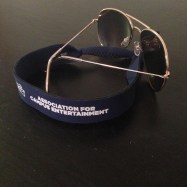
    image1

    There is more to promotions than simply getting a name out; ACE must also promote their events. There are the standard campus marketing methods such as banner, chalking and flyers, but in order to infiltrate the calendars of college students, you must take efforts farther. ACE is a brand that thrives on creative promotions, whether this be acting out a scene from an upcoming movie in the campus theatre or handing out paint brushes across campus for a Cheerwine and Design event. There is always something being passed out.

    A successful marketing campaign goes beyond creating and implementing the campaign. The ultimate goal of IMC, is to not only change one’s beliefs, but to change his or her actions. Whether this be successfully convincing students to change their plans and attend an event or sign up for ACE, we want them to act on our suggestions. So how do you think ACE stacks up, do you hear about their events through traditional means of advertising or through creative promotions across campus? Furthermore – how do you prefer to be wooed into coming to an organization’s event or do you organically decide to attend? Let us hear your thoughts and comments blow!

    -Amanda, Daniel, Kendall, Meleah and Luke

  • We Love Our Moms (And So Do Advertisers!)

    With just a couple weeks until another one of the biggest card holidays, Mother’s Day, card companies are gearing up their promotions. Last week, American Greetings released their new ad, “The World’s Toughest Job” and with over 14 million views in just one week, it’s safe to say the video has gone viral. This call to action is sure to have you considering whether or not to switch from Hallmark to American Greetings this year.

    Prior to this advertisement, American Greetings ads consisted of mainly cute animals – much like the ones you can find on their actual greeting cards. What these ads were missing were what this recent ad captured – emotion evoking concepts – something competitors such as Hallmark have been relying on and capturing for years. See Hallmark’s “Proud Mom” ad below:

    Yet, it seems that even Hallmark couldn’t capture the raw emotions that the Mullen Agency was able to evoke from the interviewees – simply starting with a job posting and 24 interview candidates. The finished piece was a compilation of honest reactions that left viewer’s hearts melting.

    The American Greetings’ spot isn’t the only ad that has played on the love and appreciation of our mothers this year. Proctor and Gamble’s “Thank You, Mom” series showed the mother as much a part of the Olympics as the athletes themselves. Several other companies including British Airways and General Electric have recently produced ads centered on mothers.

    So what do these “tribute to mom” ads tell us and why do our hearts warm when we watch them? Understanding how advertising works tells us the answer. Ads tell us what is virtuous and what is our ideal world. These “shout out to moms” tell us what we virtue – the compassion mothers have and the love families have for their mother. In the ideal world, that appreciation would be shown by a card everyday, but since this isn’t the ideal world we hope to make it up on Mother’s Day.

    So what do you think about all these ads centered on Mothers? Is it ethical to exploit this relationship that our society holds so valuable? Will you turn to buying an American Greetings card this holiday or stick with Hallmark?

    Caroline Robinson, Elizabeth Harrington

  • Out With The Old, In With The New: Technology Decides It All

    Everyday you as a consumer are exposed to hundreds of thousands of brands. Over the decades the shopping industry has exploded with most brands disappearing at the same rate new ones appear, yet some brands have stood the cluttered test of time – one of those is Macy’s.

    Created in 1858 by Rowland Hussy Macy the Macy’s store was originally a dry goods store. Macy’s started to gain notable recognition in the 1900s with its holiday window displays and the hiring of Santa Claus for the stores. In 1924 the store moved to its current NYC location, on the corner of Broadway and 34th Street. This year was also the first Macy’s Day Parade, which was organized to celebrate immigrant employees new American Heritage.

    macys6n-2-web

    In 1944, Macy’s became apart of the Federated Department Stores, Inc., renamed Macy’s Inc. creating the world’s largest department store. Today, Macy’s has 800 stores in the United States and sells merchandise online.

    Macy’s isn’t the only iconic retailer – Sears Roebuck ring a bell? Starting in 1886, the mail order company prospered as it was able to provide low cost alternative to farmers. As mail order plants transitioned into stores, Sears found their place in city life and the retailer soon became a retailer giant. Today the store owns 863 mall-based operations and 1200 other locations including hardware, outlet, tire, and battery stores.

    sears catalogue

    Nowadays Macy’s and Sears are direct competitors, but it seems Sears, the company who invented mail order, can’t quite figure out online order.

    Holiday sales account for a large indicator of profit margins and often depict the health of a company. Sears seems to be in critical condition – US stores suffered a 9.2 percent drop. In decline for some time now, and with little to no improvement, some speculate the store could be gone by 2017.

    The history of an iconic brand is something that should be cultivated in your identity – it induces credibility, shows longevity, and prompts nostalgia. Yet being historic isn’t merely enough to remain vibrant. Iconic companies remain iconic because they are able to cultivate lasting relationships with consumers – at all time periods – and that means evolving.

    Looking at each retailers attempt to reach customers during the holiday seasons could explain Sears 9.2 percent drop in sales. Both have social media accounts, yet social media presence is widely disproportionate. Macy’s Instagram account has 150,00 followers while Sears has two Instagram accounts – “Sears” and “Sears Style” – yet both of the followers combined don’t even reach 8,000. A huge missed opportunity for Sears – Instagram is leading the way in social media, growing faster than Facebook, Twitter, and Pinterest combined.

    According to Gary Vaynerchuk’s article “The Road to Black Friday: Macy’s vs. Sears”, the use of social media by Sears is lazy. Choosing to ignore the social media culture they have posted irrelevant and uninteresting content such as a link to one of their commercials and an original YouTube video. While Macy’s post content that is culturally relevant, trendy, and formed around pop culture.

    Our culture today has switched, as James Twitchell describes it, “In the last generation we have almost completely reversed the poles of shame so that where we were once ashamed of consuming too much (religious shame), we are now often ashamed of consuming the wrong brands (shoppers’ shame)”. In this day in age a brand establishes and remains relevance by relationship cultivation, reinforcement, and engagement forged through technology – the Internet and social media. It seems Sear’s inability to adapt to technology has prevented them being able to participate in the younger crowds culture leading in profit and brand influence. As an American brand we hope Sears can get back into the groove but as they stand now they are the weakest link.

    In what other ways do old brands stay new? Can you think of any others that have had a hard time capturing new generations of shoppers? Or others that have done well?

    Caroline Robinson, Savannah Valade, Elizabeth Harrington

  • Marc’s Makeover: Marc Jacobs’ decision to rebrand… is it the right one?

    Deciding whether or not to rebrand your company is an immense decision. Your brand is the face and personality of your company. It is what viewers connect with. Changing this identity will greatly affect your company, but if done right the market can soar.

    Fashion designer Marc Jacobs has decided it is time for his company, Marc Jacobs International to rebrand. In an interview with David Amsden from W Magazine Jacobs explains the troubles the Marc Jacobs brand had encountered. Describing the brand as having been “diluted” from his lack of creative supervision and merchandisers pushing his design team.

    In order to fix this Jacobs decided to leave his position at Louis Vuitton to grow his company, which includes boutiques, clothing lines such as Marc by Marc Jacobs and Little Marc Jacobs (a children’s clothing line), Bookmarc (a bookstore), and more.

    Some changes have already taken place such as his decision to move his offices from Manhattan to London and his decision to part with longtime campaign photographer Juergen Teller after he creatively disagreed on the Spring 2014 ad campaign which features Miley Cyrus. 

    marcmiley

    So what is Jacobs looking to do? He’s looking to redesign the logo and packaging, to build his shoe and handbag lines, and maybe even change the name, which he told W Magazine that he had always hated.

    Rebranding can be daunting between redefining research, audiences, creative campaigns, and even products, but for those experiencing continuous losses, it is often the best way to launch back into the market.

    In recent years, another clothing line, Burberry, underwent a widely recognized successful rebranding campaign. Over the years, the British line went from being known for its historically iconic outwear, to being associated with cheapest form of high fashion, and even gang wear.

    In 2006, the company hired Angela Ahrendts and in the next six years, she turned the ubiquitous brand back to luxurious. First, Ahrendts did what she called “buying back the company.” Reigning in the 23 licenses Burberry had around the world, control was brought back to the company with centralized executive and creative offices that could maintain product authenticity and exclusivity.

    Secondly, Ahrendts recognized we are in the age of digital consumption and a digital generation – tapping into the resources social media and technology offers. In stores, sale assistants are equipped with iPads, and mirrors transform into screens displaying catwalk images. Online, the company continues to grow its presence, attracting over 16 million fans on Facebook, and over 2 million followers on Twitter. Burberry also uses YouTube to broadcast campaigns, events, music, and even corporate news. 

    However, rebranding is not exclusive to high profile companies, the challenges above are things that can be experienced in all types of companies: personal, mid, or large. So how do you know if you should rebrand your own company? From Katie Morrell’s article “10 Signs You Should/Should not Rebrand” here are some warming signs that your company should rebrand.

    Macro problems

    Maria Ross, author of Branding Basics for Small Business: How to Create an Irresistible Brand on Any Budget (2010, Norlights Press) suggests that if a company notices that their target customers are choosing the competition over their own company and if a decrease in sales is also trending, rebranding should be considered.

    Look and function don’t match

    Another element that should be considered when having a decrease in customers is “From a cosmetic point of view, when you look old and your looks don’t reflect what you are or what you deliver, it may be time to rebrand,” said Susan Betts, senior strategy director for New York-based FutureBrand North America.

    Attracting the wrong customers

    Rebranding is beneficial when a company wants to change their target customers. It gives a company an opportunity to create a new brand identity that the new target audience has the chance to connect too.

    Management change

    When a company changes management, it is normal that policies and values change as well. When a companies values change, rebranding is a good idea.

    Philosophy/function change

    When a company changes it’s direction, rebranding can showcase to customers what they may or may not be aware of concerning this change. Betts also mentions rebranding should be considered when a company has a “New philosophy or a changed philosophy”.

    These signs are great examples to take heed from, but it is important to note rebranding should not be done unless it has been proven your brand identity is the root of your problems. Branding is the largest initial investment for a company, it sets the spring board for your identity, association, and customers. Rebranding is an even bigger investment – an attempt to reintroduce ideas to already established and preconceived perceptions is no easy task, it is one that must be thoroughly strategized. For Burberry, reigning in and refining their identity proved to be the best decision the company has made. For Jacobs, we will see what his creative vision produces.

    What companies do you think have faltered recently or over the years? Who needs to rebrand?

    Caroline Robinson, Savannah Valade, Elizabeth Harrington

  • You can’t have your Coke and drink it too

    It’s one of the pillars of successful marketing, target your audience. Individualizing ads to particulars groups or regions of consumers ensure that messages have the most impact. But what happens when a company features a controversial scene in a spot, then removes it for some audiences and not others? Good marketing move or failure to take a stance?

    In its newest global campaign, “Reasons to Believe” Coca-Cola set out to inspire consumers that no matter what happens in life, it’s those small happy moments that make life worth living.

    Check out the commercial below.

    In most European countries the ad contains a scene of two gay men holding hands in front of their wedding party. However, in the Irish version (the video below) the scene has been replaced to feature a bride and groom.

    The Irish LGBT publication, EILE Magazine, brought attention to the issue, calling the removal an “inexplicable move”. In response to the criticism, Coca-Cola said that the advertisement had been tailored to individual markets so that the ad resonates with the people in each country where it is shown. The company defends the decisions saying that grooms were excluded from the Irish version because gay marriage is not legal in the country. EILE Magazine claims the Coca-Cola reasoning moot. The footage of the two grooms is known to be a video clip from a same-sex union ceremony in Australia – equivalent to a civil partnership in Ireland. Yet gay marriage is also illegal in Australia, but shown there. EILE claims the spot should have been suitable for Ireland as well.

    Coca-Cola has unequivocally made public their supporting stance on same sex marriage. Since 2006, the Human Rights Campaign continues to award Coca-Cola with a 100 percent ranking of their company polices and practices regarding LGBT. The Coca-Cola Company notes on their website, “To achieve a perfect score, companies must have fully inclusive equal employment opportunity policies, provide equal employment benefits, demonstrate their commitment to equality publicly and exercise responsible citizenship”

    Many are saying that Coca-Cola’s recent actions were hypocritical. Coca-Cola claims to support gay marriage, but their choice to remove a gay marriage scene from a commercial in Ireland, in which law does not prohibit such imagery, is misleading of the company’s values. Similarly, another beverage icon, Starbucks, has also gained attention for their hypocritical actions.

    Bryant Simon discusses the company Starbucks in his book Everything But the Coffee. Through his research he comes to discover that Starbucks isn’t delivering what they are promising in their brand – good coffee with little environmental impact. Claiming to buy fair-trade coffee from Rwanda and Nicaragua farmers, Starbucks was actually buying from bigger farmers and only buying 5-6 percent of fair-trade out of all the total coffee purchases.

    Much like Starbucks claiming to be environmentally friendly yet not taking the necessary steps in order to be green, Coca-Cola’s actions were just as misleading; claiming to support gay marriage yet removing a scene from one version of a commercial for the sole purpose of trying to please everyone.

    As future and current brand ambassadors we have to remember that every decision we make, including company policy decisions, become an integral part of brand, and when decisions are made that contradicts that it hurts the brand.

    On the other side of things, as consumers (and as Simon states in his book) we have to remember pursuing “solutions to highly complex social problems through buying and buying alone” doesn’t fix the problem or change the ideology. We have to stop relying and believing that buying certain brands is going to change a social issue.

    So, does Coke’s decision to take out the gay marriage scene hurt its brand identity? Should companies take stances on social issues? What practices do you follow to make sure this brand conflict doesn’t occur in your company or with your clients?

    Savannah Valade, Caroline Robinson, Elizabeth Harrington

  • New Season, New Drama

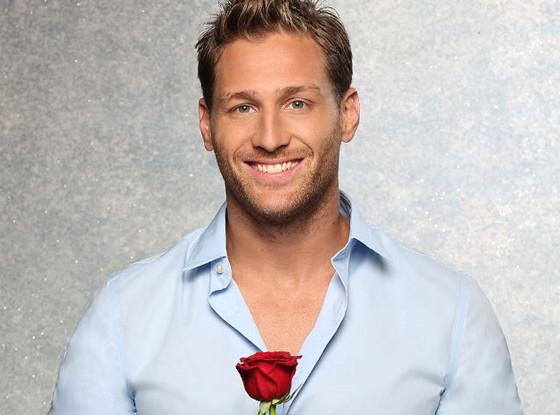
    For 7.8 million people, winter wasn’t too cold and lonely.  Their break was filled with anticipation and whispers about Juan Pablo Galavis, the new bachelor on ABC’s hit show The Bachelor.  As the first Latino to be featured on the show, his good looks and Spanish accent had women across the country swooning.  Now, almost three weeks later, Juan Pablo is still causing a stir – but for very different reasons.

    In an interview this past week, Juan Pablo gave a very controversial answer to whether he thought The Bachelor should make a gay or bisexual version of the show.

    “I respect [gay people], but I don’t think it is a good example for kids to watch that,” he said.  “There’s this thing about gay people — it seems to be, I don’t know if I’m mistaken or not — I have a lot of friends like that, but they’re more pervert in a sense.”

    Bachelor Nation recoiled at Galavis’ less-than-sexy response.  Some Juan Pablo fans rushed to his defense, but members of the gay community were more outspoken.  One Facebook user accused Galavis of knowing exactly what he was saying, as “pervertido” is the Spanish word for pervert.

    Even Bachelor producers felt the need to do some public relations acrobatics.  Producers tried to shift any blame away from the show and entirely onto Galavis, saying “Juan Pablo’s comments were careless, thoughtless and insensitive, and in no way reflect the views of the network, the show’s producers or studio.”

    juan pablo

    Juan Pablo later apologized through Facebook. He insisted that throughout the interview, he had nothing but respect for gay people and their families.  He did not mean to use the word pervert, but misspoke because of his limited English vocabulary.  He claimed to have only meant that gay people are more affectionate and intense, which might not be viewed positively by some of the TV audience.

    Juan Pablo probably meant to use apologia, a rhetoric in communication that is used in defense for one’s actions or opinions.  However, to many members of the gay community, it was perceived as a non-apology apology – something quite the opposite.  A term that first appeared in the ’70s, a non-apology is when you apologize – but only if you have to.  Many celebrities or companies involved in a scandal will attempt to enact crisis communication by “apologizing” for offending anyone, rather than for their actions.   To the public eye, Juan Pablo’s apology had non-apologetic written all over it.  Pulling the “I-don’t-speak-English-so-good” card as one CNN reporter so delicately put it, is one such red flag.

    Was Juan Pablo sincere in his apology? Or was he just trying to cover up some ill-used “palabras”?

    – Christine Schulze

  • Dogfish Disaster Averted

    As we have gravitated towards becoming a society submerged in technology, in recent years, outlets of social media have become essential marketing tools for many companies and organizations.Facebook, Twitter, Instagram and Vine are few forms of social media utilized by most. While social media can strongly influence consumer behaviors and increase consumer awareness it can also be detrimental to a company’s image. In some cases social media can be the cause of a PR crisis. Crisis management is the process by which an organization deals with this major event that threatens to harm the organization.

    The American Red Cross is a prime example of an organization who exemplifies strong crisis management skills. This honorable humanitarian organization managed to dodge-a-bullet back in 2011 when an intern fired off a personal tweet on the company’s twitter account. The tweet read “Ryan found two more 4 bottle packs of Dogfish Head’s Midas Touch beer…when we drink we do it right #gettingslizzerd”.

    red cross

    This uniquely unorthodox and unprofessional tweet received a lot of negative attention from the general public. In this particular circumstance social media proved to be the cause of the crisis. When responding to the tweet the Red Cross avoided disaster by acknowledging that the tweet went out, deleting it, and explaining with humor that is was a mistake. This is an example of crisis management where the Red Cross turned a potentially harmful tweet in to an opportunity for engagement.

    Thankfully, the Red Cross realized the potential of social media and understood the power that it has to bring down a major organization. Now, other companies can look at this experience and utilize it to learn for themselves. After understanding the Red Cross’s response it is easy to break down their post-crisis steps and keep them in mind for other emergency situations. First, they were able to assess the situation. They realized the crisis was a major problem but they came to the conclusion that they could handle it which brought them to their second step, adapting their message. They considered their stakeholders and created a strong message to appeal to them. Lastly, they were able to analyze and learn from the situation post-crisis. Although this could have led to a horrific downfall for one of the greatest humanitarian organizations, everyone was able to benefit, understand, and learn from this experience.

    red cross 2

    -Parker Farfour, Caitlin Ford, Alex Corrigan, Kaitlin Batson