Category: Intercultural

  • “I’d like to buy the world a Coke”

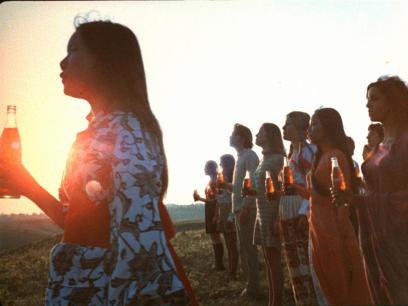
    In 1971 Coca-Cola launched one of its very first in-color TV commercials. It was named; “I’d like to buy the world a Coke” and has been called, “one of the best-loved and most influential ads in TV history”. It featured a multicultural cast with actors and actresses from over 20 countries singing together on a hilltop in Italy. All holding a cold bottle of coke in their hands.
    cocacolapic2

    The commercial has been called “groundbreaking” and was a part of the Coca-Cola campaign, “It’s the real thing”. The slogan, as well as the commercial was created by Bill Backer (creative director for the Coca-Cola account at McCann). The idea of the commercial came to Backer while in an airport on the way to London. He quickly wrote down the words, “I’d like to buy the world a Coke and keep it company” on a white napkin so that he would not forget it in the morning.

    cocacolapic1

    Backer got help from established song writers Roger Cook, Billy Davis and Roger Greenway to write the full song for the commercial. The song became such a hit it was recorded by the New Seekers, a British pop-band. It was so idolized that it was played on the radio as a full-on song.

    The lyrics read;

     “I’d like to teach the world to sing in perfect harmony”
    “I’d like to buy the world a Coke” 
    “And keep it company”
    “It’s the real thing—Coke is”
    “What the world wants today”


    The commercial has received praise throughout the years, and rightfully so. Davis truly captured the essence of Coca-Cola’s brand identity explaining that, Coke was more than a liquid refresher. Saying that, Coke is a “tiny bit of commonality between all people”.

     cocacolapic3.png

    The commercial gave hope to a multicultural world in where a bottle of Coke could be shared together amongst anyone in “perfect harmony”. The Coca-Cola bottle was used as a symbol of peace. By using a multicultural cast the commercial aimed for a world filled with greater acceptance and inclusion. Erasing divisions between people with different skin colors, ethnicities, and backgrounds.

    The commercial first aired in 1971. The same year as the US voting age was lowered to 18, Disney World welcomed it’s first visitors, the Pentagon Papers were published, and National Public Radio broadcasted for the first time.

    cocacolapic4

    A lot of things were changing at this time. You could possibly argue that in a state of doubt and anti-Vietnam war attitudes, Coca-Cola was ahead of its time releasing this “feel good” commercial focused on friendship and happiness. And it might have been a slight nod against the war oversees.

    Take a look at the commercial yourself! Why do you think this became such a hit? Why do you think it resonated with people?

    P.S. If you watched Mad Men, the final scene of the show is followed by the Coca-Cola Hilltop commercial. Showcasing just how iconic it was and still is today.

    – Olivia Nilsson
  • You can’t have your Coke and drink it too

    It’s one of the pillars of successful marketing, target your audience. Individualizing ads to particulars groups or regions of consumers ensure that messages have the most impact. But what happens when a company features a controversial scene in a spot, then removes it for some audiences and not others? Good marketing move or failure to take a stance?

    In its newest global campaign, “Reasons to Believe” Coca-Cola set out to inspire consumers that no matter what happens in life, it’s those small happy moments that make life worth living.

    Check out the commercial below.

    In most European countries the ad contains a scene of two gay men holding hands in front of their wedding party. However, in the Irish version (the video below) the scene has been replaced to feature a bride and groom.

    The Irish LGBT publication, EILE Magazine, brought attention to the issue, calling the removal an “inexplicable move”. In response to the criticism, Coca-Cola said that the advertisement had been tailored to individual markets so that the ad resonates with the people in each country where it is shown. The company defends the decisions saying that grooms were excluded from the Irish version because gay marriage is not legal in the country. EILE Magazine claims the Coca-Cola reasoning moot. The footage of the two grooms is known to be a video clip from a same-sex union ceremony in Australia – equivalent to a civil partnership in Ireland. Yet gay marriage is also illegal in Australia, but shown there. EILE claims the spot should have been suitable for Ireland as well.

    Coca-Cola has unequivocally made public their supporting stance on same sex marriage. Since 2006, the Human Rights Campaign continues to award Coca-Cola with a 100 percent ranking of their company polices and practices regarding LGBT. The Coca-Cola Company notes on their website, “To achieve a perfect score, companies must have fully inclusive equal employment opportunity policies, provide equal employment benefits, demonstrate their commitment to equality publicly and exercise responsible citizenship”

    Many are saying that Coca-Cola’s recent actions were hypocritical. Coca-Cola claims to support gay marriage, but their choice to remove a gay marriage scene from a commercial in Ireland, in which law does not prohibit such imagery, is misleading of the company’s values. Similarly, another beverage icon, Starbucks, has also gained attention for their hypocritical actions.

    Bryant Simon discusses the company Starbucks in his book Everything But the Coffee. Through his research he comes to discover that Starbucks isn’t delivering what they are promising in their brand – good coffee with little environmental impact. Claiming to buy fair-trade coffee from Rwanda and Nicaragua farmers, Starbucks was actually buying from bigger farmers and only buying 5-6 percent of fair-trade out of all the total coffee purchases.

    Much like Starbucks claiming to be environmentally friendly yet not taking the necessary steps in order to be green, Coca-Cola’s actions were just as misleading; claiming to support gay marriage yet removing a scene from one version of a commercial for the sole purpose of trying to please everyone.

    As future and current brand ambassadors we have to remember that every decision we make, including company policy decisions, become an integral part of brand, and when decisions are made that contradicts that it hurts the brand.

    On the other side of things, as consumers (and as Simon states in his book) we have to remember pursuing “solutions to highly complex social problems through buying and buying alone” doesn’t fix the problem or change the ideology. We have to stop relying and believing that buying certain brands is going to change a social issue.

    So, does Coke’s decision to take out the gay marriage scene hurt its brand identity? Should companies take stances on social issues? What practices do you follow to make sure this brand conflict doesn’t occur in your company or with your clients?

    Savannah Valade, Caroline Robinson, Elizabeth Harrington

  • The trend of helping others

    With everything that is happening in the world today, it is nice to see that others are using their products to direct consumers’ attention to things other than America’s economy. Some companies have created a brand based on helping those in need. This trend has been one that can actually make a difference in the world we live in. These companies are using their consumers’ ethos to make them feel as though they are doing the right thing by buying certain products. This marketing tactic has proven to be a successful one because two brands especially have become increasingly popular throughout their mission to help those who truly need it.  

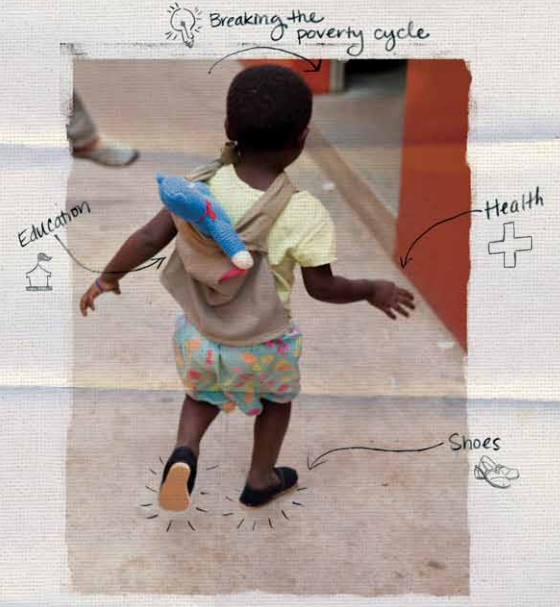
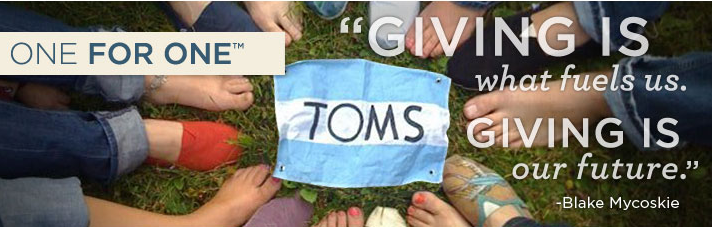
    If you haven’t heard of TOMS, you aren’t in with the latest trends.  Here on the campus of UNCW especially, TOMS are almost as big of a hit as Rainbows.  Not only do they look amazing and feel great, the TOMS brand is all about giving back.  For every pair of TOMS sold, the company donates a pair of their shoes to people in need.  The TOMS brand started back in 2006 with the creator’s trip to Argentina, where he saw first hand how many children had no shoes to protect their feet.  This is not only true in Argentina, but in many other developing countries where children grow up barefoot.  The TOMS brand slogan is ONE FOR ONE and is making a major impact on the trend of helping those in need.

    Chegg is a resource that hundreds of thousands of students utilize around the world to rent or buy textbooks to save money. One of Chegg’s incentives for students to rent or buy textbooks from their company is their philanthropic marketing strategy.  Chegg markets to their consumers that with their support, Chegg can plant trees around the world. Today, Chegg has planted over five million trees with their partnership with American Forest Global ReLeaf Foundation.  As stated on Chegg’s website these trees are planted worldwide to, “help regenerate areas damaged by wildfire, strengthen River Bounds, and restore wildlife habitats.”  In 2011, 175,000 trees were planted in Pondicherry, India, 40,500 trees were planted in Colorado and 700,000 trees were planted in Florida, just to name a few.  Chegg inspires students to be a catalyst for change around the world.  When their consumers purchase their textbooks through Chegg they can make a difference in the world by improving the environment.

    -Kelsey Bendig, Andrea Blanton, Brooke Keller, Brian Burch

  • Catch more Libyans with sugar than with gunfire

    Tripoli, Libya. (Abdel Meguid al-Fergany/Associated Press)

    Around the world it seems that there are few who have not heard about the latest wave of protests going on in Africa, the most recent being the widely covered being in Egypt. The latest wave of protests have come to the Libyan front, where citizens have been fueling a need for freedom and asserting their displeasure with the high unemployment problem as well as their support for the Libyan people, not for Gadhafi. The Central Intelligence Agency estimates about one-third of Libyans are currently living in poverty despite being an oil-rich country.

    However, Gadhafi, the current leader of Libya, is not willing to budge. He even went so far as to vow that the only way that he would step down from his position would be to die “a martyr” in his country and according to CNN, he blames the unrest on “rats” who are “agents” of foreign intelligence services and that people found to be cooperating with said services will be executed. Human Rights Watch stated earlier this week that at least 233 people have been killed during the unrest from random open fire by Libyan forces.

    It seems that although Gadhafi has vowed to stand strong in his position, he has still lost support in a large portion of eastern Libya. Even the Interior Minister, Abdul Fattah Younis al Abidi, has resigned, aligning his support with the Libyan people’s revolt. It is becoming clearer daily that the brand that Gadhafi has created for Libya and for himself is one that is being morphed by the people into a whole new concept. The current brand associated with Gadhafi’s politics is that of regime and repression, including an iron fist on outgoing communications within the country.

    We will have to stay tuned to see if Gadhafi steps down, and takes with him his regimented governmental identity and/or what new identity that the Libyans will create for themselves with or without his leadership in the future.

    -Heather Cornman

  • Lessons Learned from Chips

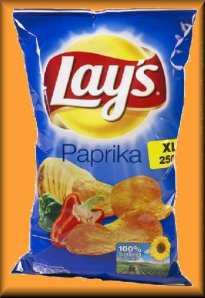
    When I picked my friend up from the airport after a short-term study abroad session in Italy, I naturally asked how her trip was. She looked at me, smiled and said something along the lines of, “I have discovered the most delicious thing in the world.” I expected her to say fine Italian bread, or pastries, or anything along the lines of cultural food. With a mischievous grin, she opened her suitcase and there they were—three cans of her beloved Pringles Paprika chips. She was beaming! About 2 months later, I left for a study abroad trip and was in search of the Paprika chips to bring back as a gift. I bought some for myself and, though I hate to admit it, I too became hooked on the Paprika chips! After I was home for about two weeks, I began to crave them, so I went to the grocery store just to look around in hopes they would be there. Much to my disappointment, they weren’t. That same night I went to a cookout and tried a flavor of chips for the first time: Barbeque…wait, Paprika? Yes, you guessed it! Barbeque chips in the U.S. are the same as the Paprika chips in Europe! What a concept. Both Lays and Pringles knew “Barbeque” the way the U.S. knows it, wouldn’t make sense in Europe, so they decided to rename the chip!

    Taking culture into consideration is vital when companies want to expand and market their product in other countries. Some products simply don’t translate. It is necessary to understand different markets and customer needs, or it could be a catastrophe. When embarking on an intercultural marketing campaign, it is essential that companies think about these scenarios. They may have to alter their product slightly, but it will translate more successfully. Though Lays and Pringles gave up the name “Barbeque,” they kept the idea of the chip and changed the name to the main ingredient in the chips, Paprika. Also, they had to note that “chips” in many countries are our “French fries,” and are instead referred to as “crisps.” Next on American shelves: the popular “ham” flavored chip from Spain, or the Mayonnaise Cheese flavored Pringles from Japan! Just kidding.

    Rachel Kaylor

  • Exploring The World Through Communication Studies

    Now more than ever, it is important for us as future employees to set ourselves apart from the competition. What better way then to study and live in another country? UNCW encourages travel abroad and specifically our very own Communication Studies Department, offers a multitude of opportunities.

    The Office of International Programs and our department offer a variety of programs tailed to fit any student seeking to gain insight into life across the pond or even across the world.  Programs can range in a length from about 10 days all the way up to one year. A variety of university’s in a number of counties are already approved for study, specifically to the Communication Department, Swansea University. During the Spring 09 semester we even had one of our own faculty members serve as a leader for students.

    While abroad there are many opportunities one can engage in to enrich their cultural experiences.  Students can take classes at accredited universities, which count toward their degree from UNCW.  Communication classes can be taken in marketing as well as public relations and advertising. Taking classes in a different environment helps to put a fresh outlook on concepts we have learned. Various internships are also available through certain programs and in certain countries. Imagine gaining work experience internationally! Traveling is encouraged during school breaks and weekends to other countries via train or air.  This is a great way to see parts of the world you might not otherwise have such easy access to.

    Studying abroad not only allows you go places you’ve never been, it is also helpful in giving a fresh prospective to your academic studies and sets you apart to future employers. Experiencing things you may not have the opportunity to on a traditional vacation makes you more aware of the world we live in. Take advantage of any opportunity available to you and I promise you won’t regret it!

    -Jess Smith