Category: Influencers

  • How Influencer Marketing has Changed our Society

    By Kylee Clifton

    It’s 2023. You spend most of your free time scrolling through TikTok watching your favorite influencers “Get ready with me” videos. They show you their most recent favorite products, linking them in their profile for you to view. You automatically put these new products into your cart and buy them, not realizing you are a part of their strategic marketing strategy. According to Jones (2021), “Influencer Marketing” uses trusted figures within a niche community that possess knowledge or experience about what they are advertising. The term “Influencer celebrification” is defined as “The process by which influencers acquire celebrity capital within an interconnected advertising ecosystem.” This celebrity capital is usually achieved through sports, music, television and movies (Jones 2021). In this blog my intent is to share this new idea of influencers, and how they have changed the marketing strategy for our society.

    You might be familiar with the concept of celebrity endorsements, which have been a popular method to promote products in our society. The idea of connecting a celebrity figure to a brand allows the audience to feel emotionally connected to the products displayed by that brand. Although this strategy is still efficient, there has been a rise in social media platforms, creating prominent influencer figures who have a large following. The Influencer Marketing Hub Explains that brands love influencers because they are able to create trends and encourage their followers to buy the products they use. There are 4.89 billion people social media users globally, which makes this marketing strategy important. (Geyser 2023)

    @ForbesLife on X

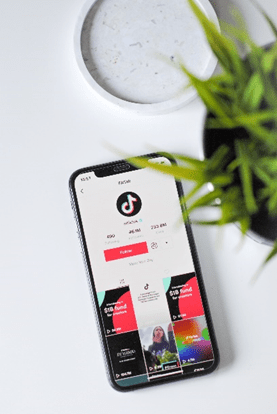
    I want to talk a little bit about Alix Earle. For those who do not know her, she is one of the biggest and newest influencers of this generation. She is referred to as the “It girl” who shares TikTok videos of her day-to-day life. She is 22 years old and has an impressive 6.1 million followers on the TikTok app. She is now rising to celebrity status due to her new connections with many famous people, attending big events and being on many news outlets and magazines. Alix conducted an interview with Forbes talking about what led to her success. She states that her videos are authentic and in real time, which leads her fans to have an emotional connection to her. They feel as if they can relate to her on a personal level because of the openness and trust Alix creates.

    For an influencer to be successful, the article “Influencer Celebrification: How Social Media Influencers Acquire Celebrity Capital” describes two celebrification processes:

    1. “Audience Portability: Influencers have the power to create content that is consistently engaging to their audience. The value of an influencer is in the influencers committed audience and the willingness to be transported across platforms and opportunities.
    2. Creative Ideation: Influencer has already created a niche which is evident in the followers. This idea touches upon the responsive and reciprocal content development between influencers and audiences.” (Jones 2021).

    Alix Earle has nailed both of these processes above. She is now guiding her way to acquire celebrity capital because of her influential content and her niche community that worships her, “The smartest influencers out there and the ones who really will have longevity are the ones who understand the relationship that they have with their audience.” (Jones 2021). With social media still on the rise, evolving to influencer marketing strategies are beneficial for many companies and brands to stay successful in our society today.

    Works Cited

    Bretoni, S. (2023). How Influencer Alix Earle cornered a social media market and made $5 million in one year. Forbes. https://www.forbes.com/video/6337810992112/how-influencer-alix-earle-cornered-a-social-media-market-and-made-5-million-in-one-year/?sh=15da54ba6dac 

    Brooks, G., Drenten, J., & Piskorski, M. J. (2021). Influencer Celebrification: How social media influencers acquire Celebrity Capital. Journal of Advertising50(5), 528–547. https://doi.org/10.1080/00913367.2021.1977737 

    ForbesLife. (2023, October 3). Video: How Alix Earle earned $5 million in a year while balancing college and career demands https://t.co/d2ktw9zdcx pic.twitter.com/aeb0aer6up. Twitter. https://twitter.com/ForbesLife/status/1709252057356435476 

    Geyser, W. (2023, November 15). What is an influencer? – social media influencers defined [updated 2024]. Influencer Marketing Hub. https://influencermarketinghub.com/what-is-an-influencer/ 

    Photos licensed from Adobe Stock 

  • Social Media Connoisseurs: The Adaptability of Content Creators

    By Michalah Matthews

    (Photo by FreePik)

    Content Creators in IMC?

    Influencers and content creators are an ever-growing demographic, directly influencing what it means to be in social media strategy. As COM majors, we are expected to have experience with social media along with some knowledge of how to curate posts and increase visibility of a brand. Social media influencers are not just a face for promotion of specific brands, but they also make up their own brand and have to work a platform to their advantage.

    The Evolution of Social Media

    Technology and social media platforms are constantly updating and becoming more innovative in terms of what they offer their consumers. App developers want to continue to have users interact with their app so they’ve even adopted features on their sites similar to other platforms to encourage their users to keep using it. Instagram started to develop and change several different functions of their app. They’ve added a shopping feature, Reels, and have allowed users to start posting “stories” to showcase snippets of their life. While these updates have made things easier for the consumer, they have had some pretty big impacts on content creators who rely on social media for their brand.

    Making Apps Better…

    Social media moguls have had to adapt to the constantly changing platforms. These adaptations have had positive and negative effects on their ability to promote their brands. One adaptation they’ve had to make is choosing the correct platform to advertise their brand. Not long ago, sites like Tumblr and YouTube were “on and poppin” making them the app that produced the most visibility for content creators. People no longer have the patience or time to read a blog or watch a 15-minute long review about a product. This is where the creation of Instagram comes in. Instagram started as a platform to simply post a photo allowing increased visibility through use of hashtags. This technology created a very straight-forward system benefiting users and creators alike, making it a positive impact for their brand, but this update didn’t seem to be enough for consumers.

    …Or Worse?

    With these changes, comes a challenge for those who depend on these apps to make a living. One of these updates that had a negative impact on content creators was the development of the algorithm for Instagram feeds. Technology has updated and allowed us to curate experiences for people based on the things they frequently look at online. For example, I love a good human hair wig so every now and then I see a banner ad for some stranger’s hair on my browser. That is a benefit to the curation of ads and content based on what an individual likes to see when they’re on the Internet. Although I view this innovation as beneficial, the curation of content for users is actually a content creator’s worst nightmare. In creating posts for an individual based on what they usually view, it erases the visibility influencers may have had prior to the update.

    Content Creators Adaptation to Change

    Views are one of the ways content creators receive money but if their posts are not being seen, it makes it hard for them to profit. While this is a negative to having social media as a main source of income, it has allowed them to be creative in finding ways to combat this update to the algorithm. According to Arturo & Ibáñez, who have studied and dissected the adaptability of content creators, one way content creators have been able to work against the decrease in visibility is collaborations with other influencers. Arturo and Ibáñez have given this technique the name, “cooperative algorithm hacking”(p. 2). If you have an Instagram and you happen to follow a few beauty or fashion influencers, this is a common occurrence among that community. They do a type of series that is composed of several different influencers of the same category or community. For example, not too long ago the Bratz dolls were trending due to the influx of people becoming interested in the Y2K theme. This resulted in a few influencers doing a Bratz doll challenge, where each influencer selected a doll to create a look for. In doing this, their followers not only saw the content of someone they liked seeing but they saw similar content from a different creator. This is an example of how content creators successfully adapt to the constant updates of social media platforms.

    How does this relate to IMC students?

    As IMC students, we are content creators ourselves! We’ll have to be just as innovative in our ability to adapt to the ever-changing rules of social media. Experience in breaking down the reports and analytics that our posts generate will be necessary, as well as the familiarity with navigating any changes to apps themselves in order to maintain a successful marque. Our ability to be adaptive and innovative are some of the many things labels are looking for in individuals to represent their brand.

    (Photo from Jackie Aina via YouTube, https://www.youtube.com/watch?v=tbQ-a-4xVwA)

    Source

    Arturo, A., & Ibáñez, F. (2020). “You need at least one picture daily, if not, You’re dead”: Content creators and platform evolution in the social media ecology. Social Media + Society, 6(3) doi:http://dx.doi.org/10.1177/2056305120944624

  • Which Form of Social Media Content Works Best for Increasing Brand Attitude?

    By Shelby Watson

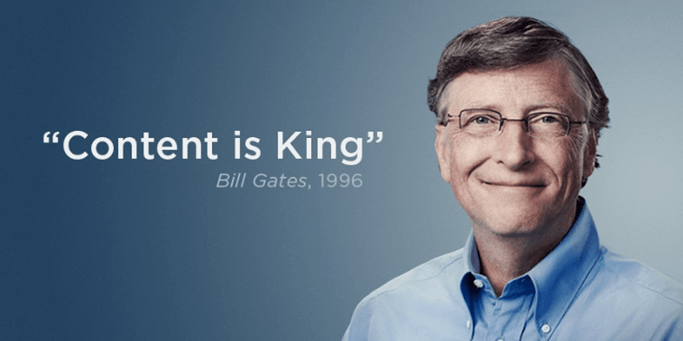
    (Photo from Dreamwealth Films, http://dreamwealthfilms.com/content-is-king-what-bill-gates-said-about-internet-in-1996/)

    Creating content-driven media to share across social channels is one of the most effective ways for a brand to reach their target audience today. However, there are so many different ways to create advertising content. How do you know which one is the most effective? Especially for brands that are looking to increase positive attitudes towards their product or service, understanding the techniques available and being able to decide which one will work the best for your purposes is incredibly important.

    What are the major techniques used by companies on social media?

    First, it will help to understand what techniques are available to you. Content marketing is a more traditional tool used by a brand, where hired social media coordinators will create original content for a brand, share that content, and try to increase brand reputation or sales. Typically, this form of content is heavily curated by the company producing it and is easy to control, which can allow a brand to create a cohesive image of itself.

    Sponsored content is content that a company pays someone to post in order to promote the brand’s image or encourage sales of its products. Often, sponsored content is posted by influencers within a certain niche market or a well-known or respected celebrity. Sponsored content is almost always disclosed as such, so an audience is aware that the content they are seeing is marketing.

    User-generated content is content that an individual posts on their own social media channels promoting a brand or product. Often, user-generated content does not disclose whether or not the poster was paid or otherwise compensated for promoting something. This kind of marketing can be riskier because a brand cannot always predict how an individual will talk about their products or services.

    Which techniques are most effective at increasing positive brand attitude?

    According to a study completed in 2019, there are significant differences in how audiences receive certain types of content. Sponsored content is generally received less favorably, likely because the disclosure that something is a paid #ad comes off as insincere to a targeted audience. For example, in November of 2021, Amazon teamed up with actor Terry Crews in hopes of improving attitudes towards the working conditions within the company’s fulfillment centers. In a TikTok posted to his channel, Crews visits an Amazon warehouse and acts like a kid in a candy store, excited about the work and employee benefits offered by Amazon (which the video says include paid college tuition and flexible working hours). The internet was quick to point out the insincerity within the video, noting that it does not accurately represent what working at a fulfillment center is like. Crews was also criticized for being willing to promote such an unrealistic video for money. In the end, Amazon’s brand attitude, as well as Crews’, took a hit because of the sponsored content.

    (Photo from Business Insider, https://www.businessinsider.com/terry-crews-amazon-ad-video-2021-11)

    On the other hand, content marketing and user-generated content are both better received by audiences because these forms of content are generally trusted more. It makes sense that user-generated content is more likely to read as sincere – if someone who doesn’t work for or with a company promotes a product or service, we are likely to believe they do actually enjoy it. For example, shopping has become a popular niche within TikTok and Instagram. #Amazonfinds on Instagram is filled with all kinds of items people are promoting from the website, and “Amazon Must Haves” videos like this one are incredibly popular across TikTok. Popular ways for brands to encourage positive user-generated content include challenges or giveaways that require users to post something in order to participate.

    It is a little more surprising, however, that content marketing and user-generated content show little difference in how they influence audience brand attitudes. Audiences likely trust content marketing more than sponsored content because the connection between author and message is clearly established. We know that a brand is going to market goods or services to us, so we expect to see ads when we follow a brand on social media. However, when we follow a celebrity or influencer, we expect to see content about them and their lives, not necessarily ads. So, this form of marketing reads as trustworthy.

    To continue with the example of Amazon, the company uses its Instagram (@amazon) as a way to reinforce its brand image and messaging. The company features humorous reviews of items from its website and uses symbols such as Amazon delivery trucks, the trademark Amazon smile, and the brand’s orange, black, and white color palette in order to support the brand image it has already built. Because we expect to see Amazon promoting itself and the items it sells on its own Instagram page, we are more likely to trust the content they are posting and in turn, may be more likely to purchase something through their platform.

    How can this help me market my own brand on social media?

    Understanding how your audience perceives different forms of content on social media can allow you to make informed decisions about how to improve brand attitudes. Depending on what your brand is looking to accomplish, you might determine that sponsored content is not the way to go or that you would prefer the control of content marketing over user-generated content. It’s always important to remember that these are general rules and that specific scenarios may call for specific kinds of content. However, using scientific research and recent case studies can help you make better decisions about your brand marketing in the future.

    Source

    Christandla, F., & Müller, J. (July 2019). Content is king – But who is the king of kings? The effect of content marketing, sponsored content & user-generated content on brand responses. Computers in Human Behavior, 96, 46-55. https://doi.org/10.1016/j.chb.2019.02.006

  • Social Media Influencers and Their Impact on a Brand

    By Julia Dolinshek

    (Photo from Unsplash)

    What is a Social Media Influencer?

    Within the last decade, social media has become an extremely popular outlet for individuals of all kinds to interacts with family, friends, and brands that they love. The rapid growth of social media has caused brands to hire social media influencers to promote their products and spread a positive light onto their company (Singh, et al., 2020). With so many people being active users of social media, brands took advantage of the ones with a high following to not only promote their products, but also represent their brand as a whole.

    Reports indicate that over two thirds of multinational brands around the world plan to increase spending on influencer marketing within the coming years (World Federation of Advertisers, 2018). Global spending in social media marketing and communication are expected to reach $15 billion by 2022 (Schomer, 2019). Social media influencers typically consist of individuals who have a sizable audience who are willing to create content based on different products and ideas that they support.  Their followers are likely to trust any brand or product that they are endorsing, with an end goal of more people supporting the brand being promoted. With social media influencers using effective communication and marketing skills, while also being paid by the brand, everybody wins. Although the publicity is great for both parties, issues can arise when the personal lives of influencers are brought to life. This has the potential to impact a brand for the better or for the worse.

    Social Media Influencer’s Impact on a Brand – Better or Worse?

    It’s no secret that humans are all imperfect. We all try our hardest to be our best selves, both publicly and privately. It is easy for someone who is not in the public eye to make a mistake. They are able to realize a mistake, learn from it, and grow as a person because of it. There is not a large following of people to bash them and make them feel like they are unforgivable. As a social media influencer, this is not the case. Social media influencers are held to a high standard for many reasons. These individuals can be representing multiple well-known companies at a time. They are also the inspiration and role models to many of their followers. Research has shown that recommendations from social media influencers enhance consumers’ positive perceptions about a brand and consequent purchase intentions (Lu, Chang, & Chang, 2014). When a social media influencer makes a public mistake, it immediately reflects negatively on the brands that they are collaborating with. It causes the brands image to look poor, which can cause a loss of many valued customers. In today’s time, there are so many different brands to support and love. If an influencer who is promoting a particular brand is involved with a public scandal, it may cause supporters of the brand and the influencer to step back and find other competing brands to support instead.

    For Worse

    Social media influencer Olivia Jade was followed and looked up to by millions. She was a fashion, beauty, and lifestyle influencer. She had various partnerships with well-known companies such as Sephora, HP, Lulus and Amazon. In spring of 2019, it was discovered that Olivia Jade’s parents, Lori Loughlin and Mossimo Giannulli had paid $500,000 in bribes to get her admitted into the University of Southern California. Followers and supporters of Olivia were all baffled by the news, stating that she was the “poster child for white privilege” (Clark, 2020). This not only made Olivia Jade look bad, but also the companies that chose to partner with her. This scandal led to all of these companies dropping Olivia Jade as a social media influencer for their brand.

    For Better

    (Photo from Unsplash)

    Companies also sponsor individuals who will make their brand look even better than ever. Tik Tok star, Charli D’Amelio, is sponsored by popular brands such as Dunkin Donuts, Invisalign, Pura Vida Bracelets, Hollister Co., and more. Charli promotes to over 160 million followers. In 2020, Charli used her voice to speak out on topics such as Black Lives Matter, the murder of George Floyd (Charli D’Amelio: Trading card, 2021). This not only educated her large following on important events, but let others know that she is an ally and supportive of equality for all. This specific example would reflect positively on brands that she collaborates with.

    Bringing it all together

    Influencers hold great power for brands within the world of social media. Appealing to the correct target audience while effectively communicating positives about products will have great impacts on what consumers chose to purchase and support. Social media is bigger than ever before. Brands are choosing to pay social media influencers top dollar in order to shine a positive light on their company.

    Sources

    Charli D’Amelio: Trading card. SponsorUnited. (2021, November 24). Retrieved February 7, 2022, from https://sponsorunited.com/charli-damelio-trading-card/#:~:text=TikTok%20superstar%20Charli%20D’amelio,influence%20on%20social%20media.

    Clark, Chavaz. (2020, December 9). Olivia Jade Giannulli, Lori Loughlin’s daughter, breaks silence on college admissions scandal, says she was “poster child of white privilege”. CBS News. Retrieved February 7, 2022, from https://www.cbsnews.com/news/olivia-jade-giannulli-lori-loughlin-college-admission-scandal-interview/

    Lu, L. C., Chang, W. P., & Chang, H. H. (2014). Consumer attitudes toward blogger’s sponsored recommendations and purchase intention: The effect of sponsorship type, product type, and brand awareness. Computers in Human Behavior, 34, 258–266. https://doi.org/10.1016/j.chb.2014.02.007

    Schomer, A. (2019). Influencer Marketing: State of the social media influencer market in 2020

    https://www.businessinsider.com/influencer-marketing-report?r=US&IR=T Accessed

    29th Feb 2020.

    Singh, J., Crisafulli, B., Quamina, L. T., & Xue, M. T. (2020). ‘To trust or not to trust’: The

    impact of social media influencers on the reputation of corporate brands in crisis. Journal

    of Business Research, 119, 464-480. https://doi.org/10.1016/j.jbusres.2020.03.039

    World Federation of Advertisers. Brands to invest more on influencers. (2018). https://

    www.wfanet.org/news-centre/multinational-brands-focus-on-influencertransparency/

    Accessed 30 July 2018.

  • How Do Brands Evaluate and Choose Social Media Influencers?

    In the short amount of time someone spends on YouTube, Instagram, or Facebook, there is a high chance that they have encountered a social media influencer promoting a product. How many times have you scrolled through your Instagram feed and seen someone promoting Care/Of Vitamins? Probably a lot. So, what really is a social media influencer? What qualifies a person to become a social media influencer? How do brands come into contact with the influencer? In Jan-Frederik Grave’s 2019 research article titled, “What KPIs Are Key? Evaluating Performance Metrics for Social Media Influencers” all of these questions are answered.


    According to Grave, there are two challenges that companies face when selecting a social media influencer: finding which social media influencer to work with and measuring the outcomes of the campaign. Fashion, health, beauty, entertainment and more are just a few of the various topics that social media influencers cover. Since there is a wide range of influencers for a company to choose from, they must rely on social media metrics to determine which influencer they would like to collaborate with.


    Key performance indicators (KPIs) are various metrics used by brand marketers and agencies when selecting a social media influencer for their brand, according to Grave. One KPI that might be used is the amount of interactions an influencer recieves on a post (comments, “likes”, “shares”, etc). Another KPI could be the amount of followers, subscribers, friends, etc. the influencer has on their social media channels.


    Grave explains that typical paid content on social media is created by the brand marketers themselves, which gives them more control of the overall message. However, social media influencers are given most of the control when it comes to creating the content for the brand. Although brand marketers provide the social media influencer with some tips to follow for the content, it is up to the influencer to create the content. Grave says this is why it is important for companies to choose an influencer whom they believe will create quality content with non-conflicting posts on their channels.

    Kate Scott is an undergraduate student at the University of North Carolina at Wilmington. She will be graduating in May 2020 with a B.A. in Communication Studies with a focus in Integrated Marketing Communication.


    References

    Gräve, J.-F. (2019). What KPIs Are Key? Evaluating Performance Metrics for Social Media Influencers. Social Media Society, 5(3), 205630511986547. doi: 10.1177/2056305119865475


  • Social Media: How Relevant are You?

    Crafting an idea, building a brand, launching it and growing a following all take time and the key factor in making a brand successful is building relationships on social media. Social media has shifted the focus of strategic marketing from informational ads to creating content and having conversations within social groups. According to the 2018 article in The Journal of Media Research Online Brand Awareness. A Case-Study on Creating Associations and Attachment by Alina Nechita “the symbolic dimension built by communicative means ensures the consistency and value of a brand.”

    Nechita discusses figuring out how your audience is using social media, she mentions the reach of Facebook, Instagram, Youtube, Pinterest, and niche blogs for reaching your audiences. You should be figuring out what platforms your audiences are using, Facebook and Pinterest report the most active users, Instagram is popular with teenagers and young millennials, what are your consumers using?

    Once you know where the people are, where do you start? Nechita’s research recommends piggy-backing on influencers; she specifically mentions using influencers who test products, applies personal experience, and share a final verdict. Nechita acknowledges the potential for bias but mentions that these tend to be very successful and apply similarly to general brand awareness. She states that “in the absence of a well-known brand to associate it with, the impact of its message will soon become null.” 

    Though Nechita recommends building brand awareness through more established brands and influencers, it can be done over time through consistent engagement with social groups online. The process requires analysis of not only sales, but of likes, shares, and comments at six-month intervals. 

    You should be establishing consistent positive interactions with your consumers online. Nechita mentions looking into all mentions of your brand and having them removed. The text mentions how detrimental to a new brand a negative comment could be and recommends going as far as to look the person up and contact them to discuss having the comment removed as well as frequently removing those who engage negatively online. While a negative comment may be detrimental, I think to contact someone with the goal to remove it seems risky, I would think responding directly would be a better solution. Public criticism deserves a public response.

    She goes on to mention that creating a tone or mood to the conversations on social media is also important, she mentions humor working particularly well here in America like Wendy’s use of Twitter. It is essential to create a conversation that your audience wants to be a part of and is relevant.

    Another key point that she makes is that the worst possible thing a brand can do is to ignore the customers. Nechita iterates that with well-known brands, our consumption shows who we are, it’s a representation of us so the brand’s personality needs to match up with our own. These brands have to continue to stay relatable to the consumer and she elaborates on this by going over measuring customer satisfaction and that being shared among social communities: if you like it, you tell your friends about it, right? She states that the most successful brands are the ones that “fulfill the needs of community members.” 

    This doesn’t just mean physical needs but emotional ones as well, she offers the example of Samsungs’ commercial in India in 2018, where they mention a refrigerator taking care of you like your mother does, driving on strong emotions like a mothers’ love, maybe sadness from missing that mother, and so on. Nechita makes the point that “the brand sales goal is no longer obviously profit-oriented, but apparently targets its alignment to certain emotional needs, to bring joy to customers.”

    The article goes on to warn of trying to engage online by launching too many social media accounts at once that you cannot create individual content consistently for each or not having a specific communication strategy which creates inconsistency in messaging. It says that “humanizing a brand will ensure the public’s involvement for a longer period of time” and unattended social media profiles that have old posts at the top of the page create the feeling that the brand is doesn’t care about interacting with their consumers.

    So what this research boils down to is finding your target audiences and immersing your brand into the conversation in the various social groups in your audience and then having an honest, organic conversation with your consumers and figuring out their needs and trying to fulfill them. Through this process, you create a lasting impression on your audience and an authentic value to your brand that consumers want to take part in and share with others. 

    NECHITA, V. A. (2018). Online Brand Awareness. A Case-Study on Creating Associations and Attachment. Journal of Media Research, 11(2), 91–111. https://doi-org.liblink.uncw.edu/10.24193/jmr.31.7

    Carol Friday 


    Carol Friday is a Communication Studies senior at the University of North Carolina Wilmington and is the creative director for the community group managing the Communication department’s Twitter page, the IMC Hawks blog, and its respective Twitter and Facebook page.