Category: IMC

  • What’s Your Unique Brand Style?

    UNCW’s Communication Studies Day includes an informative Dress for Success Fashion show for college students of all ages and levels. The fashion show will also include skits demonstrating the importance of an elevator speech, professional attire, portfolios, and how necessary it is to be prepared for interviews. This year the theme, “Will You Make the Cut?” is based upon the Food Network show “Chopped.”

    One idea about IMC manifested in this fashion show is that company image and brand management is very vital for growth and success. Individuals, as well as companies, have always had their own image and have to manage their own brand. It is sometimes hard for college students to transition from a student image that they have had for the past 13 years to a business professional image. The great part about the fashion show is that it shows students how to transition from their current image and brand to something more professional.

    Whether people realize it or not, we are branding ourselves every day through the types of clothes we choose to wear in professional or unprofessional settings. Your unique brand style can be a description of who you are in a job interview setting. It is very important to make interpersonal connections with job interviewers through your developed style and authenticity that will make you stand out from others. Branding yourself when looking for a job is very similar to branding a product. Basically, you are selling yourself as a product to your potential employer with the goal of standing out amongst the rest. Are you casual business, formal business, chick, trendy, preppy, classic, or a hybrid of several?

    By: Laura Simmons, Mollie Berthold, Dorothy Conley, Christina Stevenson

  • True Life: We Live in a Barbie World

    The Barbie Doll is an icon in American history.  Young girls have been playing with Barbie since 1959 when the doll was first introduced.  Jill Barad president of Mattel, which manufactures Barbie said, “99% of girls ages 3 to 10 own at least one Barbie doll.”  Though Barbie has been considered anatomically incorrect, teens and women everywhere consider Barbie to have the perfect body.  According to the Media Awareness Network, “Researchers generating a computer model of a woman with Barbie-doll proportions found that her back would be too weak to support the weight of her upper body, and her body would be too narrow to contain more than half a liver and a few centimeters of bowel.”  Even with realizations such as those mentioned above and professional opinions, teens and women are continuously looking for ways to get the “perfect” body that clearly doesn’t exist.

    With the media’s portrayal of skinny bodies, tiny waists, and big busts, beauty products and diet plans are constantly growing and becoming more profitable by the day. Women become insecure with their body image because they are surrounded by the unattainable beauty presented in the media.  This overwhelming presence of thinness presented in the media can easily bruise women’s confidence and self-esteem. Living in the culture of thinness can ultimately lead to self-destruction. However, some marketing companies, such as Dove, are fighting against this stereotype and defining what real beauty truly is.

    The Dove® Campaign for Real Beauty was created in September 2004 to encourage women to voice their opinions on the issue of the definition of beauty. Through these discussions, it was obvious that the definition of beauty that the women knew was extremely limiting and virtually unattainable. The Real Truth About Beauty: A Global Report found that “among the study’s findings was the statistic that only 2% of women around the world would describe themselves as beautiful.” Since these horrifying findings, Dove has put forth amazing effort to break beauty stereotypes and make people realize that beauty is not what the media portrays. The first jab at the media came when Dove aired a commercial that featured real women whose appearances were not of the norm. Dove asked their viewers to judge the women’s looks and vote at their website. The options for the voting consisted of questions such as “oversized or outstanding?” and “wrinkled or wonderful?” Since the campaign was created, these commercials have made an impact on women around the world. Dove has seen an increase in the percentage of women who can describe themselves as beautiful.

    -Kelsey Bendig, Andrea Blanton, Brooke Keller, Brian Burch

  • The Happiest Place On Earth

    On October 25, 1971, Walt Disney World opened its doors to the world. The theme park is a tribute to the inspirational life of Walter Elias Disney and all of the dedication and loyalty he has contributed to the Disney organization. According to a Disney World history website, “Walt Disney World Resort was first envisioned by Walt Disney in the early 1960s to give millions of residents in the Eastern United States an opportunity to enjoy unique entertainment concepts which had become world-renowned at California’s Disneyland.” The Disney planning team at WED Enterprises (now known as Walt Disney Imagineering) decided to place this park in Florida for many reasons. The main one being that Florida is known for year-round wonderful weather. This allows operation to continue throughout the year so that their vacationers can come whenever they would like. Also, Florida is first ranked among the states in tourism.

    “The Walt Disney World Resort that burst on the scene in the 1970s rapidly became the world’s best-known destination vacation resort with guests coming from all parts of the world.”  When Disney first opened, there was only the Magic Kingdom Park and two resort hotels. As time passed, it didn’t take long for Disney World to expand. Within 10 years, Disney World welcomed two new parks and six new resorts. By this time, their attendance surpassed 100 million visitors. A few years after this major addition, Disney also created the Disney-MGM Studies, five more resorts including its first luxury resort, Pleasure Island, and a water park. Today, Disney world offers four major theme parks, two water parks, six golf courses, 21 resorts, and the Downtown Disney dining/shopping/entertainment complex. The four Disney theme parks have attracted more than 700 million guests total.

    Disney’s brand is one of the most powerful brands in the world.  Most people think of children’s movies when they hear “Disney,” but the magic appeals to groups of all ages.  The Disney brand encompasses adventure, fantasy, magic, fairytale, and happiness.  Disney World is the place where imagination is not only allowed, but also strongly encouraged.  With over 25,000 acres of enjoyment and possibilities, Disney World has become a staple for anyone planning a vacation.

    -Kelsey Bendig, Brooke Keller, Andrea Blanton, Brian Burch

  • Get your Fuzzy on!

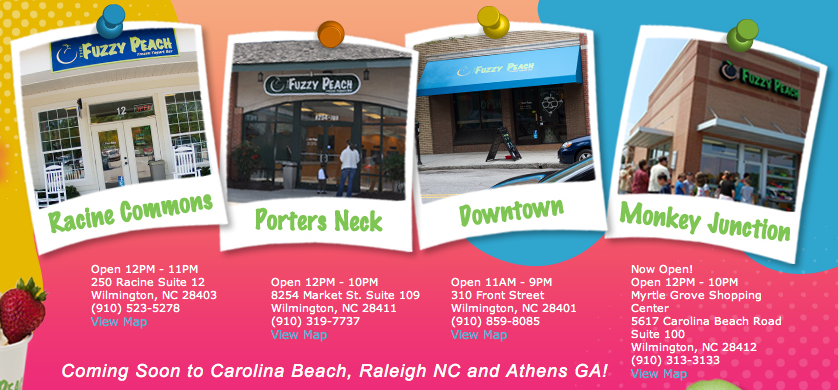
    Looking for something new and exciting in your life?  The Fuzzy Peach is a self-serve frozen yogurt bar that allows their customers to be as creative as they’d like. Located in Racine Commons, and in three other sections of Wilmington, The Fuzzy Peach offers eight different flavors of frozen yogurt each day. Also available are rows full of toppings including fresh fruit and candy to make each yogurt creation unique. The Fuzzy Peach is a healthy alternative to dessert, but still satisfies the sweet tooth that we all have. Customers pay by the ounce, so they’re in control. Add on ten toppings, or maybe just one, but in the end the customers will have exactly what they’ve been wanting. Rocco Quaranto, Wells Struble and Jason Nista graduated from the Cameron School of Business from the University of North Carolina Wilmington in 2008. The trio met their freshman year in the dorms and ran track together. They graduated and continued on to peruse employment in the corporate field, but it didn’t take long before they were bored with their jobs and wanted something new and fresh. The young entrepreneurs came back to Wilmington, NC two years after graduation and decided to start their own business named The Fuzzy Peach. They got the idea of a frozen yogurt dessert bar from California and thought it would be a business that would be successful in the Wilmington market.  Needless to say they found a niche and have struck gold in the Wilmington area.   Did these young entrepreneurs place their yogurt shop in Wilmington by chance, or was it a strategic planned marketing move?  Their knowledge of the Wilmington area and their locations for their stores leads us to believe it was a strategic move on their part.  Their placement of the first Fuzzy Peach store is conveniently located close to UNCW, and their probable target audience is college students.  Through word of mouth and advertising, this location became a popular spot for college students in Wilmington craving frozen yogurt.  Once that location became a hit, they opened up their second location in downtown Wilmington.  This location offers free frozen yogurt to a different company downtown and their employees on certain Fridays advertised by the store.  This second store’s target audience is businesses and professionals working in the downtown Wilmington area. However, they are also still open late for young students wandering downtown.  Their Monkey Junction location is their third, and attracts people from the surrounding areas much like their newest location in Porter’s Neck.  A Fuzzy Peach yogurt store will be coming soon to Carolina Beach, which will further expand their target market.  Each location offers specials, such as T-Shirt Tuesday where customers wearing a Fuzzy Peach shirt into the store will receive 10% off their frozen yogurt purchase.  The future seems very bright for the three entrepreneurs who have brought a frozen yogurt empire to the Wilmington area. -Kelsey Bendig, Brooke Keller, Andrea Blanton, Brian Burch

  • Shave Time. Shave Money. Go Viral.

    You may have seen the latest viral ad campaign that has surged through the Internet and created quite the buzz. It’s a video from DollarShaveClub.com, a recent startup company that ships high quality razors for as little as $1 a month. The video has reached close to 700,000 views on YouTube in just two days.

    The video features Michael Dublin, founder and CEO of Dollar Shave Club, leading the viewer through the company’s warehouse. Michael claims that their blades aren’t just good, they’re “f***ing great”. Michael continues by bashing the competition and “fancy razors” with high-tech gear, saying how handsome your grandfather was with just one razor. The level of absurdity in the video has been compared to the success of the Old Spice campaign, which features deadpan humor and ridiculous situations.

    The marketing campaign may have been more than Dollar Shave Club bargained for. The reaction was so strong that the company’s website crashed soon after the video launched due to the amount of traffic they were receiving. With the website shut down, Dollar Shave Club potentially lost revenue from the overwhelming demand. In the world of modern business, success can literally happen over night, as displayed by Dollar Shave Club’s huge viral impact. With startup companies trying to get their name out there in the fastest and cheapest way possible, creating a hit video may be the way to go, as long as your prepared for the traffic flow afterwards.

    The popularity of the campaign raises some questions regarding the changes in modern advertising. Having your CEO star in a video where you pronounce that your blades are “f***ing great” is risky,  but it seems that the risk, blatant honesty, and the ability for a company to poke fun at itself is what drives a business to viral success. In comparison to the Old Spice campaign, Isaiah Mustafa’s character became so popular that Old Spice went beyond TV adverts and began answering viewer questions on YouTube. While this is still just a character that sells deodorant, it became much more than that to viewers because it didn’t feel like a commercial. If commercials have a self-awareness of what they are, the audience recognizes that awareness and is more lenient to simply enjoy an advertisement as entertainment. Perhaps this is what Dollar Shave Club was going for, simply telling people what they are in the most honest, exciting, and fun way that they knew how.

    By: Hunter Wilson, Josh Vester, Ashley Oliver, Molly Jacques

  • Surfing Your Way to Success

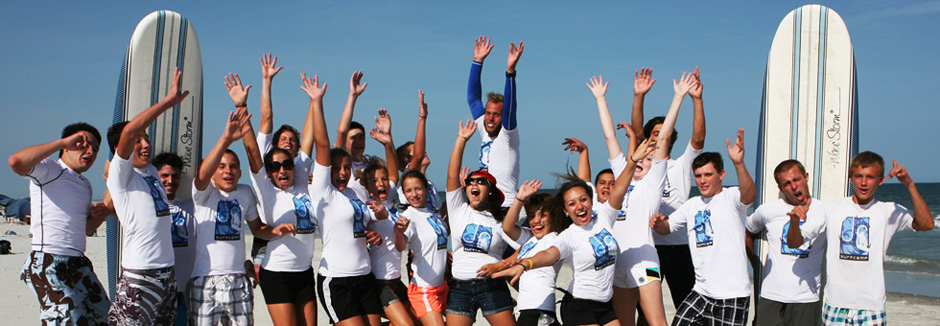
    Entrepreneurs, as well as many other companies, rely on Integrated Marketing Communication to get the word of their business out to the public with multiple methods. A fellow UNCW Senior in the Communication Studies department, James Connolley, has been an entrepreneur using IMC to promote his business, JC Surf Camp. James has been teaching people of all ages how to surf for 8 years and has been an entrepreneur, owning JC Surf Camp for 6 years. His decision to start his own surf camp business started with a conversation with his high school bible study leader. James has a love for surfing, kids, and Jesus and decided the best way to combine all the things he loves into his surf camp. He likes to share his message through his surf camp by the quality and professionalism in his every day work.

    When the surf camp started in 2006, the only way James was communicating with his publics was by posting fliers in the storefront of a local surf shop. His business quickly started to grow and in 2007, James decided he wanted to market his business to a broader audience. He paid someone to build his own website and just recently added new content and features. James uses many other ways to communicate to his public by using mass emails, direct mailing, brochures, website, and social media. The best marketing overall with JC Surf Camp is word of mouth advertising and partnerships with other local camps in Wilmington. More recently, James was able to advertise his business through the local news station WECT.

    Link to WECT Live bit on JC Surf Camp

    The JC Surf Camp team considers surfing one of the greatest blessings in life and goes to great lengths to ensure others see it the same way. Each instructor at JC Surf Camp has gone through an extensive SurfInstruct Training Program before becoming a surf instructor. This program was developed to ensure every instructor knows ocean safety, surf safety, CPR and First Aid certified, and knowledge of different teaching methods for all levels, such as, kids, teens, groups, or private lessons. Another way James and his team ensure safety is by providing UV protected rash guards and soft-top surfboards. Safety is very important to all the JC Surf Camp instructors to make sure they are providing a safe learning environment. James stated it perfectly when he said if people feel safe, they are able to have fun. This is one of the messages James tries to communicate to retain and maintain customers.

    Many times entrepreneurs start from the ground up and have to take what they have and make the most of it. Since James is in the communication studies department at UNCW, he has been able to take the knowledge learned in communication classes and IMC classes and implement that in his business. James, as a student and entrepreneur, thinks of entrepreneurship as an adventure and has far exceeded what many entrepreneurs his age are capable of.

    Learn how to surf today!

    By: Laura Simmons, Dorothy Conley, Christina Stevenson, Mollie Berthold

  • Why did you vote for THEM?

    The strength of political party’s brand largely depends on knowledgeable voting consumers who understand what the brand has to offer.  However, no matter what a person thinks about a particular party, everyone tends to come to an agreement that the strength of a brand can quickly collapse. If the party is viewed as divided or sending incompatible messages, their voter’s perception of the cohesiveness breaks down and credibility is lost.  Although, if the party is perceived as being more “exciting” and innovative the voters are more likely to pardon their misdoings.  According to Gareth Smith and Alan French, “as all political brands try to appear trustworthy and honest, transgressions pose a clear threat to political brand relationships.”  They also stress that the overall brand must satisfy their needs when it comes to “the competitive nature of the political market, the credibility, attractiveness and personality of its leaders, and the party’s perceived salience and credibility in fulfilling its promises.”

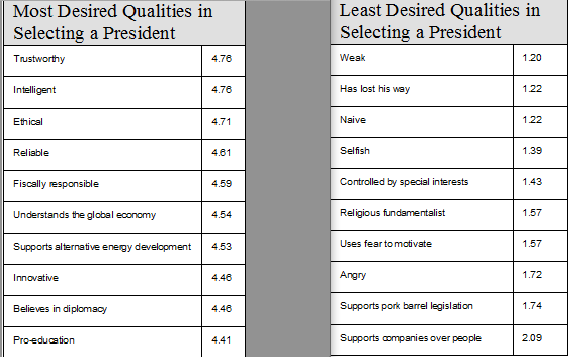
    A politician’s campaign for the Presidency is no different than a company marketing a product or service to a target audience.  Just like in marketing, it’s important for politicians to conduct research and gain knowledge about what their target audience perceives to be important and credible.  During the 2008 election, Brad VanAuken, author of Brand Aid, developed, conducted and analyzed a survey given to 100 people from 29 states on political branding strategies.  He hoped to gain insight into the personality traits often associated with strong and powerful political brands.  Through his research, he established two lists; the most desirable and the least desirable qualities for potential Presidential candidates.  Two of the most desired qualities for a potential President include trustworthiness and intelligence. On the other hand, two of the least desired qualities include using fear to motivate and supporting companies over people.  Political candidates should integrate these characteristics into their brand to appeal to their target audience.


    With the upcoming elections, politicians can take this study into consideration when developing a campaign to promote their personal brand.  It’s important to remember that consumers can make or break a political candidates’ chances of becoming our next President.  Candidates should do whatever they can to connect to their audience.  People feel more of a connection with a political brand if there is access to online interactions. Obama successfully created an online community to establish social networks to recruit and fund-raise among the local community. The Internet has become a means of relationships with its voters and will be of importance for the future political brands.

    “Political brands clearly face a challenging future with the only certainty being that old strategies such as the occasional re-branding and change of leader will be insufficient to address the core concerns that consumers have of them. As the world becomes more interrelated, nation states are increasingly unable to deliver on their promises to electors; electors who are increasingly aware of the brand’s attempt to influence them and less prepared to accept their right to do so.” –Gareth Smith and Alan French


    -Kelsey Bendig, Andrea Blanton, Brooke Keller, Brian Burch