Category: Community

  • Ready or Not, Here We Come!

    Well, it wasn’t ready. The Affordable Care Act website, that is. Commonly known as Obamacare by critics, the program officially launched October 1, 2013 and attempts to allow each American the opportunity to have affordable health care. The program was signed into law in 2010, but only just now became part of daily American life. The website experienced technical errors last week, and again this past Tuesday. However, this was unrelated to the government shutdown. Instead, the system experienced a major overload due to mass traffic to the site, claimed those who run it. An estimated 8 million visitors forced the site to send a response of “Please Wait and Be Patient,” CNBC reports. Run by the Department of Health and Human Services, the process to acquire a health care quote is actually quite simple. I myself did it and, just shy of giving my contact information, I was inches from an affordable quote in less than two minutes.
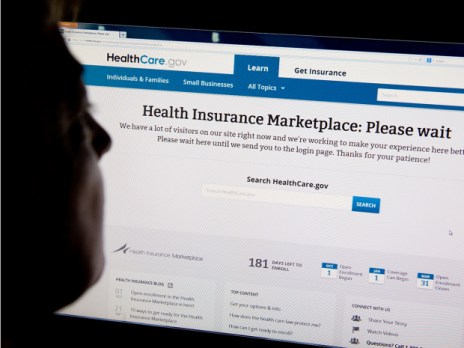
    Page that loads with technical issues, courtesy of MSNBC
    Page that loads with technical issues, courtesy of MSNBC

    Fox News said that the 93 million dollar website was the victim of poor Java Script coding, to the point where, simply put, the site freezes up. It doesn’t know where to go or in which direction to proceed. Yet MSNBC follows the path of the HHS, saying it was simply a matter of visitor overload to the site. MSNBC did not report, as of posting, that there were Java Script coding issues.

    So. Which to believe? It is common knowledge that news stations lean differently towards their side, whether it be right or left. Even CNN, a major world news outlet, leans toward one side. This post is neither liberal nor conservative, and it neither promotes nor discourages the Affordable Care Act. However, it does encourage that American citizens not rely solely on one news outlet for information. Rather, gather your news from a multitude of sources. Otherwise a viewer faces the possibility of being a victim of “Spiral of Silence.” The Spiral of Silence is an instance where an individual, with one opinion differing from that of the majority, is unable to voice said opinion for fear of judgment. For instance, if I believe Theory X, but my neighborhood only watches one news channel that reports solely on Theory Y, the neighborhood will only be educated on Theory Y. If the entirety of the neighborhood, apart from myself, believes in Theory Y, I would be uncomfortable in expressing my opinions and differences. I am lost in the Spiral of Silence. If you support a cause that one news station does not, you are only educated on their belief. In the land of the free, is our free speech being suppressed by the media?

    -Hilary Hall

  • “Together We Make Football” and Community

    When I think about the NFL, or football in general, my mind immediately goes to large men with helmets running into each other; granted, I am not a big sports fan.  Most people’s minds wouldn’t imagine a little girl as the face of a major NFL ad campaign.  However, tiny Samantha Gordon, a ten-year-old pee-wee football player from Utah, is featured on the first commercial of the NFL’s “Together We Make Football” campaign.

    0ap2000000247227

    “Together We Make Football” is a contest where football fans of all ages, shapes and sizes are encouraged to share their stories of how football impacts their lives and what it means to them.  The contest narrows down to ten finalists, with five invited to take part in Super Bowl XLVIII festivities.  These stories can be in video, picture or story form and are posted to the “Together We Make Football” website.  The winners are chosen by a panel of judges, and the site’s visitors are invited to “like” the different posts; although these likes don’t have any affect on the contest winners.

    So how can I, someone so inexperienced in all things NFL, take an interest in “Together We Make Football?”  By applying it to what I know.  This campaign is a perfect example of how subcultures form and become such tight-knit communities.  The Social Identity Theory of communication states that people have many different versions of themselves depending on the groups, or subcultures, they belong to.  Different social situations are what drive these separate “selves” to behave in certain ways.  The title alone explains why “Together We Make Football” exemplifies this theory.  Defining fans of football as a “we” takes thousands of people and brings them together into a single unit.

    nfl-rivals-has-arrived-bring-your-rivalries-into-the-game-now_niesg_0

    Social Identity Theory goes further, saying that people belonging to one group tend to favor others within the group at the expense of others on the outside.  This holds true in the NFL regarding team rivalries in which fans become passionately involved.  Rivalries are like a double-edged sword, bringing together fans of the same team while creating tension with the fans of the opposing team.

    “Together We Make Football” reminds us that all fans are the same.  Ultimately, the goal is for their favorite team to win.  The campaign reminds us that all fans have the same goal, though it might be for different teams.  It allows people to share why they love the game so much, which can bridge the gap between rivals.  The different fan groups can become a single football-loving “we” because of the “Together We Make Football” campaign.

    – Maggie Dowicyan