Category: Campaigns

  • Why Your Business Should Adapt a Green Thumb

    We’ve all heard the saying “Going Green”. Almost everyone nowadays is changing their daily habits to be more environmentally friendly. But what does this mean for businesses? Eco Brands are gaining popularity, which means adding some green to your business could be your next marketing move.

    With the rising concern about climate change, it’s no wonder people are beginning to be more cautious when shopping. Whether you believe in the crisis or not, there is some sort of draw to making an environmentally friendly decision. Consumers are becoming more and more likely to spend extra on a product if it is considered “green”.

    In a 2017 joint study done by, The Hong Kong Polytechnic University and Rajamangala University of Technology Phra Nakhon, researchers found that there is a strong relationship between brand green image and eco branding; specifically, within textile brands. A majority of the people surveyed agreed that eco-branding helps a brand’s reputation and credibility, and that it increases their likelihood of purchasing from a business.

    Eco-Branding is the emphasis on environmentally friendly practices within a company. This could mean that products are made with recycled materials, the production leaves a smaller carbon footprint, or that the company uses revenue to invest in protecting the environment. Some major corporations will highlight specific “green” projects they do while some companies are built upon the principle of being eco-friendly. Regardless, this is a rising trend for businesses as the world becomes increasingly worried about the state of the environment.

    Brand Green Image is described in the study as the consumer’s value in the eco-friendliness of a brand. Target consumers are predicted to be more willing to pay more for eco-friendly goods and services. Not all consumers hold environmentally cautious production as a high factor in decision making, but some however do. It is important to reflect the green image to that target market. The goal is to tap into the target’s values and create a more personal connection between the brand and consumer.

    Credibility is a huge factor in brand loyalty. Consumers favor brands that are consistent and reliable. Data shows a positive relationship between eco-brand and credibility. Eco-Branding shows that the brand is concerned in preserving the environment, a value in which some consumers hold highly. However, it is important when implementing eco-branding to be transparent with the audience. Claiming to be “green” when sustainable practices are not being made can cause major damage to a brand’s credibility.

    The study also showed that consumers are more likely to prefer a brand with an established green image. If eco-friendly tactics are integrated into the company’s brand image, participants of the survey stated that they were more likely to do business with them. This means that sustainability within a company is a key factor to market to the public.

    If you are considering enhancing your company’s brand image in the future, perhaps implement an eco-branding strategy.

    1. Introduce green products or services into your company. An example of a green product would be something that was made from recycled materials or was made in a process that used low energy. These types of products are becoming increasingly popular, especially within the fashion industry. Textiles require a lot of energy and water to create, so many brands are looking for alternate production methods for their products. Retail franchise H&M has a service that promotes recycling used clothes in exchange for a discount- which promotes an eco-friendly brand image.

    2. In addition to adding green products or services, promote green behavior in branding materials. Include reasons why it is important to shop sustainably or use green products. Being transparent on why the brand is eco-friendly helps to build credibility and trust amongst consumers.

    3. Highlight the effect on the environment your company has made by switching to be greener and articulate that data to shareholders. This creates more value in the company and can attract potential investors. Being transparent with shareholders is another way to strengthen relations and brand reputation.

    Not only does eco-branding have the potential to attract more customers, it can boost your company’s reputation. As the results of the study show, there is a positive relationship between eco-brand and green brand image. There is potential for increased value, profit, and brand loyalty. So perhaps going green might be your next business move?

    Post written by Lyndsey Newton

    Kan, Chi Wai, Ting Chow Cheby Yuen, Chamlong Sarikanon, and Rattanaphol Mongkholrattanasit. 2017. “A Study of Brand Green Image in Relation to Eco-Branding of Fashion Products.” Applied Mechanics and Materials 866: 448-451. doi:http://dx.doi.org.liblink.uncw.edu/10.4028/www.scientific.net/AMM.866.448. https://search-proquest-com.liblink.uncw.edu/docview/1910408508?accountid=14606.

  • What is wrong with IMC?

    IMC seems to be everywhere and nowhere at the same time. Schools are teaching it and marketers are using it, but some experts are still reluctant to write about it in new media. I was curious as to why, so I chose to reference an article titled “Integrated Marketing Communication- from an instrumental to a customer-centric perspective” by Manfred Bruhn and Stefanie Schnebelen. The purpose is to inform readers about the role of Integrated Marketing Communication in new media. Brunn and Schnebelen attempted to do this through discussion of the changed conditions of the media markets since the development of Integrated Marketing Communication.

    This article is based on research done via a literature-based approach. The authors conducted this with consideration of the modern media market and customer behavior. The first step in researching was analyzing the challenges of Integrated Marketing Communication, followed by the principles of customer-centric Integrated Marketing Communication, and lastly the implementation issues in Integrated Marketing Communication. By analyzing these three steps, Brunn and Schnebelen were able to point out the gaps of Integrated Marketing Communication in new media and establish a media-based umbrella framework that searched for common gaps in new media and Integrated Marketing Communication. The authors analyzed various forms of literature that discussed Integrated Marketing Communication in efforts to see the prevalence of Integrated Marketing Communication on new media.

    Brunn and Schnebelen didn’t really END the conversation on why IMC isn’t being considered a part of new media yet, but the authors definitely opened the door for it and provided

    good insight into the issues of experts in marketing and new media not considering IMC a part of the currently used approach to media and marketing.

    As someone who is an avid consumer of things such as Nike shoes and also an IMC student, the marketing campaign they use to get me interested in purchasing their products practically revolves around IMC. First, they promote and share user-generated content all the time for their advertisements. Secondly, they integrate all kinds of different marketing and promotional tactics in order to reach the correct audience effectively. Personally, I do not know researchers and scholars can ignore IMC’s place in new media given the fact that it is in almost every advertisement and marketing campaign that we see in today’s world. The method of encompassing things such as influencer marketing, commercials, and targeted advertisements into one campaign is practically standard in marketing now, and it is time that literature catches up with the times.

    The results of the study by Brunn and Schnebelen were that the artifacts about Integrated Marketing Communication that the authors analyzed did not discuss social media as a part of Integrated Marketing Communication in new media to any great extent. The articles that were analyzed were vague and only regarded Integrated Marketing Communication as a new form of media, but did not get into specifics and more information. The literature that the authors analyzed fails to address the foundational change of social media and the impact it has on Integrated Marketing Communication as a whole. The article also discusses the loss of control over advertising content that corporations are currently experiencing. Today, someone can post a viral tweet about your brand and that becomes a part of your brand identity. The corporation has no control over that happening and as a result of the rise in user-generated content, corporations are now more interactive with users on social media and promote UGC, as opposed to strictly

    pushing their own content. The authors suggest changing the mindset of the corporate IMC world, rather than changing the process in which communication is done. The results of this study encourage corporations and IMC practitioners, in general, to remember that IMC is an adaptive concept and as new forms of media and communication emerge, IMC must be adapted, rather than made into a black and white, never-changing subject.

    One example of this that I see regularly is when Instagram users “tag” the brands they were wearing or using in their posts. Today, more marketing on social media is done by consumers to other potential consumers than ever before, and major corporations are putting more resources consumers to spread the word about their products in hopes that consumers create marketable content for them.

    This study has made a great impact on IMC. Firstly, this article forces those in the Integrated Marketing Communication research community to seek a deeper understanding of social media and its impacts on social media. As social media continues to become a mainstream of marketing, the literature not analyzing this information shows that the Integrated Marketing Communication industry is behind where it should be in terms of analyzation and application of Integrated Marketing Communication in new media, specifically the analysis of Integrated Marketing Communication in the customer-centric landscape.

    Bio:

    Adam Guttadauro is a student at UNCW, majoring in Communication Studies. He is originally from Boston, Massachusetts. While not in a class, he is working on his various business ventures

    or at home watching football. Adam is interested in IMC due to its prevalence in his ventures and hopes to bring an IMC-centered approach to all of those ventures

  • How Social Media Benefits Brand Attitude and Awareness Online

    Based on a research study by Daniela Langaro, Paulo Rita, and Maria de Fa ́tima Salgueiro

    It’s no secret that social media has moved mountains, and has created a plethora of new ideas in the world of branding. The correlation between using social media sites and branding has always been an integral factor in utilizing the different communication and marketing skills this generation has to offer. Something so normal and monotonous like scrolling through social media feeds now has more power and value than we as a society of communicators could ever imagine. Branding nowadays cannot be fostered within a company without some sort of media and online presence, and social media happens to be a somewhat “free” platform for building a brand. The article “Do social networking sites contribute for building brands?” clarified a lot of my assumptions as a Communication Studies student on how different areas of social media serve different organizations. While a lot of my discoveries and observations were not new, they have expanded the way I think about social media and branding as a whole, and as two equal parts that help one another in the world of communication.

    Before considering the advantages of social media, let’s discuss branding. Branding, by definition, is “the promotion of a particular product or company by means of advertising and distinctive design”, and a brand alone is defined as “a type of product manufactured by a particular company under a particular name”. So, we can conclude that while a brand is the product or idea being promoted, if the act of branding isn’t successful, the actual brand may not be of as much value as it could be. These two individual elements of branding and an actual brand depend on each other for quite a lot.

    From these ideas, companies build the image and vision of their “brand” and formulate ways to continue the branding process in different, creative ways. For example, almost anyone can identify the “target” emblem included in the retail store Target’s logo. People identify with the logo, and immediately think about what the logo means to them by associating it with a time or place they engaged with the Target brand, and then decide if they like it or not. From here, all of these interactions with branding can be broken down into subcategories including brand awareness and brand attitude.

    Brand awareness, as defined in the article “Do social networking sites contribute for building brands?” captures the potential availability of a brand in the mind of the consumer (Langaro, Rita, and Salgueiro, 2018). In the same article, brand attitude is defined as the evaluative dimension of brand image. Customers, potential or current, develop their own evaluation and judgements towards a brand by what they see and interact with. Having a presence on social media heavily affects this interaction and can provide a leg up for companies looking to engage more with different audiences. This can make a company or organization more competitive as well. The more a brand image or brand in general is shown in an appropriate way, the more association, knowledge, and popularity the brand will attract. This is why an online or social media presence is so vital today. Because social media is so relevant, why not utilize free promotion and improve the image of a company by establishing an online presence on a social media website?

    When it comes to branding, organizations want their personal image to be immediately identified and simple enough for people to remember. This is most often achieved by visuals and resonating cognitively with the organization’s potential or desired audiences. Brand association, brand quality, and brand knowledge are all benefits of using social media to boost any image or brand online (Langaro, Rita, and Salgueiro, 2018). When a company posts regularly on popular social media platforms, it now has individuals associated with and educated in it’s brand based off of the brand’s online presence, which is an essentially free outlet to promote or improve branding. Organizations now see the value and necessity in posting daily on social media sites and looking into analytics because it can show an organization exactly how people are interacting with their brand.

    One can realize quickly that branding is a very broad element in the promotion of a company, business, or organization. Branding is not just simply “branding”. Branding is developing a certain image within a brand, connecting other people and things to the brand, showcasing the brand in a way that will connect with others and display the right idea to customers, and the list goes on. When one analyzes the purpose of branding, so many layers can be found within it and its purpose is ever-changing. One thing that isn’t going anywhere, though, is the constant yet rapid growth of the internet and social media. Companies should continue to use social media outlets for brand communication. They should stay current on evolving social media trends, and how the company can adjust and grow with a technologically-charged society. Taking advantage of the online community can work wonders in the world of branding.

    Written by Natalie Oldani

  • THIS IS FAKE NEWS! NOPE… IT’S REAL

    Would you know fake news if you saw it? How often have you come across fake news during your time on social media? I’m betting more than once. Believe it or not, in the past few years, platforms created algorithms to reduce the amount of fake news flooding your stream. But how well has that worked?

    Hunt Allcott and others found specific trends in the diffusion of misinformation in social media. They gathered thousands of pieces of content and stories from over 100 fake news websites and their level of engagement with Facebook and Twitter and reviewed the trends of their diffusion from 2015 to 2018. Using various web trafficking methods such as BuzzSumo and Alexa, they reviewed the volume of user interactions and recorded browsing data. Yeah, they can do that.

    Allcott’s research also measured the outcomes for not only major sites, but small business and culture sites, and small news sites not identified as producing misinformation (Allcott, 2019). But those sites followed a stable trend in comparison to Facebook. Even so, some of the fake news sites also contain true news and clickbait to misleading content. Because of that reason, the researchers also compiled a list from Snopes.com that fact checked the content they deemed false. That gave them still a whopping 9,540 false stories! Later described in the article, the data could be misconstrued because of the sites these programs don’t account for.

    The amount of misinformation leading up to the 2016 election is alarming and fake news on social media is argued to play a major role in the results. Because of the increased volume of fake news, Facebook and other platforms created an algorithm to flag false content in order to prevent the spread of misinformation and improve its quality. The amount of decline within the past 2 years has suggested that Facebook’s algorithm may have something to do with it (Allcott, 2019). But, it’s nearly impossible to control the amount of misinformation people put out into the world.

    The results suggest that since the end of 2016, Facebook has had a decline in fake news since its peak while Twitter is still rising (Allcott, 2019). This change in the continuous rise after the election could have something to do with the President’s recent engagements on Twitter. The results from Facebook show relationship to major news and fake news sites engagement through the same periods of time. While Twitter engagements are on a continuous rise through the entire study due to the president’s active account and rising millenial use.

    This study seeks out to share the importance of knowing the decline is visible but the amount of misinformation still being consumed by viewers is large and alarming (Allcott, 2019). That’s mainly referring to Twitter and Facebook. Though Facebook’s fake news has declined from 160 million to 60 million engagements per month, the number is still high. And that’s just from one social media platform! Imagine the generations who get their news from major news sites that also carry false content not in this study. That just adds to the number of people exposed to things that can persuade one’s decisions.

    As communicators in the IMC world, it is our job to persuade and influence, however, in an ethical and approachable manner. Seeing this research has only solidified the fact that people are aware of the content put on social media. What is said online is shared and impacts society more than it seems. Allcott (2019) concludes that the diffusion of misinformation through social media is a potential threat to democracy and broader society. As a young generation of communication students, it is our responsibility to create content that is honest and thought-provoking in an ethical way.

    We remember the social media chaos that surrounded the 2016 Trump election but it makes you wonder about the effect a continuous amount of misinformation would have on a society and future elections. The research suggests there was a decline, however, there is still a problem. We, as marketers, need to keep in mind ethical values and the content we create and post- whether it be personal or business related. The fact is, on the internet, the information you share will be seen by someone out there, so don’t be fake, be real.

    Allcott, H., Gentzkow, M., & Yu, C. (2019). Trends in the diffusion of misinformation on

    social media. Research & Politics, 6(2), 205316801984855. doi: 10.1177/2053168019848554

    -Annie Cline

    Annie is happy to bring her creative writing skills into her studies with IMC. She has a passion for communication and cannot wait for graduation to put her skills into action in the real world.


  • Spring Break Travel, Iceland, and Authentic Advertising

    Spring Break Travel, Iceland, and Authentic Advertising

    March begins the season of spring break for college students and faculty. It’s a necessary period to disconnect, reflect, and have some fun in the midst of midterms and difficult coursework, jobs, or internships.

    But just because we might be escaping our day-to-day lives for a week doesn’t mean we escape the myriad ways that advertising and integrated marketing communication impacts us and our decisions. One huge way IMC impacts us: how do we decide where to go?

    Travel agents, tourism bureaus, hotels, airlines, and other stakeholders create vibrant campaigns. Few have had to deal with a crisis as large as a volcanic eruption.

    Inspired by Iceland

    Eyjafjallajokull-fimmvorduhals-eruption-iceland11
    Eyjafjallajökull erupting. Via adventures.is

    In 2010, Eyjafjallajökull (an Icelandic volcano) erupted and caused historic disruptions, including ash fall that shut down flights across Europe for almost a week.

    Tourism to Iceland fell by 30%. Inspired by Iceland was a campaign that involved the whole country. The president of the country at the time, Ólafur Ragnar Grímsson, stopped the entire country in its tracks (schools, workplaces and more) to ask for citizens to submit positive stories–which they did.

    The campaign chronicled its success in this video:

    The huge catalogue of positive Iceland experiences included celebrity testimonials. Webcams provided live footage of some of the most tourist-attracting natural wonders. The results of the campaign included more than £137 million in extra tourism revenue and more than 22 million stories shared.

    That last part is pretty amazing, because Iceland’s population is fewer than 350,000 people.

    The Brooklyn Brothers, the campaign’s creators, shared a case study on their website with more details.

    What Other Travel Experiences Can Take from Inspired By Iceland

    The award-winning campaign was effective because the agency running it knew its target audience: socially conscious millennials wary of traditional advertising ploys. The Brooklyn Brothers successfully gathered authenticity and storytelling.

    What would be more likely to get you to travel to a destination: a generic, high-production-value slideshow of landscapes with a peppy but robotic disembodied narrator telling you to Visit XYZ? Or a series of pictures of black sand beaches and a story from Olaf, a real Icelander, telling you about his afternoon on Iceland’s south coast? What is more authentic–a curated video or a live webcam broadcast?

    If you picked the second answer for any of those, you’re part of the target audience for Inspired by Iceland.

    Authenticity in marketing is now more important than ever, Business.com writes. That’s counterintuitive for some brands, which strive to carefully curate a perfect facade. Consumers’ desire for authenticity also makes it difficult for brands that lack a clear contribution to “the greater good”–without that corporate social responsibility, authenticity just means admitting that a brand wants a profit.

    The travel and tourism industry has always been about selling experiences, not goods. The next time you start googling destinations, consider what experiences you’re being sold–and whether they’re true-to-life or inauthentic ones.

    –Nikki Kroushl

  • And the Oscar Goes To…Advertising!

    And the Oscar Goes To…Advertising!

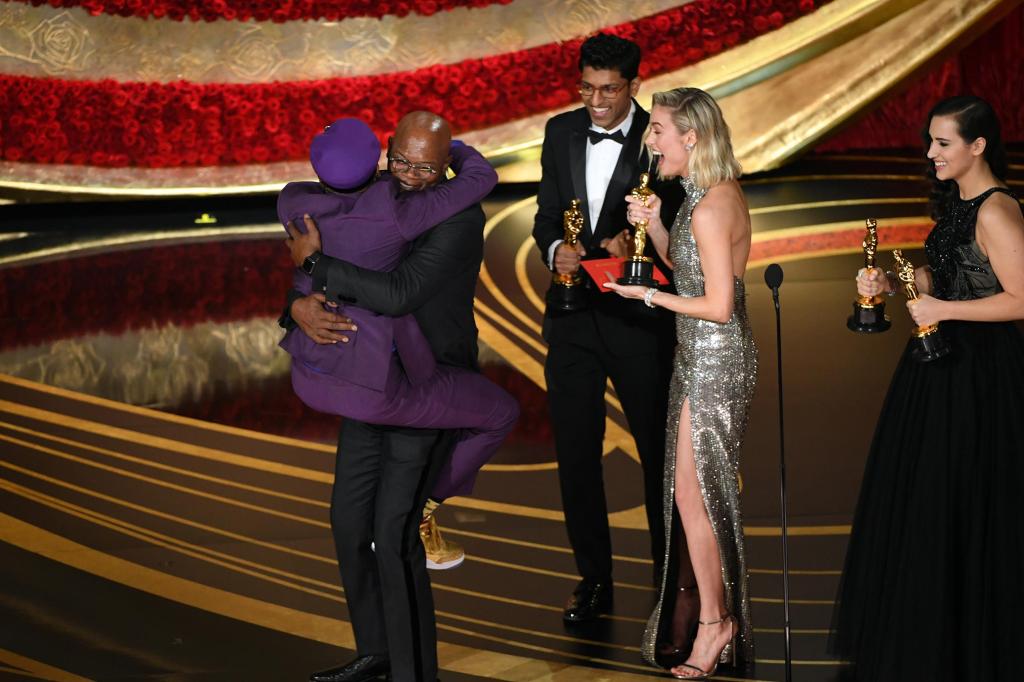
    The Academy Awards were last Sunday, and I think it’s safe to say there were plenty of surprises throughout the night. From the program having no host, to Green Book unexpectedly winning Best Picture, there was plenty to talk over the course of the next few days. Although director Spike Lee supposedly storming out after the Best Picture reveal, and Lady Gaga and Bradley Cooper’s steamy duet made headlines, things that didn’t get as much recognition were the various advertisement campaigns geared specifically towards the Academy Awards audience.

    It’s no secret that we are living in an age of recorded television and streaming services, and people have become impatient in general when it comes to sitting through commercials. Much like the Super Bowl, an awards show such as the Oscars are another example of a live televised event people tune in to in real time, and thus present the perfect opportunity to capitalize on viewers’ attention. While the adverts for the program didn’t cost nearly as much as those for the Super Bowl (according to Variety, 30 second advertisement spots for the Oscars cost between $2-3 million), it was very clear through the commercials’ content that they were advertising directly to the Academy Award audience, especially females.

    One example of this was with Walmart’s ad campaign. It’s known that fashion and style contribute to some of the Oscar’s biggest moments—both on the red carpet and in the award categories. Walmart, one of the night’s sponsors, seized this night of culture and fashion as an opportunity to advertise their clothing lines, while simultaneously highlighting film crew members and stylists who work endlessly behind the camera to make “movie magic” happen. The various commercials reinforced the idea that if ordinary people such as Julia Roberts’, Rami Malek’s, and Chadwick Boseman’s stylists can be glamorous and creative while wearing Walmart, then you can too!

    Another advertisement specifically aimed at women between the awards was a Budweiser commercial featuring Charlize Theron. In the commercial, Theron challenges female stereotypes while drinking her beer in a bar by challenging men to various games (billiards, darts, arm wrestling, etc.). An A-List celebrity, and a beautiful woman at that, was sure to capture and keep the attention of a time-shift-conditioned audience.

    Another Academy-specific ad campaign came from Google. The company utilized clips from various iconic movies, such as 2001: A Space Odyssey, Lady Bird, The Hangover Scream, Jerry Maguire, Deadpool etc., and depicted how the scenarios could have played out differently had Google been present in each scene. The commercials assume that viewers of the Oscars are movie buffs, and know enough about the films to understand the references within the commercials.


    What do you think? Do you believe the advertising efforts between the awards successfully kept audiences engaged? Did celebrities or those closely associated with celebrities influence your opinion about a product or brand featured? Comment below with your thoughts!

    -Audra Bullard

  • Election Day Voter Guide

    its-voting-day-lets-do-this-meme

    Over the past few months we have been overwhelmed with political campaign advertisements for candidates whether it’s been on social networks, TV, or in print ads. We have seen our family, friends, and even celebrities endorse candidates and their campaigns and it has become a social media trend to post a selfie with your “I voted” sticker. As Americans, being able to express our concerns and beliefs is part of the individuality of our culture.

    If you did not choose the early voting option, do not fret, there is still time to vote and post your own “I voted” selfie! Election Day is finally here and the polls will be open from 6:30 a.m. until 7:30 p.m.

    Kate-Hudson-took-selfie-after-voting

    Where to Vote: If you waited to vote till Election Day, you must vote in the precinct where you are registered to vote. With over 40 polling places in New Hanover County, you can easily search your address here to find the correct polling place!

    What to Bring: Although a photo ID is not a requirement to vote, certain voters such as first time voters who did not initially provide their North Carolina drivers license number may have to bring an acceptable form of HAVA ID. For example, a valid photo identification or a document such as a utility bill, bank statement, or government document that shows your name and address will be accepted. You can find more information here.

    Candidate Information: Deciding which candidate to vote for can be stressful. It is important to research about each of the candidates and learn their political point of view on a variety of issues and policies. Even if a political issue does not necessarily affect you personally, it is important to remember that many policies can affect the people around you. When deciding on a candidate to vote for, remember to do your own research! Sometimes the media can be one sided and as a voter, you want to make sure you understand who and what you are voting for. You can find a list of the candidates here

    Having the option to vote should not be taken for granted and voting gives us the opportunity to make our voice heard. So, do not forget to go vote today!

    anigif_sub-buzz-26141-1478538969-3

    For more information on this year’s elections in North Carolina, you can visit https://www.ncsbe.gov/Elections/2018-Election-Information

    – Emma Adamcik