Category: Branding

  • It Takes Two to Tango

    Crisis communication is one aspect of the corporate and professional world that is regarded with hesitation and stress. Just as in everyday life, most people prefer to avoid conflict at all cost. However, when faced with conflict or crisis it is those who handle the situations in the most effective and fair manner that exemplify great corporate communication and leadership skills.

    An example of crisis and conflict in the corporate world was the tire recall and conflict between Ford Motor Company and Firestone tires. After expressing concerns that Firestone had manufactured defective tires, which had been used on Fords Explorer model vehicles, John Lampe CEO of Firestone tires caused business relationships to quickly end between the two companies. The next day Ford announced that it would have to recall over 13 million tires that had not been previously included in the 6.5 million tire recall. Discrepancies on the safety of the Explorer tires generated heated debates between Firestone and Ford. Though Firestone admitted the tires were unsafe in its first 6.5 million recalls, it denied any knowledge that the alleged 13 million defective tires Ford was recalling, were not safe. Ford’s boss, Jacques Nasser, stated “We simply do not have enough confidence in the future performance of these tires keeping our customers safe.” The companies began the blame game, accusing each other for the defective tires and as injuries and fatalities increased, the conflict and arguments intensified.

    As the conflict continued between Ford and Firestone, the incident was being called the most deadly auto crisis in America. By October 16, 2000, over 119 deaths had occurred from the defective tires. In the end, over 250 deaths were reported and attributed to this crisis and over 3,000 serious injuries. While the companies were blaming each other, their consumers were being hurt, and in this case, not figuratively but literally.

    The importance of handling crisis communication in an effective and timely manner is essential to corporate business. If the Ford/Firestone conflict had been resolved quickly, with both parties recognizing that it takes “two to tango” and that both parties were responsible for the defective tires, then they could have protected their profit losses, their own employees, reputations, and ultimately ensured the safety of their consumers and thus branding their companies as trustworthy and reliable. Instead, both parties chose to blame the other instead of focusing on a solution and the best possible resolution and thus exemplified very, very poor crisis communication skills which the consumer ultimately paid for, both out of pocket and even their lives.

    Breanna Alexander
    Lauren Dehart
    Lauren Smith
    Kelly Wiley
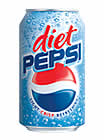
  • Syringe? Wooden Screw? Pepsi?

    PepsiCo has always been a leader in the beverage industry and in 1993, proved this to be true with how they handled their almost-crisis. Earl and Mary Triplett of Tacoma, Washington made the Seattle news when they reportedly found a syringe in a can of Diet Pepsi. Once news of this disturbing incident hit, reports from all over the United States poured in. Within one week, people from 23 states came forward claiming that objects such as a bullet, broken sewing needle, wooden screw and cracked vial were found in their Diet Pepsi cans.

    With such serious reports, you would think PepsiCo immediately recalled their product. However, PepsiCo didn’t believe in the reports. After all, with manufacturing facilities in many different locations the likelihood of such a crisis on a national level is slim to none. Instead of throwing in the towel and losing millions of dollars, PepsiCo decided to work with the Food and Drug Administration (FDA) to find the root cause of the crisis. In deciding that PepsiCo wasn’t going to recall, they knew they had to explain to the public that this decision is the right choice. How do you communicate this? By using the first ever video news release (VNR).

     In having 4 VNRs, PepsiCo was able to reach 265 million viewers. These VNRs allowed the public to hear and see the facts; that the whole scare was a cruel scam. With exclusive B-roll of Pepsi’s bottling process and surveillance camera footage from Colorado of a suspect tampering with a Pepsi can, PepsiCo was able to keep their brand name clean. At the end of all this madness, the crisis resulted in 20 arrests, each facing five years imprisonment and $250,000 in fines for their false claims.

    On June 21, “Pepsi is pleased to announce…nothing” became the headline of PepsiCo’s full page advertisement, placed in 12 national newspapers and hundreds of publications. PepsiCo had already planned on a summer promotion and by using their recent crisis; the company took advantage of their media coverage and tweaked their advertisement accordingly.

    What is most important to take away from this crisis was PepsiCo’s ability to invite the media in, letting them know the facts allowed for the truth to come forward and stifled speculation. Media can be a powerful tool, as we have seen through PepsiCo’s crisis scare.

    Meghan French and Gracie Anderson

  • Branding, It’s Not Just For The Cows!

    When we think of branding, yes we can think of cows that are marked to receive their distinction, but in the business world it’s a company’s trademark. In communication, we typically think of the term in regards to businesses. Branding is a necessity for businesses, but it’s also important for professional individuals. Our theme this week is careers in corporate communication. Now that the end of the semester is in close sight and many are looking at graduating, we thought self-branding would be a good topic to discuss.

    According to the U.S. Department of Labor, people change careers approximately 3-6 times during a lifetime for various reasons. Our world is constantly changing and evolving and a career-oriented professional has to keep up with the times. Generations before us found a job after college and it was considered the norm for a person to stay with the same company and in the same field until they retired. Not many people do that now. This is one reason why it is important for us to brand ourselves. As most of us begin to carve out a career path over the next few months, there has been a lot of talk about what we want to do with our lives. The main focus is what we are passionate about and where are strengths lie. An interesting article points out that self-branding is the difference between “just a job” and a career. It can make you employable in a profession you are passionate about and open doors you never thought existed.

    There are many steps to self-branding and the first step for the college graduate is to discover what you are passionate about and where your strengths are within that passion. This brings to mind a chapter in one of our textbooks entitled, “Good to Great” by Jim Collins. He finds that the great companies follow the Hedgehog Concept. In short, the Hedgehog Concept is about aligning

    1) What you are deeply passionate about?
    2) What can you be the best at?
    3) What drives your economic engine?

    As you see, self-branding sets us apart from the rest of the cattle out there. Let’s go make it happen!

    Sarah McIntosh, Sean O’Connell, Eliza Wadson, Jocelyn Walson

  • We’ve got Canes Fever!

    With October comes many things, the beginning of fall, Halloween, and one of my personal favorites, hockey season!  Granted, along with millions of other fans, I have been watching preseason games since September, but there is something indescribable about watching your favorite team play their first game of the season that I love.  This year was no different; I was so excited to watch my beloved Carolina Hurricanes play the Minnesota Wild that I had trouble sleeping the night before.

    Despite being a popular NHL franchise now, the ‘Canes haven’t always had the same following.  When the franchise first moved to North Carolina in 1996, their fan base was small.  Many people thought, “Hockey, in North Carolina?  Are you sure this is going to work?”  We aren’t exactly a state know for frigid temperatures and long winters typically associated with the ice sport.  This, coupled with the fact that the team played its first two seasons in Greensboro, a city somewhat out of the way for a sport that doesn’t have many followers and a team that doesn’t have many fans, proved to be a stumbling block.  Luckily, over the next few years the team’s success steadily increased, thanks in part to player improvement, relocating to Raleigh, and the efforts to spread the sport of hockey to North Carolina.

    Although winning the Stanley Cup for the 2005-2006 season helped to bolster the team’s fan base, the Hurricanes would not be where they are today without the efforts of the promotions and fan development department.  The department continually strives to promote and bring the sport of hockey to everybody.  They accomplish this through initiatives such as the organization, Canes Youth and Amateur Hockey (CYAH), an effort to get involved with youth hockey at all skill levels.  They also take advantage of in-game promotions including fun activities on and off the ice.  The team mascot, Stormy makes special visits to local schools and is available for parties and functions.  During games, the Storm Squad pumps up the crowd with cheers and entertainment.  The Storm Squad is also available for charity events and corporate outings.  Another unique promotional activity that the team uses is the Canes Cool Bar.  This is when the Carolina Ale House hosts a live broadcast during the game.  For fans who want to learn more about their favorite players, they can enroll in Hurricanes U, which provides students with a t-shirt, handbook, tickets to a Hurricanes game, and a graduation certificate.  Before every home game, one lucky fan gets to sound the Hurricanes Warning Siren, which signals the start of the game.  All of these promotional activities create a community for fans to come together and celebrate being Caniacs.

    Sarah McIntosh, Sean O’Connell, Eliza Wadson, Jocelyn Walson

  • Think Pink…Football?

    When someone says football, more likely than not the first images that come to mind are big, sweaty, muddy and masculine MEN. However, as a yearly tradition this month the NFL will be getting in touch with its more feminine side. To be more precise, all of the players will be accessorizing with pink. Pink sweat bands, socks, cleats and even pink mouth guards, all in honor of Breast Cancer awareness month. The NFL has designated all games from October 5-27th as NFL Breast Cancer Awareness games, started its own campaign called “A Crucial Catch” which encourages mammograms and also donated 14,000 to the Susan G. Komen for the Cure at the beginning of the month. Not only is the NFL taking action, throughout the year Major League Baseball is incorporating 250 pink bats into its games, and the National Hockey League players will be using pink hockey sticks as well as many other professional athletic teams. It seems that breast cancer awareness has turned “Think Pink” into a masculine concept as well.

    From the view of a Corporate Communication student, there is more to this concept than meets the eye. Professional sports such as football, hockey and baseball has had (for the most part) a predominantly masculine appeal. Not to say that thousands of women don’t love a full Sunday of watching their favorite team score touchdown after touchdown, or even participate in the sport itself. However, this “Think Pink” concept has become an athletic BRAND of its own. Fans of all genders love to see there favorite male players donning there pink accessories in order to create awareness of a disease that is statistically expected to effect 207,090 women by the end of 2010. Considering the biggest risk factor for being diagnosed with breast cancer is just simply being a woman, sports teams all over the nation that consist of mostly men are creating a whole new concept of branding for themselves. Star players within all areas of the athletic industry are taking action to show their concern for the cause; from Alex Rodriguez using a pink Louisville Slugger bat, to Cowboy’s LB Bradie James forming his own personal foundation that supports breast cancer, “Foundation 56”.

    It’s pretty obvious that breast cancer is a disease that effects all parties involved, not only the women (and men) who are diagnosed. This month, the NFL and other sports teams are making a statement about their normally masculine “brand” and letting everyone know that real men really do wear pink.

    – Lora Hampton

  • The Greeting Card Industry: An Accessible Form of Corporate Humor

    There are many people in the world who have sent a card at some point in their lives to a friend or relative. It can be for any holiday or special occasion whether it’s Christmas, Easter, Valentine’s Day, birthdays, weddings, anniversaries, or newborns. The list goes on and on. Cards are a testament to the power of print and it continues its existence into the digital age. Cards are symbols of humor from the corporation and cards need that humor to convince consumers to purchase them.
    One of the biggest (and best-selling) greeting card companies is Hallmark Corporation. This company sells a majority of greeting cards in the United States, with Christmas being the hottest season. No two cards are the same and each one has to incorporate some kind of humor in order to amuse the sender and the receiver. The cards use every method at their disposal, such as photos, graphics, puns, jokes, or all of the above. However, the cards can take this humor too far. Several cards that have come out recently have become more crass and sometimes politically incorrect (One example is a card with a photo of a person mooning the reader). There have been a few instances where Hallmark had to recall certain cards because some members of the public saw them as offensive. So, the industry has to rein in some of the humor to avoid potential conflicts.
    Despite its strong sales in print, Hallmark has embraced digital mediums as well. On their website there is a selection of e-cards. These cards have their own quirky charm. You can customize and expect some surprises whenever you click on the graphics. There are some well-known card mascots online. For example, Hoops and Yoyo, Hallmark’s animated duo featured in many of their e-cards. The company has created an entire mini-brand around a pink cat, Hoops, and a green rabbit, Yoyo.
    Hallmark is not the only greeting card industry; American Greetings has a substantial amount of business as well. But each card industry has the same objective: to bring in strong sales based on humor. All of these corporations need employees with a sense of humor so that newer and funnier cards can be put on the shelves. Sometimes humor can overstep its bounds, but humor is something our society needs in some of the more difficult times.

    Sarah McIntosh, Eliza Wadson, Jocelyn Walson, Sean O’Connell