Category: Branding

  • Establish your brand identity and you will guarantee success

    By Kelly Geiger

    Imagine you are walking through the mall and every store looks the same. Décor, logos, colors… everything is exactly the same. How could you possibly find the store you are looking for? This is where brand identity shows its importance. When you walk through the mall and see the check mark of a Nike store, the cursive sign reading Free People, or the navy-blue color surrounding the Gap, there is no question as to what brand you are looking at. Establishing a brand identity through colors, logos, fonts and more will not only set you apart from other brands, but also improve recognition and memorability for customers.

    This article will do two things. It will help you understand what a strong brand identity is and show you the importance of visually building a brand that sets themselves apart from their competitors.

    What is brand identity?

    “Brand identity is a combination of the name, terms, signs, symbols, and design used to identify a brand’s goods or services and distinguish them from competitors (Aaker 1991; Kotler 1991; Zaichkowsky 2010)” (Ward and Yang and Romaniuk and Beal, 2020). This is the part of the brand that people associate with visually. When you see Coca-Cola, what color do you think of? Red. When you see the words ‘Just o It’ what brand do you think of? Nike. When you see the golden arches what brand do you think of? McDonalds. “Brand identity elements are the building blocks that contribute, creatively, to enhancing brand presence in advertising content and purchase environments. For example, many McDonald’s advertisements contain no direct brand name, but instead favor brand identity elements such as the “Golden Arches” and “I’m lovin’ it” jingle” (Ward and Yang and Romaniuk and Beal, 2020). These are all examples of how successful these companies were in creating a strong brand identity. 

    Brand identity is not about selling the company’s product, it is about selling the company itself. They want to set themselves apart from their competitors, and using these visual elements is how they do it. This idea of ‘selling themselves rather than their products’ is further explained in the scholarly article Building a unique brand identity: measuring the relative ownership potential of brand identity element types by Ella Ward, Song Yang, Jenni Romaniuk, and Virginia Beal. “Described as an integrated system of cues, the purpose of brand identity is to provide a physical, proprietary representation of the brand (Perry and Wisnom 2003). In this sense, rather than providing a reason to buy the brand, the primary function of brand identity is to create a synergy amongst disparate brand elements and establish a unique brand look and feel for relatively homogenous goods (Perry and Wisnom 2003; Underwood 2003; Romaniuk and Nenycz-Thiel 2014).” In the image below you can see what an established brand identity might look like.  This mock example is a great representation on how a company creates a color scheme, font, and logo variations that are specific to their company.
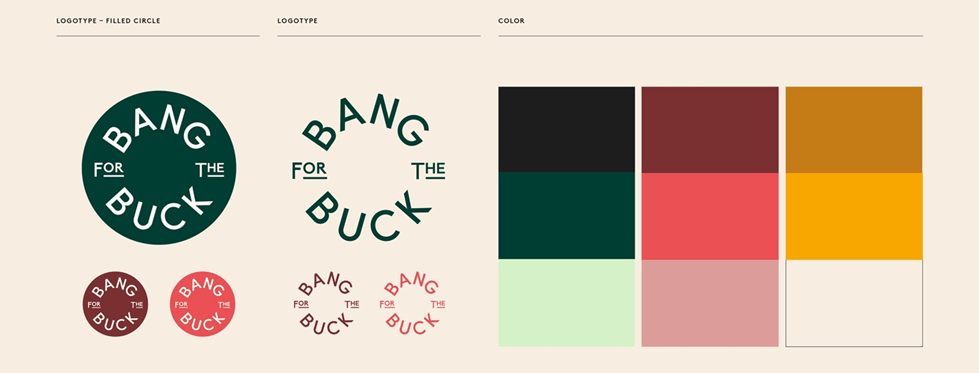
    (Photo from BeHance, https://www.behance.net/gallery/57691987/Bang-for-the-buck/modules/375634675)

    While some might not value the artistic side of branding such as choosing colors, logos, fonts, etc., this isn’t just so your brand looks ‘pretty’ or ‘trendy’, it is truly a science to set yourself apart from your competitors.  Brand identity is important because it relates to the psychological ways consumers connect their memory with your brand.  “Brand identity elements can help explain the brand (Kohli et al. 2013), add meaning (Dahlén and Rosengren 2005) and contain imagery such as colours and shapes that expand the way the brand is encoded and stored in memory (Keller et al. 2008; Hartnett et al. 2016). As a result, the brand becomes more readily accessible to the consumer via creating a unique brand identity and artistic presence. (Ward and Yang and Romaniuk and Beal, 2020) Again, when it relates to identity elements, the goal is not to sell the product but the brand itself. Another way to explain this is “Identity elements are the cornerstone to brand identity that helps consumers to recognize brands and distinguish them from competitors (Hoek and Gendall 2010). These elements evoke the brand in the mind of consumers and create a unique look and/or feel that makes it easy to identify the brand (Perry and Wisnom 2003; Romaniuk and NenyczThiel 2014).” (Ward and Yang and Romaniuk and Beal, 2020).

    The biggest takeaways from this article are the importance of brand identity and its key position in successful companies.  It relates to integrated marketing communication in many ways but most of all brand identity can be practiced through campaign and message design.  The corresponding brand identity features are mostly used in the forms of advertising, packaging, and other forms of design.  Integrated Marketing Communication deals with these features of how and why it is necessary to create a brand identity as well as how this will eventually help your company succeed within its marketing and advertising techniques.  

    Source

    Ward, E., Yang, S., Romaniuk, J., & Beal, V. (2020). Building a unique brand identity: Measuring the relative ownership potential of brand identity element types. Journal of Brand Management, 27(4), 393–407. https://doi.org/10.1057/s41262-020-00187-6

  • How can brands stay up to date with user generated content?

    By Courtney Busick

    Brands are constantly changing. They need to stay up to date on how an audience interacts with them on social media. Many companies are finding users who share their content through stories or posts shows more engagement and interaction than counting likes and comments. How can brands engage their audience? By understanding their human values and what makes them want to share user-generated content with others.

    What is user generated content? User-generated content (UGC) is completely created by the user. Many brands are using this by asking users on social media questions about their products. More and more brands are finding that they can get free marketing from social media users with UGC’s. Whether it’s Lays asking for new chip flavors or Coke sharing the hashtag #shareacoke, brands can get reviews from user who share their content on platforms.

    Sometimes it can be hard for a brand to navigate UGC’s so here are some tips I love from other marketers that can help you engage with user-generated content.

    (Photo Pi Datametrics, https://www.pi-datametrics.com/blog/name-game-coca-colas-shareacoke-summer-ad-campaign/)

    Connect Human values to your Products

    Understanding a user is understanding what they value. Brands must look at human values and use those to generate content that users enjoy. “Human values are guiding principles reflecting style goals in life that may impact how individuals judge situations and events” (Nikolinakou 14). Meaning that human values are what drives our decisions. It affects consumer behavior towards certain products. It can also affect what we purchase. There are four levels of human values described by the article a brand should understand. Self- Transcendence (audiences’ stances on political or social issues), Conservation (audience’s desire to maintain security and stability), openness to change (what motivates users to change their opinions about products/services), and Self enhancement (user’s need to achieve success, wealth or influence) (Nikolinakou 14).

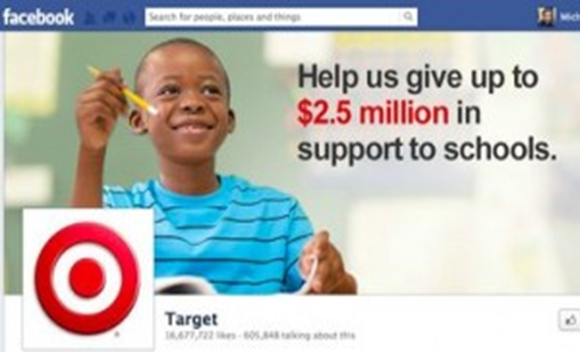
    Target actually used this in their “Acceptance” campaign. In 2010, Target pledged to donate $500 million to student’s education and they would double that for the best college acceptance video form their audience. So people sent in videos of them opening their college letters (Siu 2015). This allowed for the brand to connect with the brand personally and have fun showing of their authentic emotions. They touched on self-transcendence and conservation of their audience by showing what they value and how they are going to engage their loyal customers.

    (Photo from Contently, https://contently.com/2012/08/03/target-video-captures-real-college-acceptance-reactions-video/)

    In IMC, we should always be focused on the values of the consumer. This can also be seen through looking at a specific target audience. This is from their demographic to their psychographics and behaviors. What are the values and behaviors of my audience and how can I engage them in user content? For user generated content, you not only want to look at your brand target audience, but the population that is most likely to share you content through reviews or promotions.

    Reach out to audiences with specific human values to share content or promote a brand

    Human values drive consumer decisions. The primary and most popular values is conservation values. Consumers are constantly looking for trust and safety from their brand (Nikolinakou 15). By brands reaching out to the customers for promotions it makes them feel in charge and in control of the brands they love and their purposes.

    An example of this is social media management company Buffer. Instead of creating captions and content on their own, they encouraged their users to engage in their blog and submit their own content. They get the chance to be featured on their account. They post their own content to make you feel a part of their content process. Buffer also makes sure to be quick in responding to comments and dm’s on their pages. It allows for them to be authentic and true to their followers.

    In IMC, brand loyalty is so important. If a consumer picks our brand, we know we have to think of how we can meet their needs and that they want to stay with us. You cannot have customers without brand loyalty. As a customer to certain brand, I want to feel like the brand cares about me and what I value. I like to find brands that are consistent and authentic with what they do. People are influenced by others around them, so it creates a strong community of people who love and will continue to purchase from your brand.

    So what makes it easy for brands to use user generated content? Connection and understanding. In order for brands to immerse themselves into user generated content they must understand their clientele and who is loyal to their brand. They must observe human values and understand what human values they should reach in order to find quality brand users.

    Sources

    Nikolinakou, A. (2019) “Do human values matter for promoting brands on social media? How social media users’ values influence valuable brand‐related activities such as sharing, content creation, and reviews” Journal of Consumer Behavior. 14-22

    Siu, E. (2021, April 15). 10 user generated content campaigns that actually worked. HubSpot Blog. Retrieved February 25, 2022, from https://blog.hubspot.com/marketing/examples-of-user-generated-content 

  • Which Form of Social Media Content Works Best for Increasing Brand Attitude?

    By Shelby Watson

    (Photo from Dreamwealth Films, http://dreamwealthfilms.com/content-is-king-what-bill-gates-said-about-internet-in-1996/)

    Creating content-driven media to share across social channels is one of the most effective ways for a brand to reach their target audience today. However, there are so many different ways to create advertising content. How do you know which one is the most effective? Especially for brands that are looking to increase positive attitudes towards their product or service, understanding the techniques available and being able to decide which one will work the best for your purposes is incredibly important.

    What are the major techniques used by companies on social media?

    First, it will help to understand what techniques are available to you. Content marketing is a more traditional tool used by a brand, where hired social media coordinators will create original content for a brand, share that content, and try to increase brand reputation or sales. Typically, this form of content is heavily curated by the company producing it and is easy to control, which can allow a brand to create a cohesive image of itself.

    Sponsored content is content that a company pays someone to post in order to promote the brand’s image or encourage sales of its products. Often, sponsored content is posted by influencers within a certain niche market or a well-known or respected celebrity. Sponsored content is almost always disclosed as such, so an audience is aware that the content they are seeing is marketing.

    User-generated content is content that an individual posts on their own social media channels promoting a brand or product. Often, user-generated content does not disclose whether or not the poster was paid or otherwise compensated for promoting something. This kind of marketing can be riskier because a brand cannot always predict how an individual will talk about their products or services.

    Which techniques are most effective at increasing positive brand attitude?

    According to a study completed in 2019, there are significant differences in how audiences receive certain types of content. Sponsored content is generally received less favorably, likely because the disclosure that something is a paid #ad comes off as insincere to a targeted audience. For example, in November of 2021, Amazon teamed up with actor Terry Crews in hopes of improving attitudes towards the working conditions within the company’s fulfillment centers. In a TikTok posted to his channel, Crews visits an Amazon warehouse and acts like a kid in a candy store, excited about the work and employee benefits offered by Amazon (which the video says include paid college tuition and flexible working hours). The internet was quick to point out the insincerity within the video, noting that it does not accurately represent what working at a fulfillment center is like. Crews was also criticized for being willing to promote such an unrealistic video for money. In the end, Amazon’s brand attitude, as well as Crews’, took a hit because of the sponsored content.

    (Photo from Business Insider, https://www.businessinsider.com/terry-crews-amazon-ad-video-2021-11)

    On the other hand, content marketing and user-generated content are both better received by audiences because these forms of content are generally trusted more. It makes sense that user-generated content is more likely to read as sincere – if someone who doesn’t work for or with a company promotes a product or service, we are likely to believe they do actually enjoy it. For example, shopping has become a popular niche within TikTok and Instagram. #Amazonfinds on Instagram is filled with all kinds of items people are promoting from the website, and “Amazon Must Haves” videos like this one are incredibly popular across TikTok. Popular ways for brands to encourage positive user-generated content include challenges or giveaways that require users to post something in order to participate.

    It is a little more surprising, however, that content marketing and user-generated content show little difference in how they influence audience brand attitudes. Audiences likely trust content marketing more than sponsored content because the connection between author and message is clearly established. We know that a brand is going to market goods or services to us, so we expect to see ads when we follow a brand on social media. However, when we follow a celebrity or influencer, we expect to see content about them and their lives, not necessarily ads. So, this form of marketing reads as trustworthy.

    To continue with the example of Amazon, the company uses its Instagram (@amazon) as a way to reinforce its brand image and messaging. The company features humorous reviews of items from its website and uses symbols such as Amazon delivery trucks, the trademark Amazon smile, and the brand’s orange, black, and white color palette in order to support the brand image it has already built. Because we expect to see Amazon promoting itself and the items it sells on its own Instagram page, we are more likely to trust the content they are posting and in turn, may be more likely to purchase something through their platform.

    How can this help me market my own brand on social media?

    Understanding how your audience perceives different forms of content on social media can allow you to make informed decisions about how to improve brand attitudes. Depending on what your brand is looking to accomplish, you might determine that sponsored content is not the way to go or that you would prefer the control of content marketing over user-generated content. It’s always important to remember that these are general rules and that specific scenarios may call for specific kinds of content. However, using scientific research and recent case studies can help you make better decisions about your brand marketing in the future.

    Source

    Christandla, F., & Müller, J. (July 2019). Content is king – But who is the king of kings? The effect of content marketing, sponsored content & user-generated content on brand responses. Computers in Human Behavior, 96, 46-55. https://doi.org/10.1016/j.chb.2019.02.006

  • Social Media Influencers and Their Impact on a Brand

    By Julia Dolinshek

    (Photo from Unsplash)

    What is a Social Media Influencer?

    Within the last decade, social media has become an extremely popular outlet for individuals of all kinds to interacts with family, friends, and brands that they love. The rapid growth of social media has caused brands to hire social media influencers to promote their products and spread a positive light onto their company (Singh, et al., 2020). With so many people being active users of social media, brands took advantage of the ones with a high following to not only promote their products, but also represent their brand as a whole.

    Reports indicate that over two thirds of multinational brands around the world plan to increase spending on influencer marketing within the coming years (World Federation of Advertisers, 2018). Global spending in social media marketing and communication are expected to reach $15 billion by 2022 (Schomer, 2019). Social media influencers typically consist of individuals who have a sizable audience who are willing to create content based on different products and ideas that they support.  Their followers are likely to trust any brand or product that they are endorsing, with an end goal of more people supporting the brand being promoted. With social media influencers using effective communication and marketing skills, while also being paid by the brand, everybody wins. Although the publicity is great for both parties, issues can arise when the personal lives of influencers are brought to life. This has the potential to impact a brand for the better or for the worse.

    Social Media Influencer’s Impact on a Brand – Better or Worse?

    It’s no secret that humans are all imperfect. We all try our hardest to be our best selves, both publicly and privately. It is easy for someone who is not in the public eye to make a mistake. They are able to realize a mistake, learn from it, and grow as a person because of it. There is not a large following of people to bash them and make them feel like they are unforgivable. As a social media influencer, this is not the case. Social media influencers are held to a high standard for many reasons. These individuals can be representing multiple well-known companies at a time. They are also the inspiration and role models to many of their followers. Research has shown that recommendations from social media influencers enhance consumers’ positive perceptions about a brand and consequent purchase intentions (Lu, Chang, & Chang, 2014). When a social media influencer makes a public mistake, it immediately reflects negatively on the brands that they are collaborating with. It causes the brands image to look poor, which can cause a loss of many valued customers. In today’s time, there are so many different brands to support and love. If an influencer who is promoting a particular brand is involved with a public scandal, it may cause supporters of the brand and the influencer to step back and find other competing brands to support instead.

    For Worse

    Social media influencer Olivia Jade was followed and looked up to by millions. She was a fashion, beauty, and lifestyle influencer. She had various partnerships with well-known companies such as Sephora, HP, Lulus and Amazon. In spring of 2019, it was discovered that Olivia Jade’s parents, Lori Loughlin and Mossimo Giannulli had paid $500,000 in bribes to get her admitted into the University of Southern California. Followers and supporters of Olivia were all baffled by the news, stating that she was the “poster child for white privilege” (Clark, 2020). This not only made Olivia Jade look bad, but also the companies that chose to partner with her. This scandal led to all of these companies dropping Olivia Jade as a social media influencer for their brand.

    For Better

    (Photo from Unsplash)

    Companies also sponsor individuals who will make their brand look even better than ever. Tik Tok star, Charli D’Amelio, is sponsored by popular brands such as Dunkin Donuts, Invisalign, Pura Vida Bracelets, Hollister Co., and more. Charli promotes to over 160 million followers. In 2020, Charli used her voice to speak out on topics such as Black Lives Matter, the murder of George Floyd (Charli D’Amelio: Trading card, 2021). This not only educated her large following on important events, but let others know that she is an ally and supportive of equality for all. This specific example would reflect positively on brands that she collaborates with.

    Bringing it all together

    Influencers hold great power for brands within the world of social media. Appealing to the correct target audience while effectively communicating positives about products will have great impacts on what consumers chose to purchase and support. Social media is bigger than ever before. Brands are choosing to pay social media influencers top dollar in order to shine a positive light on their company.

    Sources

    Charli D’Amelio: Trading card. SponsorUnited. (2021, November 24). Retrieved February 7, 2022, from https://sponsorunited.com/charli-damelio-trading-card/#:~:text=TikTok%20superstar%20Charli%20D’amelio,influence%20on%20social%20media.

    Clark, Chavaz. (2020, December 9). Olivia Jade Giannulli, Lori Loughlin’s daughter, breaks silence on college admissions scandal, says she was “poster child of white privilege”. CBS News. Retrieved February 7, 2022, from https://www.cbsnews.com/news/olivia-jade-giannulli-lori-loughlin-college-admission-scandal-interview/

    Lu, L. C., Chang, W. P., & Chang, H. H. (2014). Consumer attitudes toward blogger’s sponsored recommendations and purchase intention: The effect of sponsorship type, product type, and brand awareness. Computers in Human Behavior, 34, 258–266. https://doi.org/10.1016/j.chb.2014.02.007

    Schomer, A. (2019). Influencer Marketing: State of the social media influencer market in 2020

    https://www.businessinsider.com/influencer-marketing-report?r=US&IR=T Accessed

    29th Feb 2020.

    Singh, J., Crisafulli, B., Quamina, L. T., & Xue, M. T. (2020). ‘To trust or not to trust’: The

    impact of social media influencers on the reputation of corporate brands in crisis. Journal

    of Business Research, 119, 464-480. https://doi.org/10.1016/j.jbusres.2020.03.039

    World Federation of Advertisers. Brands to invest more on influencers. (2018). https://

    www.wfanet.org/news-centre/multinational-brands-focus-on-influencertransparency/

    Accessed 30 July 2018.

  • Controversial Advertising Strategies: Understanding How They May Help or Hurt Your Brand

    By Emma Hudson

    (Photo from Unsplash)

    Have you ever heard the phrase “there’s no such thing as bad press?” On the surface, this statement may seem logical. Controversial advertising is known for making brands more relevant by grabbing attention and garnering conversation. But just how valid is the “bad press” argument?

    According to an article released by MDPI , controversial advertising operates by deliberately inducing feelings of surprise by “violating social norms or personal ideals, to draw attention.” Controversy must be used with extreme caution, as it may generate both positive and negative effects in the reception of an advertised brand.

    Here’s a closer look into the successes and failures of controversial advertising and questions that should be examined when considering a controversial campaign for your brand.

    What does effective controversial advertising look like?

    A common misconception about controversial advertising is that its primary goal is to offend its viewers. In reality, controversial advertising doesn’t aim to polarize an audience. When done correctly, it’s an attention-grabbing technique for stating an opinion, and brands use it to stir the conversation about a contentious topic.

    An example of effective controversial advertising is found in the 2017 Budweiser advertisement, “Born The Hard Way.”

    (Photo from Budweiser: Born The Hard Way)

    This commercial tells the story of Budweiser founder Adolphus Busch and his journey to America from Germany with a dream of building his own beer company. The ad artfully portrays the trials a young Busch may have overcome, from fiery ships to unwelcoming American citizens, and eventually meeting with future business partner Eberhard Anheuser.

    The advertisement was released during Trump’s executive order banning immigrants from Muslim countries and makes a subtle statement on the topic. The story makes people realize that something so fundamentally American, like Budweiser beer, can have immigrant roots.
    It reminds viewers that the United States is founded on immigrants, a message that starts a conversation without condemning pro-travel ban or anti-immigration individuals. The strategic use of controversy helped the commercial reach 21.7 million views within the first 72 hours, with a predominantly positive audience reaction (Atkinson, 2017).

    What does ineffective controversial advertising look like?

    When approached ineffectively, controversial advertising undermines customer trust in brand values and creates confusion that may lead to brand abandonment (Buchnik and Nowacki, 2018). A prime example of this is Hyundai’s commercial, “Pipe Job,” meant to promote the Hyundai ix35, an eco-friendly fuel cell car with “100% water emissions.”

    (Photo from Hyundai: Pipe Job)

    This advertisement shows a man running a hose from his car’s tailpipe to its passenger compartment in his closed garage. Taking a few deep breaths and closing his eyes, the man waits to be killed by carbon monoxide poisoning. A few hours later, the garage light comes on, and the man leaves in defeat. “The new 1×35 with 100% water emissions” appears on the screen, which makes it impossible for the man to take his own life. Unsurprisingly, the commercial was pulled after airing for only 24 hours, receiving backlash for mocking suicide attempt survivors (Herper, 2013).

    Questions to ask before using controversial advertising

    1. What are your goals?

    The first question you want to ask before pursuing a controversial topic through advertising is, “what are your goals?” If the reason that your marketing team wants to execute a controversy is to go viral, you need to think again. Controversial advertisements should have logical reasoning and meaning behind them to achieve their desired effect.

    This question reigns relevant to the “Pipe Job” commercial, as the motives of the advertisement were unclear. Sure, the company wanted to promote that their new car has 100% water emissions, but couldn’t they accomplish this through a less triggering method? More likely than not, the brand used the controversial advertising strategy merely to go viral, which ended in outright disaster.

    2. Are the goals relevant to your brand values?

    To elicit a positive response, you must consider if your goals align with your brand values. If the messages perceived do not reflect your brand’s values, it may come off as disingenuous, which will damage consumer trust. Additionally, if the values presented through the advertisement are misaligned, your audience will likely not align with those principles either. The disconnect between audience values and campaign messaging can lead to brand abandonment.

    The Budweiser commercial does a great job relating its brand values to the commercial at hand. Budweiser claims the title of “America’s beer,” so the idea of immigrants achieving the “American dream” aligns directly with the brand’s image.

    3. What are the potential consequences or misconceptions?

    A great way to determine the reception of your advertisement is to conduct focus groups. This will allow you to receive insight into how audiences may react to your commercial before it is published and cannot be changed. Once your commercial is live, there’s no turning back.

    It may also be beneficial to consider some of the common causes of negative reception in controversial advertising. Such controversies can be triggered by:

    • Human figures presented in a way that implies or maintains negative stereotyping of specific social groups (women, men, children, or elderly people)
    • Information whose accuracy is clearly doubtful (misleading advertising).
    • Negative associations of a religious, racial, or ethnic nature.
    • Content that insensitively utilizes trauma or violence (drastic scenes, violence, cruelty, death, rape, etc.)

    (Buchnik and Nowacki, 2018)

    Key Takeaways

    In a current culture obsessed with controversy, it’s easy to create a campaign that draws attention from the masses. While the saying goes, “there’s no such thing as bad press,” it is vital that your team thoroughly strategizes for positive public perception. With the right goals, consideration of brand values, and proper reflection on potential consequences or misconceptions, you’re more likely to receive the desired response from your audience.

    Sources

    Atkinson, Claire. (2018). “Budweiser’s Super Bowl Ad Was the Most-Watched Online.” New York Post, https://nypost.com/2017/02/07/budweisers-super-bowl-ad-was-the-most-watched-online/. 

    Herper, Matthew. (2013). “Hyundai Apologizes for Car Ad Depicting Attempted Suicide.” Forbes, https://www.forbes.com/sites/matthewherper/2013/04/25/a-hyundai-car-ad-depicts-suicide-it-is-so-wrong-i-cant-embed-it-in-this-post/?sh=2691cee6554d. 

    Bachnik, K., & Nowacki, R. (2018). How to build consumer trust: Socially responsible or controversial advertising. Sustainability, 10(7), 2173. doi:http://dx.doi.org/10.3390/su10072173

  • Why Your Business Should Adapt a Green Thumb

    We’ve all heard the saying “Going Green”. Almost everyone nowadays is changing their daily habits to be more environmentally friendly. But what does this mean for businesses? Eco Brands are gaining popularity, which means adding some green to your business could be your next marketing move.

    With the rising concern about climate change, it’s no wonder people are beginning to be more cautious when shopping. Whether you believe in the crisis or not, there is some sort of draw to making an environmentally friendly decision. Consumers are becoming more and more likely to spend extra on a product if it is considered “green”.

    In a 2017 joint study done by, The Hong Kong Polytechnic University and Rajamangala University of Technology Phra Nakhon, researchers found that there is a strong relationship between brand green image and eco branding; specifically, within textile brands. A majority of the people surveyed agreed that eco-branding helps a brand’s reputation and credibility, and that it increases their likelihood of purchasing from a business.

    Eco-Branding is the emphasis on environmentally friendly practices within a company. This could mean that products are made with recycled materials, the production leaves a smaller carbon footprint, or that the company uses revenue to invest in protecting the environment. Some major corporations will highlight specific “green” projects they do while some companies are built upon the principle of being eco-friendly. Regardless, this is a rising trend for businesses as the world becomes increasingly worried about the state of the environment.

    Brand Green Image is described in the study as the consumer’s value in the eco-friendliness of a brand. Target consumers are predicted to be more willing to pay more for eco-friendly goods and services. Not all consumers hold environmentally cautious production as a high factor in decision making, but some however do. It is important to reflect the green image to that target market. The goal is to tap into the target’s values and create a more personal connection between the brand and consumer.

    Credibility is a huge factor in brand loyalty. Consumers favor brands that are consistent and reliable. Data shows a positive relationship between eco-brand and credibility. Eco-Branding shows that the brand is concerned in preserving the environment, a value in which some consumers hold highly. However, it is important when implementing eco-branding to be transparent with the audience. Claiming to be “green” when sustainable practices are not being made can cause major damage to a brand’s credibility.

    The study also showed that consumers are more likely to prefer a brand with an established green image. If eco-friendly tactics are integrated into the company’s brand image, participants of the survey stated that they were more likely to do business with them. This means that sustainability within a company is a key factor to market to the public.

    If you are considering enhancing your company’s brand image in the future, perhaps implement an eco-branding strategy.

    1. Introduce green products or services into your company. An example of a green product would be something that was made from recycled materials or was made in a process that used low energy. These types of products are becoming increasingly popular, especially within the fashion industry. Textiles require a lot of energy and water to create, so many brands are looking for alternate production methods for their products. Retail franchise H&M has a service that promotes recycling used clothes in exchange for a discount- which promotes an eco-friendly brand image.

    2. In addition to adding green products or services, promote green behavior in branding materials. Include reasons why it is important to shop sustainably or use green products. Being transparent on why the brand is eco-friendly helps to build credibility and trust amongst consumers.

    3. Highlight the effect on the environment your company has made by switching to be greener and articulate that data to shareholders. This creates more value in the company and can attract potential investors. Being transparent with shareholders is another way to strengthen relations and brand reputation.

    Not only does eco-branding have the potential to attract more customers, it can boost your company’s reputation. As the results of the study show, there is a positive relationship between eco-brand and green brand image. There is potential for increased value, profit, and brand loyalty. So perhaps going green might be your next business move?

    Post written by Lyndsey Newton

    Kan, Chi Wai, Ting Chow Cheby Yuen, Chamlong Sarikanon, and Rattanaphol Mongkholrattanasit. 2017. “A Study of Brand Green Image in Relation to Eco-Branding of Fashion Products.” Applied Mechanics and Materials 866: 448-451. doi:http://dx.doi.org.liblink.uncw.edu/10.4028/www.scientific.net/AMM.866.448. https://search-proquest-com.liblink.uncw.edu/docview/1910408508?accountid=14606.

  • How Social Media Benefits Brand Attitude and Awareness Online

    Based on a research study by Daniela Langaro, Paulo Rita, and Maria de Fa ́tima Salgueiro

    It’s no secret that social media has moved mountains, and has created a plethora of new ideas in the world of branding. The correlation between using social media sites and branding has always been an integral factor in utilizing the different communication and marketing skills this generation has to offer. Something so normal and monotonous like scrolling through social media feeds now has more power and value than we as a society of communicators could ever imagine. Branding nowadays cannot be fostered within a company without some sort of media and online presence, and social media happens to be a somewhat “free” platform for building a brand. The article “Do social networking sites contribute for building brands?” clarified a lot of my assumptions as a Communication Studies student on how different areas of social media serve different organizations. While a lot of my discoveries and observations were not new, they have expanded the way I think about social media and branding as a whole, and as two equal parts that help one another in the world of communication.

    Before considering the advantages of social media, let’s discuss branding. Branding, by definition, is “the promotion of a particular product or company by means of advertising and distinctive design”, and a brand alone is defined as “a type of product manufactured by a particular company under a particular name”. So, we can conclude that while a brand is the product or idea being promoted, if the act of branding isn’t successful, the actual brand may not be of as much value as it could be. These two individual elements of branding and an actual brand depend on each other for quite a lot.

    From these ideas, companies build the image and vision of their “brand” and formulate ways to continue the branding process in different, creative ways. For example, almost anyone can identify the “target” emblem included in the retail store Target’s logo. People identify with the logo, and immediately think about what the logo means to them by associating it with a time or place they engaged with the Target brand, and then decide if they like it or not. From here, all of these interactions with branding can be broken down into subcategories including brand awareness and brand attitude.

    Brand awareness, as defined in the article “Do social networking sites contribute for building brands?” captures the potential availability of a brand in the mind of the consumer (Langaro, Rita, and Salgueiro, 2018). In the same article, brand attitude is defined as the evaluative dimension of brand image. Customers, potential or current, develop their own evaluation and judgements towards a brand by what they see and interact with. Having a presence on social media heavily affects this interaction and can provide a leg up for companies looking to engage more with different audiences. This can make a company or organization more competitive as well. The more a brand image or brand in general is shown in an appropriate way, the more association, knowledge, and popularity the brand will attract. This is why an online or social media presence is so vital today. Because social media is so relevant, why not utilize free promotion and improve the image of a company by establishing an online presence on a social media website?

    When it comes to branding, organizations want their personal image to be immediately identified and simple enough for people to remember. This is most often achieved by visuals and resonating cognitively with the organization’s potential or desired audiences. Brand association, brand quality, and brand knowledge are all benefits of using social media to boost any image or brand online (Langaro, Rita, and Salgueiro, 2018). When a company posts regularly on popular social media platforms, it now has individuals associated with and educated in it’s brand based off of the brand’s online presence, which is an essentially free outlet to promote or improve branding. Organizations now see the value and necessity in posting daily on social media sites and looking into analytics because it can show an organization exactly how people are interacting with their brand.

    One can realize quickly that branding is a very broad element in the promotion of a company, business, or organization. Branding is not just simply “branding”. Branding is developing a certain image within a brand, connecting other people and things to the brand, showcasing the brand in a way that will connect with others and display the right idea to customers, and the list goes on. When one analyzes the purpose of branding, so many layers can be found within it and its purpose is ever-changing. One thing that isn’t going anywhere, though, is the constant yet rapid growth of the internet and social media. Companies should continue to use social media outlets for brand communication. They should stay current on evolving social media trends, and how the company can adjust and grow with a technologically-charged society. Taking advantage of the online community can work wonders in the world of branding.

    Written by Natalie Oldani