Category: Advertising

  • Establish your brand identity and you will guarantee success

    By Kelly Geiger

    Imagine you are walking through the mall and every store looks the same. Décor, logos, colors… everything is exactly the same. How could you possibly find the store you are looking for? This is where brand identity shows its importance. When you walk through the mall and see the check mark of a Nike store, the cursive sign reading Free People, or the navy-blue color surrounding the Gap, there is no question as to what brand you are looking at. Establishing a brand identity through colors, logos, fonts and more will not only set you apart from other brands, but also improve recognition and memorability for customers.

    This article will do two things. It will help you understand what a strong brand identity is and show you the importance of visually building a brand that sets themselves apart from their competitors.

    What is brand identity?

    “Brand identity is a combination of the name, terms, signs, symbols, and design used to identify a brand’s goods or services and distinguish them from competitors (Aaker 1991; Kotler 1991; Zaichkowsky 2010)” (Ward and Yang and Romaniuk and Beal, 2020). This is the part of the brand that people associate with visually. When you see Coca-Cola, what color do you think of? Red. When you see the words ‘Just o It’ what brand do you think of? Nike. When you see the golden arches what brand do you think of? McDonalds. “Brand identity elements are the building blocks that contribute, creatively, to enhancing brand presence in advertising content and purchase environments. For example, many McDonald’s advertisements contain no direct brand name, but instead favor brand identity elements such as the “Golden Arches” and “I’m lovin’ it” jingle” (Ward and Yang and Romaniuk and Beal, 2020). These are all examples of how successful these companies were in creating a strong brand identity. 

    Brand identity is not about selling the company’s product, it is about selling the company itself. They want to set themselves apart from their competitors, and using these visual elements is how they do it. This idea of ‘selling themselves rather than their products’ is further explained in the scholarly article Building a unique brand identity: measuring the relative ownership potential of brand identity element types by Ella Ward, Song Yang, Jenni Romaniuk, and Virginia Beal. “Described as an integrated system of cues, the purpose of brand identity is to provide a physical, proprietary representation of the brand (Perry and Wisnom 2003). In this sense, rather than providing a reason to buy the brand, the primary function of brand identity is to create a synergy amongst disparate brand elements and establish a unique brand look and feel for relatively homogenous goods (Perry and Wisnom 2003; Underwood 2003; Romaniuk and Nenycz-Thiel 2014).” In the image below you can see what an established brand identity might look like.  This mock example is a great representation on how a company creates a color scheme, font, and logo variations that are specific to their company.
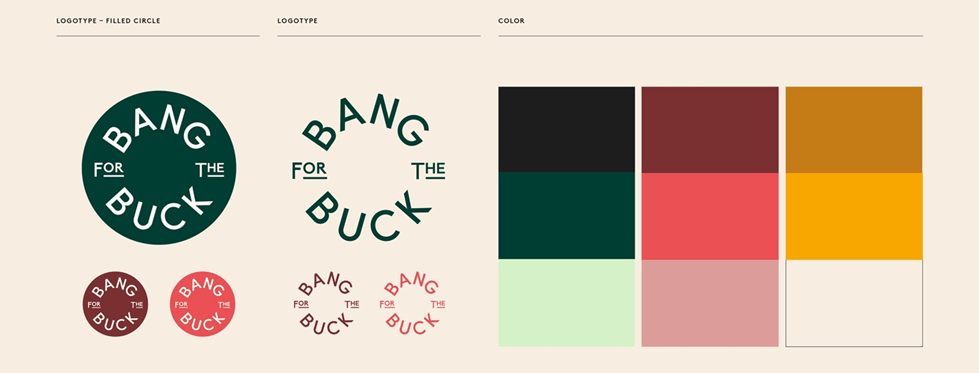
    (Photo from BeHance, https://www.behance.net/gallery/57691987/Bang-for-the-buck/modules/375634675)

    While some might not value the artistic side of branding such as choosing colors, logos, fonts, etc., this isn’t just so your brand looks ‘pretty’ or ‘trendy’, it is truly a science to set yourself apart from your competitors.  Brand identity is important because it relates to the psychological ways consumers connect their memory with your brand.  “Brand identity elements can help explain the brand (Kohli et al. 2013), add meaning (Dahlén and Rosengren 2005) and contain imagery such as colours and shapes that expand the way the brand is encoded and stored in memory (Keller et al. 2008; Hartnett et al. 2016). As a result, the brand becomes more readily accessible to the consumer via creating a unique brand identity and artistic presence. (Ward and Yang and Romaniuk and Beal, 2020) Again, when it relates to identity elements, the goal is not to sell the product but the brand itself. Another way to explain this is “Identity elements are the cornerstone to brand identity that helps consumers to recognize brands and distinguish them from competitors (Hoek and Gendall 2010). These elements evoke the brand in the mind of consumers and create a unique look and/or feel that makes it easy to identify the brand (Perry and Wisnom 2003; Romaniuk and NenyczThiel 2014).” (Ward and Yang and Romaniuk and Beal, 2020).

    The biggest takeaways from this article are the importance of brand identity and its key position in successful companies.  It relates to integrated marketing communication in many ways but most of all brand identity can be practiced through campaign and message design.  The corresponding brand identity features are mostly used in the forms of advertising, packaging, and other forms of design.  Integrated Marketing Communication deals with these features of how and why it is necessary to create a brand identity as well as how this will eventually help your company succeed within its marketing and advertising techniques.  

    Source

    Ward, E., Yang, S., Romaniuk, J., & Beal, V. (2020). Building a unique brand identity: Measuring the relative ownership potential of brand identity element types. Journal of Brand Management, 27(4), 393–407. https://doi.org/10.1057/s41262-020-00187-6

  • How can brands stay up to date with user generated content?

    By Courtney Busick

    Brands are constantly changing. They need to stay up to date on how an audience interacts with them on social media. Many companies are finding users who share their content through stories or posts shows more engagement and interaction than counting likes and comments. How can brands engage their audience? By understanding their human values and what makes them want to share user-generated content with others.

    What is user generated content? User-generated content (UGC) is completely created by the user. Many brands are using this by asking users on social media questions about their products. More and more brands are finding that they can get free marketing from social media users with UGC’s. Whether it’s Lays asking for new chip flavors or Coke sharing the hashtag #shareacoke, brands can get reviews from user who share their content on platforms.

    Sometimes it can be hard for a brand to navigate UGC’s so here are some tips I love from other marketers that can help you engage with user-generated content.

    (Photo Pi Datametrics, https://www.pi-datametrics.com/blog/name-game-coca-colas-shareacoke-summer-ad-campaign/)

    Connect Human values to your Products

    Understanding a user is understanding what they value. Brands must look at human values and use those to generate content that users enjoy. “Human values are guiding principles reflecting style goals in life that may impact how individuals judge situations and events” (Nikolinakou 14). Meaning that human values are what drives our decisions. It affects consumer behavior towards certain products. It can also affect what we purchase. There are four levels of human values described by the article a brand should understand. Self- Transcendence (audiences’ stances on political or social issues), Conservation (audience’s desire to maintain security and stability), openness to change (what motivates users to change their opinions about products/services), and Self enhancement (user’s need to achieve success, wealth or influence) (Nikolinakou 14).

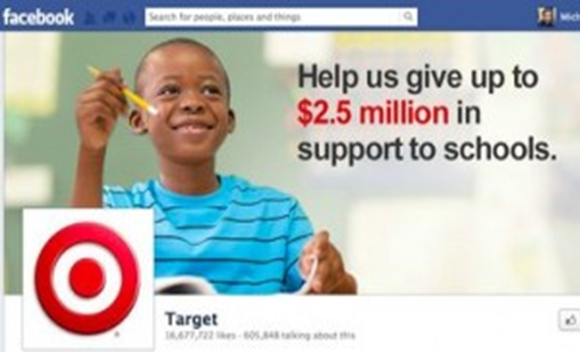
    Target actually used this in their “Acceptance” campaign. In 2010, Target pledged to donate $500 million to student’s education and they would double that for the best college acceptance video form their audience. So people sent in videos of them opening their college letters (Siu 2015). This allowed for the brand to connect with the brand personally and have fun showing of their authentic emotions. They touched on self-transcendence and conservation of their audience by showing what they value and how they are going to engage their loyal customers.

    (Photo from Contently, https://contently.com/2012/08/03/target-video-captures-real-college-acceptance-reactions-video/)

    In IMC, we should always be focused on the values of the consumer. This can also be seen through looking at a specific target audience. This is from their demographic to their psychographics and behaviors. What are the values and behaviors of my audience and how can I engage them in user content? For user generated content, you not only want to look at your brand target audience, but the population that is most likely to share you content through reviews or promotions.

    Reach out to audiences with specific human values to share content or promote a brand

    Human values drive consumer decisions. The primary and most popular values is conservation values. Consumers are constantly looking for trust and safety from their brand (Nikolinakou 15). By brands reaching out to the customers for promotions it makes them feel in charge and in control of the brands they love and their purposes.

    An example of this is social media management company Buffer. Instead of creating captions and content on their own, they encouraged their users to engage in their blog and submit their own content. They get the chance to be featured on their account. They post their own content to make you feel a part of their content process. Buffer also makes sure to be quick in responding to comments and dm’s on their pages. It allows for them to be authentic and true to their followers.

    In IMC, brand loyalty is so important. If a consumer picks our brand, we know we have to think of how we can meet their needs and that they want to stay with us. You cannot have customers without brand loyalty. As a customer to certain brand, I want to feel like the brand cares about me and what I value. I like to find brands that are consistent and authentic with what they do. People are influenced by others around them, so it creates a strong community of people who love and will continue to purchase from your brand.

    So what makes it easy for brands to use user generated content? Connection and understanding. In order for brands to immerse themselves into user generated content they must understand their clientele and who is loyal to their brand. They must observe human values and understand what human values they should reach in order to find quality brand users.

    Sources

    Nikolinakou, A. (2019) “Do human values matter for promoting brands on social media? How social media users’ values influence valuable brand‐related activities such as sharing, content creation, and reviews” Journal of Consumer Behavior. 14-22

    Siu, E. (2021, April 15). 10 user generated content campaigns that actually worked. HubSpot Blog. Retrieved February 25, 2022, from https://blog.hubspot.com/marketing/examples-of-user-generated-content 

  • Controversial Advertising Strategies: Understanding How They May Help or Hurt Your Brand

    By Emma Hudson

    (Photo from Unsplash)

    Have you ever heard the phrase “there’s no such thing as bad press?” On the surface, this statement may seem logical. Controversial advertising is known for making brands more relevant by grabbing attention and garnering conversation. But just how valid is the “bad press” argument?

    According to an article released by MDPI , controversial advertising operates by deliberately inducing feelings of surprise by “violating social norms or personal ideals, to draw attention.” Controversy must be used with extreme caution, as it may generate both positive and negative effects in the reception of an advertised brand.

    Here’s a closer look into the successes and failures of controversial advertising and questions that should be examined when considering a controversial campaign for your brand.

    What does effective controversial advertising look like?

    A common misconception about controversial advertising is that its primary goal is to offend its viewers. In reality, controversial advertising doesn’t aim to polarize an audience. When done correctly, it’s an attention-grabbing technique for stating an opinion, and brands use it to stir the conversation about a contentious topic.

    An example of effective controversial advertising is found in the 2017 Budweiser advertisement, “Born The Hard Way.”

    (Photo from Budweiser: Born The Hard Way)

    This commercial tells the story of Budweiser founder Adolphus Busch and his journey to America from Germany with a dream of building his own beer company. The ad artfully portrays the trials a young Busch may have overcome, from fiery ships to unwelcoming American citizens, and eventually meeting with future business partner Eberhard Anheuser.

    The advertisement was released during Trump’s executive order banning immigrants from Muslim countries and makes a subtle statement on the topic. The story makes people realize that something so fundamentally American, like Budweiser beer, can have immigrant roots.
    It reminds viewers that the United States is founded on immigrants, a message that starts a conversation without condemning pro-travel ban or anti-immigration individuals. The strategic use of controversy helped the commercial reach 21.7 million views within the first 72 hours, with a predominantly positive audience reaction (Atkinson, 2017).

    What does ineffective controversial advertising look like?

    When approached ineffectively, controversial advertising undermines customer trust in brand values and creates confusion that may lead to brand abandonment (Buchnik and Nowacki, 2018). A prime example of this is Hyundai’s commercial, “Pipe Job,” meant to promote the Hyundai ix35, an eco-friendly fuel cell car with “100% water emissions.”

    (Photo from Hyundai: Pipe Job)

    This advertisement shows a man running a hose from his car’s tailpipe to its passenger compartment in his closed garage. Taking a few deep breaths and closing his eyes, the man waits to be killed by carbon monoxide poisoning. A few hours later, the garage light comes on, and the man leaves in defeat. “The new 1×35 with 100% water emissions” appears on the screen, which makes it impossible for the man to take his own life. Unsurprisingly, the commercial was pulled after airing for only 24 hours, receiving backlash for mocking suicide attempt survivors (Herper, 2013).

    Questions to ask before using controversial advertising

    1. What are your goals?

    The first question you want to ask before pursuing a controversial topic through advertising is, “what are your goals?” If the reason that your marketing team wants to execute a controversy is to go viral, you need to think again. Controversial advertisements should have logical reasoning and meaning behind them to achieve their desired effect.

    This question reigns relevant to the “Pipe Job” commercial, as the motives of the advertisement were unclear. Sure, the company wanted to promote that their new car has 100% water emissions, but couldn’t they accomplish this through a less triggering method? More likely than not, the brand used the controversial advertising strategy merely to go viral, which ended in outright disaster.

    2. Are the goals relevant to your brand values?

    To elicit a positive response, you must consider if your goals align with your brand values. If the messages perceived do not reflect your brand’s values, it may come off as disingenuous, which will damage consumer trust. Additionally, if the values presented through the advertisement are misaligned, your audience will likely not align with those principles either. The disconnect between audience values and campaign messaging can lead to brand abandonment.

    The Budweiser commercial does a great job relating its brand values to the commercial at hand. Budweiser claims the title of “America’s beer,” so the idea of immigrants achieving the “American dream” aligns directly with the brand’s image.

    3. What are the potential consequences or misconceptions?

    A great way to determine the reception of your advertisement is to conduct focus groups. This will allow you to receive insight into how audiences may react to your commercial before it is published and cannot be changed. Once your commercial is live, there’s no turning back.

    It may also be beneficial to consider some of the common causes of negative reception in controversial advertising. Such controversies can be triggered by:

    • Human figures presented in a way that implies or maintains negative stereotyping of specific social groups (women, men, children, or elderly people)
    • Information whose accuracy is clearly doubtful (misleading advertising).
    • Negative associations of a religious, racial, or ethnic nature.
    • Content that insensitively utilizes trauma or violence (drastic scenes, violence, cruelty, death, rape, etc.)

    (Buchnik and Nowacki, 2018)

    Key Takeaways

    In a current culture obsessed with controversy, it’s easy to create a campaign that draws attention from the masses. While the saying goes, “there’s no such thing as bad press,” it is vital that your team thoroughly strategizes for positive public perception. With the right goals, consideration of brand values, and proper reflection on potential consequences or misconceptions, you’re more likely to receive the desired response from your audience.

    Sources

    Atkinson, Claire. (2018). “Budweiser’s Super Bowl Ad Was the Most-Watched Online.” New York Post, https://nypost.com/2017/02/07/budweisers-super-bowl-ad-was-the-most-watched-online/. 

    Herper, Matthew. (2013). “Hyundai Apologizes for Car Ad Depicting Attempted Suicide.” Forbes, https://www.forbes.com/sites/matthewherper/2013/04/25/a-hyundai-car-ad-depicts-suicide-it-is-so-wrong-i-cant-embed-it-in-this-post/?sh=2691cee6554d. 

    Bachnik, K., & Nowacki, R. (2018). How to build consumer trust: Socially responsible or controversial advertising. Sustainability, 10(7), 2173. doi:http://dx.doi.org/10.3390/su10072173

  • How Do Brands Evaluate and Choose Social Media Influencers?

    In the short amount of time someone spends on YouTube, Instagram, or Facebook, there is a high chance that they have encountered a social media influencer promoting a product. How many times have you scrolled through your Instagram feed and seen someone promoting Care/Of Vitamins? Probably a lot. So, what really is a social media influencer? What qualifies a person to become a social media influencer? How do brands come into contact with the influencer? In Jan-Frederik Grave’s 2019 research article titled, “What KPIs Are Key? Evaluating Performance Metrics for Social Media Influencers” all of these questions are answered.


    According to Grave, there are two challenges that companies face when selecting a social media influencer: finding which social media influencer to work with and measuring the outcomes of the campaign. Fashion, health, beauty, entertainment and more are just a few of the various topics that social media influencers cover. Since there is a wide range of influencers for a company to choose from, they must rely on social media metrics to determine which influencer they would like to collaborate with.


    Key performance indicators (KPIs) are various metrics used by brand marketers and agencies when selecting a social media influencer for their brand, according to Grave. One KPI that might be used is the amount of interactions an influencer recieves on a post (comments, “likes”, “shares”, etc). Another KPI could be the amount of followers, subscribers, friends, etc. the influencer has on their social media channels.


    Grave explains that typical paid content on social media is created by the brand marketers themselves, which gives them more control of the overall message. However, social media influencers are given most of the control when it comes to creating the content for the brand. Although brand marketers provide the social media influencer with some tips to follow for the content, it is up to the influencer to create the content. Grave says this is why it is important for companies to choose an influencer whom they believe will create quality content with non-conflicting posts on their channels.

    Kate Scott is an undergraduate student at the University of North Carolina at Wilmington. She will be graduating in May 2020 with a B.A. in Communication Studies with a focus in Integrated Marketing Communication.


    References

    Gräve, J.-F. (2019). What KPIs Are Key? Evaluating Performance Metrics for Social Media Influencers. Social Media Society, 5(3), 205630511986547. doi: 10.1177/2056305119865475


  • Why Your Business Should Adapt a Green Thumb

    We’ve all heard the saying “Going Green”. Almost everyone nowadays is changing their daily habits to be more environmentally friendly. But what does this mean for businesses? Eco Brands are gaining popularity, which means adding some green to your business could be your next marketing move.

    With the rising concern about climate change, it’s no wonder people are beginning to be more cautious when shopping. Whether you believe in the crisis or not, there is some sort of draw to making an environmentally friendly decision. Consumers are becoming more and more likely to spend extra on a product if it is considered “green”.

    In a 2017 joint study done by, The Hong Kong Polytechnic University and Rajamangala University of Technology Phra Nakhon, researchers found that there is a strong relationship between brand green image and eco branding; specifically, within textile brands. A majority of the people surveyed agreed that eco-branding helps a brand’s reputation and credibility, and that it increases their likelihood of purchasing from a business.

    Eco-Branding is the emphasis on environmentally friendly practices within a company. This could mean that products are made with recycled materials, the production leaves a smaller carbon footprint, or that the company uses revenue to invest in protecting the environment. Some major corporations will highlight specific “green” projects they do while some companies are built upon the principle of being eco-friendly. Regardless, this is a rising trend for businesses as the world becomes increasingly worried about the state of the environment.

    Brand Green Image is described in the study as the consumer’s value in the eco-friendliness of a brand. Target consumers are predicted to be more willing to pay more for eco-friendly goods and services. Not all consumers hold environmentally cautious production as a high factor in decision making, but some however do. It is important to reflect the green image to that target market. The goal is to tap into the target’s values and create a more personal connection between the brand and consumer.

    Credibility is a huge factor in brand loyalty. Consumers favor brands that are consistent and reliable. Data shows a positive relationship between eco-brand and credibility. Eco-Branding shows that the brand is concerned in preserving the environment, a value in which some consumers hold highly. However, it is important when implementing eco-branding to be transparent with the audience. Claiming to be “green” when sustainable practices are not being made can cause major damage to a brand’s credibility.

    The study also showed that consumers are more likely to prefer a brand with an established green image. If eco-friendly tactics are integrated into the company’s brand image, participants of the survey stated that they were more likely to do business with them. This means that sustainability within a company is a key factor to market to the public.

    If you are considering enhancing your company’s brand image in the future, perhaps implement an eco-branding strategy.

    1. Introduce green products or services into your company. An example of a green product would be something that was made from recycled materials or was made in a process that used low energy. These types of products are becoming increasingly popular, especially within the fashion industry. Textiles require a lot of energy and water to create, so many brands are looking for alternate production methods for their products. Retail franchise H&M has a service that promotes recycling used clothes in exchange for a discount- which promotes an eco-friendly brand image.

    2. In addition to adding green products or services, promote green behavior in branding materials. Include reasons why it is important to shop sustainably or use green products. Being transparent on why the brand is eco-friendly helps to build credibility and trust amongst consumers.

    3. Highlight the effect on the environment your company has made by switching to be greener and articulate that data to shareholders. This creates more value in the company and can attract potential investors. Being transparent with shareholders is another way to strengthen relations and brand reputation.

    Not only does eco-branding have the potential to attract more customers, it can boost your company’s reputation. As the results of the study show, there is a positive relationship between eco-brand and green brand image. There is potential for increased value, profit, and brand loyalty. So perhaps going green might be your next business move?

    Post written by Lyndsey Newton

    Kan, Chi Wai, Ting Chow Cheby Yuen, Chamlong Sarikanon, and Rattanaphol Mongkholrattanasit. 2017. “A Study of Brand Green Image in Relation to Eco-Branding of Fashion Products.” Applied Mechanics and Materials 866: 448-451. doi:http://dx.doi.org.liblink.uncw.edu/10.4028/www.scientific.net/AMM.866.448. https://search-proquest-com.liblink.uncw.edu/docview/1910408508?accountid=14606.

  • What is wrong with IMC?

    IMC seems to be everywhere and nowhere at the same time. Schools are teaching it and marketers are using it, but some experts are still reluctant to write about it in new media. I was curious as to why, so I chose to reference an article titled “Integrated Marketing Communication- from an instrumental to a customer-centric perspective” by Manfred Bruhn and Stefanie Schnebelen. The purpose is to inform readers about the role of Integrated Marketing Communication in new media. Brunn and Schnebelen attempted to do this through discussion of the changed conditions of the media markets since the development of Integrated Marketing Communication.

    This article is based on research done via a literature-based approach. The authors conducted this with consideration of the modern media market and customer behavior. The first step in researching was analyzing the challenges of Integrated Marketing Communication, followed by the principles of customer-centric Integrated Marketing Communication, and lastly the implementation issues in Integrated Marketing Communication. By analyzing these three steps, Brunn and Schnebelen were able to point out the gaps of Integrated Marketing Communication in new media and establish a media-based umbrella framework that searched for common gaps in new media and Integrated Marketing Communication. The authors analyzed various forms of literature that discussed Integrated Marketing Communication in efforts to see the prevalence of Integrated Marketing Communication on new media.

    Brunn and Schnebelen didn’t really END the conversation on why IMC isn’t being considered a part of new media yet, but the authors definitely opened the door for it and provided

    good insight into the issues of experts in marketing and new media not considering IMC a part of the currently used approach to media and marketing.

    As someone who is an avid consumer of things such as Nike shoes and also an IMC student, the marketing campaign they use to get me interested in purchasing their products practically revolves around IMC. First, they promote and share user-generated content all the time for their advertisements. Secondly, they integrate all kinds of different marketing and promotional tactics in order to reach the correct audience effectively. Personally, I do not know researchers and scholars can ignore IMC’s place in new media given the fact that it is in almost every advertisement and marketing campaign that we see in today’s world. The method of encompassing things such as influencer marketing, commercials, and targeted advertisements into one campaign is practically standard in marketing now, and it is time that literature catches up with the times.

    The results of the study by Brunn and Schnebelen were that the artifacts about Integrated Marketing Communication that the authors analyzed did not discuss social media as a part of Integrated Marketing Communication in new media to any great extent. The articles that were analyzed were vague and only regarded Integrated Marketing Communication as a new form of media, but did not get into specifics and more information. The literature that the authors analyzed fails to address the foundational change of social media and the impact it has on Integrated Marketing Communication as a whole. The article also discusses the loss of control over advertising content that corporations are currently experiencing. Today, someone can post a viral tweet about your brand and that becomes a part of your brand identity. The corporation has no control over that happening and as a result of the rise in user-generated content, corporations are now more interactive with users on social media and promote UGC, as opposed to strictly

    pushing their own content. The authors suggest changing the mindset of the corporate IMC world, rather than changing the process in which communication is done. The results of this study encourage corporations and IMC practitioners, in general, to remember that IMC is an adaptive concept and as new forms of media and communication emerge, IMC must be adapted, rather than made into a black and white, never-changing subject.

    One example of this that I see regularly is when Instagram users “tag” the brands they were wearing or using in their posts. Today, more marketing on social media is done by consumers to other potential consumers than ever before, and major corporations are putting more resources consumers to spread the word about their products in hopes that consumers create marketable content for them.

    This study has made a great impact on IMC. Firstly, this article forces those in the Integrated Marketing Communication research community to seek a deeper understanding of social media and its impacts on social media. As social media continues to become a mainstream of marketing, the literature not analyzing this information shows that the Integrated Marketing Communication industry is behind where it should be in terms of analyzation and application of Integrated Marketing Communication in new media, specifically the analysis of Integrated Marketing Communication in the customer-centric landscape.

    Bio:

    Adam Guttadauro is a student at UNCW, majoring in Communication Studies. He is originally from Boston, Massachusetts. While not in a class, he is working on his various business ventures

    or at home watching football. Adam is interested in IMC due to its prevalence in his ventures and hopes to bring an IMC-centered approach to all of those ventures

  • Social Media: How Relevant are You?

    Crafting an idea, building a brand, launching it and growing a following all take time and the key factor in making a brand successful is building relationships on social media. Social media has shifted the focus of strategic marketing from informational ads to creating content and having conversations within social groups. According to the 2018 article in The Journal of Media Research Online Brand Awareness. A Case-Study on Creating Associations and Attachment by Alina Nechita “the symbolic dimension built by communicative means ensures the consistency and value of a brand.”

    Nechita discusses figuring out how your audience is using social media, she mentions the reach of Facebook, Instagram, Youtube, Pinterest, and niche blogs for reaching your audiences. You should be figuring out what platforms your audiences are using, Facebook and Pinterest report the most active users, Instagram is popular with teenagers and young millennials, what are your consumers using?

    Once you know where the people are, where do you start? Nechita’s research recommends piggy-backing on influencers; she specifically mentions using influencers who test products, applies personal experience, and share a final verdict. Nechita acknowledges the potential for bias but mentions that these tend to be very successful and apply similarly to general brand awareness. She states that “in the absence of a well-known brand to associate it with, the impact of its message will soon become null.” 

    Though Nechita recommends building brand awareness through more established brands and influencers, it can be done over time through consistent engagement with social groups online. The process requires analysis of not only sales, but of likes, shares, and comments at six-month intervals. 

    You should be establishing consistent positive interactions with your consumers online. Nechita mentions looking into all mentions of your brand and having them removed. The text mentions how detrimental to a new brand a negative comment could be and recommends going as far as to look the person up and contact them to discuss having the comment removed as well as frequently removing those who engage negatively online. While a negative comment may be detrimental, I think to contact someone with the goal to remove it seems risky, I would think responding directly would be a better solution. Public criticism deserves a public response.

    She goes on to mention that creating a tone or mood to the conversations on social media is also important, she mentions humor working particularly well here in America like Wendy’s use of Twitter. It is essential to create a conversation that your audience wants to be a part of and is relevant.

    Another key point that she makes is that the worst possible thing a brand can do is to ignore the customers. Nechita iterates that with well-known brands, our consumption shows who we are, it’s a representation of us so the brand’s personality needs to match up with our own. These brands have to continue to stay relatable to the consumer and she elaborates on this by going over measuring customer satisfaction and that being shared among social communities: if you like it, you tell your friends about it, right? She states that the most successful brands are the ones that “fulfill the needs of community members.” 

    This doesn’t just mean physical needs but emotional ones as well, she offers the example of Samsungs’ commercial in India in 2018, where they mention a refrigerator taking care of you like your mother does, driving on strong emotions like a mothers’ love, maybe sadness from missing that mother, and so on. Nechita makes the point that “the brand sales goal is no longer obviously profit-oriented, but apparently targets its alignment to certain emotional needs, to bring joy to customers.”

    The article goes on to warn of trying to engage online by launching too many social media accounts at once that you cannot create individual content consistently for each or not having a specific communication strategy which creates inconsistency in messaging. It says that “humanizing a brand will ensure the public’s involvement for a longer period of time” and unattended social media profiles that have old posts at the top of the page create the feeling that the brand is doesn’t care about interacting with their consumers.

    So what this research boils down to is finding your target audiences and immersing your brand into the conversation in the various social groups in your audience and then having an honest, organic conversation with your consumers and figuring out their needs and trying to fulfill them. Through this process, you create a lasting impression on your audience and an authentic value to your brand that consumers want to take part in and share with others. 

    NECHITA, V. A. (2018). Online Brand Awareness. A Case-Study on Creating Associations and Attachment. Journal of Media Research, 11(2), 91–111. https://doi-org.liblink.uncw.edu/10.24193/jmr.31.7

    Carol Friday 


    Carol Friday is a Communication Studies senior at the University of North Carolina Wilmington and is the creative director for the community group managing the Communication department’s Twitter page, the IMC Hawks blog, and its respective Twitter and Facebook page.